Hey there! I’m a supplier of Collaborative Palletizing Robots, and today I wanna chat about the data collection and analysis functions of these awesome machines. Collaborative Palletizing Robot
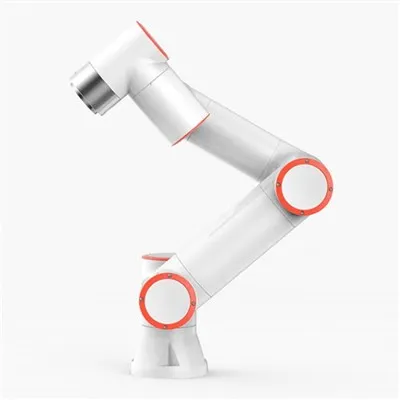
First off, let’s talk about why data collection is so important for collaborative palletizing robots. In a modern warehouse or manufacturing environment, data is king. It helps us understand how the robot is performing, spot any potential issues early on, and make informed decisions to optimize its operation.
Data Collection Functions
1. Operational Data
One of the key types of data our robots collect is operational data. This includes things like the number of palletizing cycles completed, the time taken for each cycle, and the speed at which the robot is moving. For example, we can track how many pallets the robot has stacked in an hour. This data gives us a clear picture of the robot’s productivity. If we notice a sudden drop in the number of cycles per hour, it could be a sign of a mechanical issue or a problem with the programming.
We also collect data on the robot’s movement speed. By monitoring this, we can ensure that the robot is operating at an optimal pace. If it’s moving too fast, there’s a risk of dropping products or causing damage. On the other hand, if it’s moving too slowly, it’s not being as efficient as it could be.
2. Sensor Data
Collaborative palletizing robots are equipped with a variety of sensors, and these sensors generate a wealth of data. For instance, the force sensors on the robot’s gripper can tell us how much force is being applied when picking up and placing items. This is crucial for ensuring that the robot doesn’t damage the products it’s handling. If the force is too high, it could crush the items, and if it’s too low, the items might not be held securely.
The vision sensors on the robot are also a great source of data. They can detect the position and orientation of the products on the pallet, as well as any obstacles in the robot’s path. This data helps the robot plan its movements more accurately and avoid collisions.
3. Environmental Data
The environment in which the robot operates can also have a significant impact on its performance. That’s why we collect environmental data such as temperature, humidity, and air quality. For example, high temperatures can cause the robot’s components to overheat, which can lead to malfunctions. By monitoring the temperature, we can take preventive measures to keep the robot running smoothly.
Data Analysis Functions
1. Performance Analysis
Once we’ve collected all this data, the next step is to analyze it. One of the main areas of analysis is the robot’s performance. We can use the operational data to calculate key performance indicators (KPIs) such as throughput, efficiency, and uptime. Throughput refers to the number of pallets the robot can stack in a given period of time. Efficiency is a measure of how well the robot is using its resources, such as energy and time. Uptime is the percentage of time that the robot is operational.
By analyzing these KPIs, we can identify areas where the robot can be improved. For example, if the throughput is lower than expected, we can look at the data to see if there are any bottlenecks in the process. Maybe the robot is spending too much time waiting for products to be delivered, or perhaps there’s a problem with the programming that’s causing it to move inefficiently.
2. Predictive Maintenance
Another important aspect of data analysis is predictive maintenance. By analyzing the sensor data and operational data, we can predict when the robot is likely to experience a failure. For example, if the force sensors on the gripper start to show abnormal readings, it could be a sign that the gripper is wearing out. By detecting these issues early, we can schedule maintenance before a breakdown occurs, which can save a lot of time and money.
We can also use data analysis to identify patterns in the robot’s behavior. For instance, if we notice that the robot’s performance tends to decline after a certain number of cycles, we can set up a maintenance schedule to prevent this from happening.
3. Process Optimization
Data analysis can also help us optimize the palletizing process. By looking at the data on product placement, movement speed, and cycle time, we can identify ways to make the process more efficient. For example, we might find that by changing the order in which the products are stacked, we can reduce the time it takes for the robot to complete a pallet.
We can also use the data to optimize the layout of the warehouse. By analyzing the movement patterns of the robot, we can determine the best location for the pallets and the storage areas to minimize the distance the robot has to travel.
How This Benefits Our Customers
So, how does all this data collection and analysis benefit our customers? Well, for starters, it helps them improve the efficiency of their operations. By using the data to optimize the robot’s performance, they can increase throughput, reduce downtime, and save on costs.
Predictive maintenance also means that our customers can avoid unexpected breakdowns, which can disrupt their production and lead to lost revenue. By knowing when maintenance is needed in advance, they can schedule it at a convenient time and minimize the impact on their operations.
In addition, the data analysis can help our customers make better decisions about their palletizing processes. They can use the insights gained from the data to make changes to their operations, such as adjusting the layout of the warehouse or changing the programming of the robot.
Conclusion
In conclusion, the data collection and analysis functions of our collaborative palletizing robots are essential for ensuring their optimal performance. By collecting data on operational, sensor, and environmental factors, and analyzing this data to identify areas for improvement, we can help our customers increase efficiency, reduce costs, and improve the reliability of their operations.
If you’re interested in learning more about our collaborative palletizing robots and how they can benefit your business, I’d love to have a chat with you. Just reach out, and we can discuss your specific needs and see how our robots can fit into your operations.
Collaborative Welding Robot References
- "Industrial Robotics: Technology, Programming, and Applications" by Peter Corke
- "Data Analytics for Manufacturing" by David C. Montgomery
Xinweilai Intelligent Technology (Shandong) Co., Ltd.
As one of the most professional collaborative palletizing robot manufacturers and suppliers in China, we’re featured by quality products and good service. Please rest assured to wholesale bulk customized collaborative palletizing robot from our factory. For pricelist and quotation, contact us now.
Address: Jinghua Road, Economic and Technical Development Zone, Dezhou City, Shandong Province
E-mail: liujiqing@xinweilaiznkj.com
WebSite: https://www.xinweilaiznkj.com/
