As an LNG equipment supplier, I get this question almost every week—from small-scale skid operators to multinational energy firms mapping out Arctic projects. “What are the actual technical specs I need to nail down before buying LNG gear?” It’s not a trivial ask. I’ve seen projects go sideways because someone cut corners on material grades for cryogenic piping, or picked a vaporizer with insufficient flow rate to keep up with peak demand. LNG isn’t just a colder version of natural gas; it’s -162°C liquefied natural gas, so every component has to perform reliably in extreme conditions, meet global safety standards, and integrate seamlessly with existing supply chains. Over 12 years in this game, I’ve compiled a breakdown of non-negotiable technical specs that I walk through with every client when we kick off a project. Let’s get into it. LNG Equipment
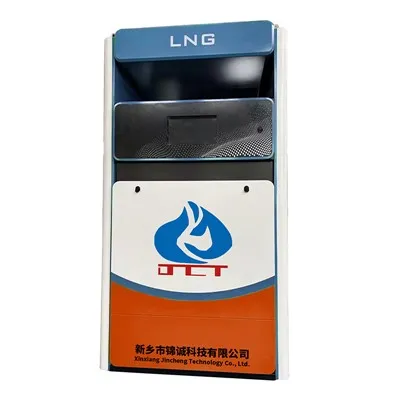
First, we have to start with the core function of the equipment, because LNG systems cover a huge range—from small 100-gallon per minute (GPM) mobile refueling skids to 1 million gallon per day (MGD) storage tanks for utility plants. The first set of specs revolves around cryogenic temperature tolerance, because that’s the defining factor of LNG. Unlike standard industrial equipment, which works down to maybe -40°C, LNG gear has to operate continuously at -162°C and handle transient conditions—like when a tank is being filled and the internal surface temperature drops rapidly, or when a valve switches from gas to liquid flow.
Material selection is make-or-break here. You can’t use standard carbon steel for cryogenic service; it becomes brittle at low temperatures, prone to cracking under pressure. The gold standard for most midstream and downstream LNG equipment is 304L or 316L austenitic stainless steel. The “L” suffix is critical—it stands for low carbon, which prevents intergranular corrosion when the material is welded. For extreme cold climate projects, like operations in Siberia or northern Canada, we move to 9% nickel steel, which has a higher fracture toughness at -196°C, and even aluminum alloys for lightweight, corrosion-resistant piping in mobile equipment. Wait, I always emphasize the difference between pressure boundary materials and structural materials, too. The outer shell of an LNG storage tank might be carbon steel for strength, but the inner tank that holds the LNG has to be the cryogenic grade steel. I can’t tell you how many times a client has shown up with a quote that uses cheaper carbon steel for the inner tank, and that’s a non-starter—those tanks have a 25+ year design life, and cutting material corners on temperature tolerance is a recipe for failure.
Next, pressure specifications. LNG is stored at very low pressures, usually between 0.2 bar and 1.5 bar for atmospheric storage tanks, but process equipment like compressors, pumps, and vaporizers has to handle much higher pressures. For example, the high-pressure LNG pumps used in marine bunkering or industrial feedstock applications operate at up to 250 bar. We always match pressure ratings to the client’s end use case. If a client is setting up a small rural refueling station for heavy-duty trucks, they don’t need a 250-bar pump; a 100-bar system is sufficient, which cuts down on upfront cost and long-term maintenance. But if they’re supplying LNG to a gas turbine power plant, the pressure has to be accurate within ±2% to avoid damaging the turbine blades. We also factor in design pressure vs. maximum allowable working pressure (MAWP). The design pressure is the minimum pressure the equipment is tested to during manufacturing, and MAWP is the highest pressure it can safely operate at during normal use—they have to be clearly marked on every component, and we never sell equipment where those numbers are adjusted to cut costs.
Then there’s flow rate and capacity, which is where a lot of new operators trip up. Flow rate isn’t just how much LNG a piece of gear can move per hour—it’s peak demand, contingency, and future expansion. For example, a client building a municipal LNG refueling center might start with a 50 GPM skid, but they plan to add 20 more trucks a year later. If we size the skid for only 50 GPM, they’ll have to tear out and replace the whole system in two years, which costs 3x more upfront. We always run a load profile analysis: that means calculating daily throughput, peak hours (like early morning when truck fleets refuel), and peak seasonal demand (winter for heating applications) to size pumps, vaporizers, and loading arms correctly. For storage tanks, capacity is measured in both gallons of LNG and equivalent gallons of vaporized natural gas, because clients often want to know how much energy their storage can hold, not just liquid volume. I recently worked with a client in Texas who thought a 50,000-gallon tank was enough, but when we ran their winter load profile, they needed a 100,000-gallon tank to avoid running out during cold snaps when heating demand spikes. That’s the kind of detail that makes a good supplier different from a parts seller—we don’t just sell you what you ask for, we tell you what you need before you make a costly mistake.
Vaporizer efficiency is another spec that’s often overlooked, especially for small-scale LNG operators. LNG has to be vaporized back into natural gas before it’s used, whether for heating, power, or industrial processes. Vaporizers come in three main types: ambient air vaporizers (AAV), submerged combustion vaporizers (SCV), and electric vaporizers. Each has its own technical specs, and efficiency is measured by how much heat is transferred to the LNG, with minimal energy input. For a remote location with access to ample natural airflow, an AAV makes sense, with a heat transfer rate of around 10-20% of the required load, depending on ambient temperature. In cold climates where ambient air is scarce, SCVs have a higher heat transfer rate (up to 100% load) but higher fuel consumption. We always match vaporizer type to the client’s location and cost structure. For example, a client in Alberta with a steady supply of wellhead gas might prefer an SCV even with higher operating costs, because they can use that wellhead gas as fuel instead of buying electricity for an electric vaporizer. We also specify the vaporization temperature tolerance: the vaporizer has to deliver natural gas at a consistent temperature between -4°C and 4°C to prevent equipment damage downstream; if it’s too cold, the gas can freeze valves and pipes in the distribution system, which leads to downtime.
Safety and compliance specs are non-negotiable—there’s no cutting corners here, because LNG is highly flammable, and leaks can cause catastrophic failures. Every piece of LNG equipment has to meet global standards like ASME Boiler and Pressure Vessel Code, PED (Pressure Equipment Directive) for the EU, and API 620 for LNG storage tanks. We also include integrated safety systems as part of the equipment package, not as an afterthought. That means pressure relief valves (PRVs) sized correctly to handle overpressure events, temperature sensors placed every 10 feet along piping to detect leaks, and emergency shutoff (ESD) valves that trigger automatically if a pressure or temperature threshold is breached. A lot of suppliers will sell you a basic tank and call it good, but we integrate ESD systems that work with the client’s existing control systems, and we test every component to 150% of its MAWP during factory testing. I remember a client in South America who bought a cheap LNG tank that wasn’t ASME-certified, and when a PRV failed during a pressure test, the tank ruptured. It cost them $2 million in damage, and they had to shut down operations for six months. We never cut corners on certification or safety testing—our equipment comes with full traceability, so every weld, every material batch, every test result is documented and available for auditors.
Control and automation specs are what make LNG systems run smoothly, especially for operators who don’t have a dedicated engineering team on site. Modern LNG equipment doesn’t just have on/off switches; it has programmable logic controllers (PLCs) that monitor pressure, temperature, flow rate, and tank level in real time. We spec PLCs that are compatible with SCADA systems, so clients can monitor their operations remotely from anywhere in the world. For mobile LNG refueling skids, we add a touchscreen HMI (human-machine interface) that walks the operator through loading procedures, reducing human error. We also include data logging, so clients can track throughput, maintenance needs, and energy usage over time—this helps with compliance reporting and predictive maintenance, which cuts downtime by up to 30%, according to industry data. A small rural refueling operator might not need the most advanced automation, so we offer scalable systems: basic PLCs for small skids, and fully integrated automation for large industrial or marine projects.
Another often-overlooked spec is maintenance access and durability. LNG equipment has a long design life, but components like seals, gaskets, and filters need to be replaced every 1-5 years. We design our equipment with easy access points for routine maintenance—valves have bolted bonnets that can be removed without cutting piping, filters are housed in quick-change cartridges that take 10 minutes to replace. We also spec components from reputable vendors with global supply chains, so if a client needs a replacement part in a remote location, they don’t have to wait 6 weeks for shipping. I always tell clients: a piece of LNG equipment that works great for the first year is useless if you can’t fix it without a 3-month lead time for parts. We test every component for vibration resistance too, especially for mobile equipment like truck-mounted refueling skids—vibration from road travel can loosen connections and cause leaks, so we test our skids for 100+ hours under simulated road conditions.
Wait, let’s not forget about cryogenic valve specs, because valves are one of the most failure-prone parts of LNG systems. Cryogenic valves have to have a stem seal that works at -162°C, standard valves will freeze up and won’t open or close. We spec ball valves or gate valves with PTFE or graphite seals, and we make sure the valve’s operating torque is compatible with the control system. For example, a valve that takes 500 ft-lbs of torque to open needs an actuator that can provide that force, otherwise the ESD system won’t trigger during an emergency. We also test valves for bubble-tight leakage, which is required for LNG service to prevent vapor leaks that can build up in confined spaces.
Let me wrap this up. Every project is different, so specs aren’t one-size-fits-all. The key is to align every technical specification with your end use case, location, budget, and long-term goals. You don’t want to oversize and pay for unused capacity, but you also don’t want to undersize and have to replace equipment in a couple years. You don’t want cheap material that fails in cold temperatures, but you also don’t need high-end 9% nickel steel for a small refueling skid in a mild climate. That’s why as an LNG equipment supplier, my job isn’t just to sell you a list of specs—it’s to walk through your project, ask the right questions, and tailor the equipment to your exact needs. If you’re planning an LNG project—whether it’s a small refueling station, a midstream storage tank, or an industrial feedstock system—reach out to our team to walk through your technical requirements, run a load profile, and get a quote that’s built to last. We work with clients across the globe, from remote mining sites in Australia to utility plants in Europe, and we know that the right technical specs are the foundation of a safe, reliable LNG operation.
Specialty Gases References:
API Standard 620, Design and Construction of Large, Welded, Low-Pressure Storage Tanks for Refrigerated Liquefied Gases, American Petroleum Institute
ASME Boiler and Pressure Vessel Code, Section VIII: Pressure Vessels, American Society of Mechanical Engineers
International Organization for Standardization (ISO) 21007, Cryogenic Vessels – LNG Storage and Transport Tanks, ISO
European Pressure Equipment Directive (PED) 2014/68/EU
Global LNG Industry Association (GLI) Technical Guidelines for Small-Scale LNG Facilities
Xinxiang Jincheng Technology Co., Ltd.
As one of the most professional LNG equipment manufacturers in China, we’re featured by quality products and good service. Please rest assured to buy customized LNG equipment made in China here from our factory. For pricelist, contact us now.
Address: Industrial Park, Fengquan District, Xinxiang City, Henan Province, China
E-mail: cncd05@cryocontainer.com
WebSite: https://www.jinchengspecialgas.com/
