Gravel biking has witnessed a remarkable surge in popularity over the past few years, captivating the hearts of cyclists who crave adventure beyond the beaten path. As a leading gravel bike frame supplier, I’ve had the privilege of witnessing firsthand the evolution of this exciting discipline and the diverse needs of riders. One of the most common questions I encounter is, "What is the difference between a full-suspension and hardtail gravel bike frame?" In this blog post, I’ll delve into the intricacies of these two frame types, exploring their advantages, disadvantages, and ideal use cases. Gravel Bike Frame

Understanding the Basics: Hardtail Gravel Bike Frames
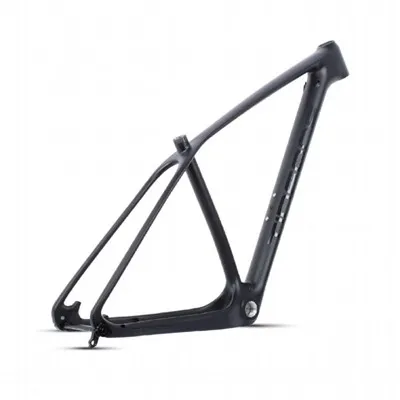
Let’s start by exploring hardtail gravel bike frames. As the name suggests, a hardtail frame features a rigid rear end, meaning it lacks a rear suspension system. Instead, it relies on a front suspension fork to absorb shocks and vibrations from rough terrain. Hardtail frames are typically lighter and more efficient than their full-suspension counterparts, making them a popular choice for riders who prioritize speed and agility.
One of the primary advantages of a hardtail gravel bike frame is its simplicity. With fewer moving parts, hardtails are generally easier to maintain and less prone to mechanical issues. This makes them an ideal option for riders who prefer to work on their bikes themselves or who are looking for a reliable and low-maintenance ride.
In addition to their simplicity, hardtail frames also offer excellent power transfer. Because there is no rear suspension to absorb energy, more of the rider’s pedaling power is transmitted directly to the wheels, resulting in faster acceleration and improved efficiency. This makes hardtails a great choice for riders who want to cover long distances quickly or who enjoy racing on gravel roads.
Another benefit of hardtail gravel bike frames is their versatility. They are well-suited for a wide range of terrain, from smooth gravel roads to moderately technical singletrack. Their rigid rear end provides excellent stability and control on descents, while the front suspension fork helps to absorb shocks and keep the wheels in contact with the ground. This makes hardtails a popular choice for adventure riders who want to explore a variety of landscapes on a single bike.
However, hardtail frames also have some limitations. The lack of rear suspension means that they can be less comfortable on rough or technical terrain, as the rider feels more of the bumps and vibrations. This can lead to fatigue and discomfort, especially on longer rides. Additionally, hardtails may not perform as well as full-suspension bikes in extremely technical or challenging conditions, where the rear suspension can provide additional traction and control.
Exploring the Benefits: Full-Suspension Gravel Bike Frames
Now, let’s turn our attention to full-suspension gravel bike frames. Unlike hardtails, full-suspension frames feature both a front suspension fork and a rear suspension system, which work together to absorb shocks and vibrations from the trail. This provides a smoother, more comfortable ride, especially on rough or technical terrain.
One of the primary advantages of a full-suspension gravel bike frame is its ability to improve traction and control. The rear suspension system helps to keep the wheels in contact with the ground, providing better grip and stability on loose or uneven surfaces. This allows riders to maintain speed and control through corners and over obstacles, making full-suspension bikes a great choice for technical singletrack and off-road adventures.
In addition to improving traction and control, full-suspension frames also offer a more comfortable ride. The rear suspension system helps to absorb shocks and vibrations, reducing the impact on the rider’s body and minimizing fatigue. This makes full-suspension bikes a popular choice for long-distance gravel rides or multi-day bikepacking trips, where comfort is key.
Another benefit of full-suspension gravel bike frames is their ability to handle a wider range of terrain. The rear suspension system provides additional clearance and flexibility, allowing riders to tackle more challenging obstacles and rough terrain with confidence. This makes full-suspension bikes a great choice for riders who want to push the limits of their gravel riding and explore new trails and landscapes.
However, full-suspension frames also have some drawbacks. They are typically heavier and more complex than hardtail frames, which can make them less efficient and more difficult to maintain. The additional weight of the rear suspension system can also slow down acceleration and reduce top speed, making full-suspension bikes less suitable for racing or fast-paced gravel riding.
Choosing the Right Frame for Your Needs
So, which type of gravel bike frame is right for you? The answer depends on a variety of factors, including your riding style, terrain preferences, and budget. Here are some key considerations to keep in mind when choosing between a full-suspension and hardtail gravel bike frame:
- Riding Style: If you prefer fast-paced, efficient riding on smooth gravel roads or paved surfaces, a hardtail frame may be the better choice. However, if you enjoy technical singletrack, off-road adventures, or long-distance rides on rough terrain, a full-suspension frame may be more suitable.
- Terrain Preferences: Consider the type of terrain you will be riding on most frequently. If you primarily ride on smooth gravel roads or paved surfaces, a hardtail frame should be sufficient. However, if you plan to tackle more challenging terrain, such as rocky singletrack or steep descents, a full-suspension frame may provide the additional traction and control you need.
- Budget: Full-suspension frames are typically more expensive than hardtail frames, due to the additional components and complexity of the rear suspension system. Consider your budget carefully when choosing a frame, and make sure you are getting the best value for your money.
- Comfort: If comfort is a top priority, a full-suspension frame may be the better choice. The rear suspension system helps to absorb shocks and vibrations, reducing the impact on your body and minimizing fatigue. However, if you are willing to sacrifice some comfort for speed and efficiency, a hardtail frame may be more suitable.
In conclusion, both full-suspension and hardtail gravel bike frames have their own unique advantages and disadvantages. The key is to choose the frame that best suits your riding style, terrain preferences, and budget. As a gravel bike frame supplier, I am committed to providing high-quality frames that meet the needs of riders of all levels. Whether you are a seasoned gravel racer or a beginner looking to explore the world of gravel biking, I have the perfect frame for you.
Carbon Bike Frames If you have any questions or would like to learn more about our gravel bike frames, please don’t hesitate to contact us. We would be happy to help you find the perfect frame for your needs and answer any questions you may have. Contact us today to start your gravel biking adventure!
References
- "Gravel Biking: A Beginner’s Guide." Cycling Weekly.
- "Full-Suspension vs. Hardtail: Which Gravel Bike is Right for You?" Singletrack Magazine.
- "The Ultimate Guide to Gravel Bikes." BikeRadar.
Huizhou Magic Carbon Co., Ltd.
As one of the most professional gravel bike frame manufacturers and suppliers in China, we have world-leading production equipment and strong manufacturing capabilities. Please feel free to buy customized gravel bike frame made in China here from our factory. For quotation, contact us now.
Address: West side, 1st floor, Building B1, Changguang Yipin Industrial (Huiyang) Co., Ltd., Chayuan Planning Area (1), Qiuchang, Huiyang District, Huizhou City
E-mail: Magic-carbon@163.com
WebSite: https://www.magic-carbon.com/
