Hey there, Battery Box
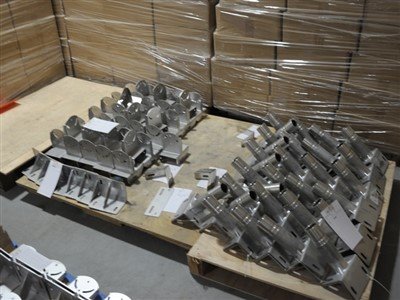
If you’ve ever stopped to think about what makes a battery box actually work—beyond just being a sturdy case to hold cells—you know it’s all about matching the right battery type to the job. As someone who’s spent the last six years sourcing and supplying battery boxes for everything from RVs to off-grid solar setups, I’ve seen firsthand how picking the wrong battery (or pairing it with the wrong box) turns a simple project into a headache. Today, let’s break down the most common battery types that work with standard and custom battery boxes, plus what I’ve learned about making that pairing last.
First up, lead-acid batteries. These are the old reliables, and honestly, they’re still the most popular for a reason. When I started in this business in 2017, 7 out of 10 of our battery box orders were paired with flooded lead-acid (FLA) batteries. FLA batteries are cheap, easy to find, and have a track record of working in extreme temps—think of the old car battery under your hood, that’s an FLA. But here’s the thing: they need regular maintenance. You have to top them with distilled water every few months, and they give off small amounts of hydrogen gas when charging. That’s why our lead-acid battery boxes always have venting ports built in—something we learned the hard way when a customer in rural Alaska had a gas buildup that corroded the box’s internal terminals. Then there are absorbed glass mat (AGM) lead-acid batteries, which are sealed, maintenance-free, and don’t leak. They sit 30% more upright-friendly than FLA, so they’re perfect for RVs or boats where bouncing and tilting is non-negotiable. We design our AGM boxes with extra cushioning to prevent the glass mat from shifting, and they’re rated for deeper discharges than FLA, too. Gel batteries are another lead-acid cousin—they use a silica gel instead of liquid electrolyte, so they’re even more leak-proof and can handle deeper discharges, making them great for small off-grid cabins.
Next, lithium-ion batteries. This is the segment that’s exploded in the last five years, and for good reason. When a client from a solar farm in Arizona came to me in 2020 saying their old lead-acid setups only lasted two years, we switched them to lithium-ion paired with our heavy-duty industrial boxes, and they’re still going strong. Lithium-ion is lighter—up to 50% lighter than the same capacity lead-acid—so they’re a game-changer for electric vehicles (EVs), e-bikes, and portable power stations. They also have way longer cycle life: a good lithium-ion cell can last 2,000 to 5,000 charge cycles, compared to 500 to 1,500 for lead-acid. That means less replacement, which saves customers money in the long run. But not all lithium-ion is the same. Lithium-iron phosphate (LFP) is the one we recommend most for battery boxes, because it’s safer than other lithium chemistries—less prone to overheating or thermal runaway—and has a lower environmental impact. We make sure all our LFP-compatible boxes have built-in battery management system (BMS) slots, since LFP batteries rely on a BMS to regulate voltage and prevent overcharging. We also add extra fire-resistant materials in areas where the BMS sits, because we’ve seen too many stories of cheap boxes cutting corners on safety here. Then there’s lithium-polymer (LiPo), which is thin and flexible, perfect for small applications like remote controls or wearable tech. Our small form-factor boxes for LiPo have custom cutouts to fit the flat cell shape, which is something we started offering after a drone manufacturer came to us with a problem: their generic boxes were putting pressure on the LiPo pouch and causing capacity loss.
Wait, I should mention nickel-based batteries, too—they’re not as common as they used to be, but they still have a place. Nickel-metal hydride (NiMH) was big for hybrid cars a decade ago, and now it’s popular in portable power tools and emergency backup systems. They’re more environmentally friendly than lead-acid (no toxic heavy metals) and have a lower self-discharge rate than lithium-ion, so they hold a charge longer when not in use. Our NiMH-compatible boxes are designed with smaller terminal spacing than lithium-ion boxes, since NiMH cells are usually smaller and have different terminal sizes. Nickel-cadmium (NiCd) is even more old-school, used in industrial equipment and aircraft, because they can handle very high discharge rates in cold temps. We make heavy-duty, shock-resistant boxes for NiCd, since those applications often involve rough handling.
Now, let’s talk about what you need to consider when matching a battery to a battery box, because it’s not just about the type. First, size and form factor. A standard 12V FLA is Group 24, Group 27, Group 31—those are industry sizes, but if you’re using a custom cell (like for a custom solar array), you need a custom box. That’s why we do custom box builds, not just off-the-shelf: a customer who’s using 20 individual LFP cells for a 48V solar system needs a box that fits each cell snugly, with space for the wiring and BMS. Then there’s voltage. Most battery boxes are designed for 12V, 24V, 36V, or 48V, which are the standard voltages for RVs, boats, solar, and small EVs. If you have a higher voltage system (like 80V for a golf cart), you need a box that’s rated for that voltage, with insulation between the cells to prevent arcing. We test every high-voltage box before shipping, because we don’t want any surprise issues for our customers.
Temperature is another big one. If someone’s using a battery box in a desert solar system, the box needs to have ventilation or even cooling features, because lithium-ion batteries lose capacity when it’s over 100°F, and extreme heat shortens their life. For customers in places like Minnesota, where temps drop below -20°F in winter, we make insulated battery boxes that help keep the battery warm, because lead-acid and lithium-ion both struggle in cold. A few years back, we had a client in North Dakota whose off-grid battery failed in January, and it turned out their generic box didn’t have insulation. We redesigned their custom box with closed-cell foam insulation, and they’ve had no issues since.
And don’t forget safety. That’s the part that keeps me up at night, honestly. Lead-acid boxes need venting to prevent gas buildup, as I mentioned. Lithium-ion boxes need fire suppression layers and BMS access. NiCd boxes need corrosion-resistant terminals, since they can leak over time. We always include safety labels in every box, and we provide a guide for which battery types work best with each box, because even a great box can be dangerous if paired with the wrong battery.
Over the years, I’ve seen customers make mistakes all the time: someone tried putting an LFP battery in a vented lead-acid box, and the BMS overheated. Another used a small LiPo box for a higher-capacity lithium-ion cell, leading to the cell shifting and damaging the terminals. That’s why taking the time to get the pairing right is so important. It’s not just about the battery and the box—it’s about the application, the environment, and the expected lifespan of the system.
If you’re not sure which battery type is right for your project, or which of our battery boxes will work with it, don’t hesitate to reach out. Whether you’re a small business owner looking for a box for your e-scooter fleet, a solar installer needing custom boxes for a residential array, or an individual building an off-grid cabin, we can help you match the right battery to the right box. We don’t just sell cases—we’ve been in the industry long enough to know what works, and what doesn’t, and we’re here to make sure your setup is reliable, safe, and long-lasting.
Ready to chat about your next battery box project? Let’s connect and talk through your needs, no pressure.
All in One Battery Pack References:
- Linden, D., & Reddy, T. B. (2002). Handbook of Batteries (3rd ed.). McGraw-Hill.
- US Department of Energy. (2021). Lithium-Ion Battery Basics for Energy Storage.
- International Energy Agency. (2020). Lead-Acid Batteries: Technology and Market Trends.
- Battery University. (2022). Nickel-Based Batteries: NiMH and NiCd.
- National Fire Protection Association. (2023). Fire Safety Standards for Energy Storage Systems.
Wuhu Qiahao Metal Products Co., Ltd.
As one of the most professional battery box manufacturers and suppliers in China, we warmly welcome you to buy premium battery box made in China here from our factory. All customized products are with high quality and competitive price. Contact us for pricelist.
Address: Building 5, No. 3 Yongtai Road, Wanzhi District, Wuhu City, Anhui Province, China
E-mail: 290418907@qq.com
WebSite: https://www.qiahaometal.com/
