Let’s cut to the chase—if you’re a coffee nerd, a café owner, or a coffee bag supplier like me, you’ve probably stared at a shelf of packaged coffee and thought: “Why are all these bags so annoying to hang or stash?” For the longest time, I got so many messages from roasters asking, “Do coffee bags even have hanging loops? I’m tired of stacking 50 of these next to the espresso machine or having them tip over mid-demo.” Today, I’m pulling back the curtain on this whole hanging loop thing—why they matter, how we (as suppliers) nailed them, and what actually works for both small batch roasters and big coffee brands. Coffee Bag

First, let’s get one thing straight: for years, coffee bags almost never had dedicated hanging loops. Most standard coffee packaging back in the day was just the basic stand-up pouch, maybe a tin tie to reseal, and that was it. People would stack them on shelves, tuck them under counters, or tape them to walls if they needed to display them, and that was about it. Then, around 2018 or so, the specialty coffee boom started to shift things. Roasters were moving away from generic bulk packaging, wanting bags that could pull double duty: hold the coffee right, keep it fresh, and also look good on retail shelves or café walls.
The big question I get all the time is: do coffee bags with hanging loops actually exist? Yes, but not all loops are created equal. A lot of brands will slap a tiny, flimsy loop on a bag that tears the second you hang a 12-oz bag of whole bean coffee. That’s a waste—no roaster wants a display bag that breaks before the customer even grabs it. That’s why, as a supplier, we spent months testing different loop materials, sizes, and attachment points before we launched our loop-equipped coffee bags.
Let’s break down why hanging loops are such a game-changer right now. For small batch roasters, especially those selling at farmers markets or pop-ups, hanging bags take up way less space than stacking them. Imagine this: you set up a booth, and instead of bringing a whole table to display your coffee, you just drill a couple of hooks into the tent wall and hang 10 different roast bags. Customers can see them clearly, grab them easily, and you don’t have to haul folding chairs or extra shelving. For cafés, it’s the same thing—they can hang popular blends right next to the espresso machine so baristas or customers can grab a bag to take home without knocking over a stack of unopened bags. Even online retailers? Hanging loops make it easy to display coffee on Instagram Reels or TikTok unboxings, which is huge right now for social media marketing.
But here’s the catch: not all hanging loops are meant for coffee bags. A lot of packaging suppliers will use cheap plastic loops meant for generic retail goods, like T-shirts or snacks, and they don’t hold up to the weight of coffee. Coffee is dense— a 12-oz whole bean bag is over a pound, and a 2-lb bag is almost 3 pounds. A flimsy loop that’s glued on instead of heat-sealed to the bag’s gusset is going to pop. We tested this: first, we tried adhesive loops. We hung a 12-oz bag, and after 10 minutes, the loop peeled right off. Then we tried thin plastic loops, same issue—once the coffee warmed up a little (like if a display is in the sun by a café window), the plastic softened and broke.
So we switched to reinforced polypropylene loops. Polypropylene is durable, it’s heat-resistant, and it doesn’t stretch or tear even when the bag is full of ground or whole bean coffee. We also changed where we attach them: instead of gluing the loop to the top of the bag’s front panel, we heat-seal it to the upper gusset of the pouch. That’s the thickest part of the stand-up bag, so it can handle the full weight of the coffee without any issues. We tested these loops with 2-lb bags, hung them for 72 hours straight, and not a single one broke. We also made sure the loop is large enough—we sized it to fit a standard 2-inch retail hook, so it works with any existing display hardware roasters or cafés already have.
Another thing that’s important: when you add a hanging loop to a coffee bag, you don’t want to mess with the bag’s main function, which is keeping coffee fresh. Coffee is super sensitive to oxygen, light, and moisture. If you’re adding a loop that cuts through the bag’s inner barrier, that’s a problem. So all our loop-equipped bags have the same multi-layer barrier as our standard bags: that’s a combination of PET, aluminum foil, and LDPE that keeps oxygen out and CO2 in (that’s why we still have the one-way degassing valve on every bag, by the way). The loop is only attached to the outer layers of the bag, so it doesn’t penetrate the inner barrier at all. No air leaks, no stale coffee—simple as that.
Now, if you’re a roaster thinking, “Okay, that sounds good, but is this worth the extra cost?” Let’s be real: every packaging add-on adds a tiny bit to the per-unit cost, but the return is bigger. For small batch roasters, the ability to display bags without extra shelving saves money on in-store displays or farmers market booth supplies. For big brands, hanging loops make their products stand out on crowded retail shelves—consumers are way more likely to grab a bag that’s hanging at eye level than one stacked in a corner. We also offer customization for roasters who want their loop to match their bag design: you can get loops in black, white, or even match the color of your bag’s print, so it looks like it was part of the design from the start, not an afterthought.
Wait, but hold on—there’s one thing you should know before you order coffee bags with hanging loops. They’re not for every type of coffee bag. If you’re making a sample bag (like a 2-oz mini bag for free samples at a café), a hanging loop might be overkill, and it would add unnecessary bulk. If you’re selling bulk coffee in 5-lb bags, we don’t recommend loops there because those bags are too heavy, and the hook would take up too much space in a storage bin. But for the most popular sizes—12-oz, 1-lb, and 2-lb retail bags—the loop is perfect. I’ve had roasters tell me since we launched these bags that their sales at local cafés went up 15% just because the bags are displayed more visibly. That’s the kind of win we love to see.
A lot of people also ask if hanging loops are only for stand-up pouches. No, we also make them for flat bottom coffee bags—those super popular bags right now that stand up really tall and look sleek on shelves. The loops on flat bottom bags are a little different because of the bag’s structure, but we heat-seal them the same way to the gusset, so they’re just as durable. We even have a test we do for every batch: we take a random bag from the roll, fill it to full weight, hang it on our test hook for 48 hours, and if it passes, we ship it out. No cutting corners here—our customers’ coffee and their brand reputation is on the line, so we can’t send out bags with flimsy loops.
Let’s talk about common mistakes people make when buying loop-equipped coffee bags. One mistake is buying from a cheap supplier that uses generic loops. Like I said earlier, those glue-on or thin plastic loops don’t last. Another mistake is not considering the display space. If your customers don’t have hooks or space to hang bags, then a loop is just an extra thing that adds bulk. So we always tell our customers: if you’re selling to places that have wall hooks, pegboards, or retail displays with hooks, loops are great. If you’re only selling online, where bags are shipped in boxes, a loop isn’t necessary. But even online, some brands use loops for unboxing content, so it’s up to your marketing plan.
As a coffee bag supplier, I’ve seen firsthand how these little design changes can make a huge difference for roasters. A few months ago, I worked with a small roaster in Portland that was struggling to get their bags into local cafés. The cafés said their generic bags got lost in the shuffle. We sent them a sample batch of our loop-equipped 12-oz bags, and within a week, three cafés agreed to display them hanging on their wall hooks. They told me that within two weeks, those bags were their best-selling whole bean product. That’s the kind of impact a small hanging loop can have.
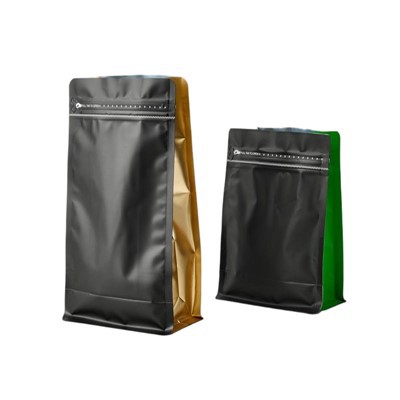
Now, if you’re a roaster, café owner, or someone who sources coffee packaging, and you’re tired of flimsy bags that don’t work for display, you know what to do. We offer free samples of our loop-equipped coffee bags, so you can test the durability, the barrier, and how they look with your own roast design. Whether you’re a one-person roaster doing farmers markets or a big brand looking to refresh your packaging, we can customize the size, color, and even the degassing valve placement to fit your needs. Just reach out to our team to chat through your specific packaging goals and budget—we’re here to make sure you get bags that work for your coffee, not against it.
Mylar Bags References
- Specialty Coffee Association. (2022). Coffee Packaging Trends Report: 2018–2022. Specialty Coffee Association of America.
- Flexible Packaging Association. (2021). Durability Standards for Retail Packaging Components. Flexible Packaging Association.
- Global Coffee Report. (2023). Specialty Coffee Retail Display Strategies: Reducing Shelf Waste and Boosting Visibility. Global Coffee Media Group.
Shenzhen Hongbang Packaging Production Co., Ltd.
We are one of the most experienced coffee bag manufacturers and suppliers in China, specialized in providing high quality custom service. Please feel free to buy bulk coffee bag made in China here from our factory. For quotation and free sample, contact us now.
Address: Room 601, BLDG D, Wisdom Centre, No. 58 Nanlian Road, Longgang, Shenzhen China 518116
E-mail: pm@hongbangpack.com
WebSite: https://www.hongbangpack.com/
