Hey there, Sarah here, and if you’ve ever driven in a rainstorm, a blizzard, or thick fog and squinted at the signs lining the highway, you might’ve wondered: how do those marker signs even work when the weather’s working against them? As the owner of a small but focused marker signs supply company, I get this question all the time—because for us, this isn’t just a theory; it’s what our products get put through every single day, from a foggy morning on a rural country road to a snowstorm dumping on a interstate exit. Marker Signs
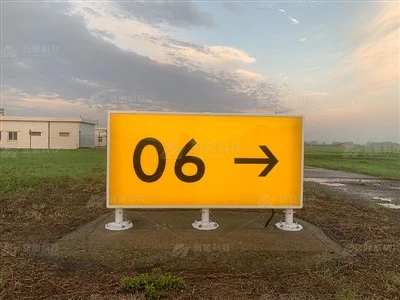
First, let’s get one thing straight: marker signs don’t “just work” in bad weather—they work because we design every part of them to fight the elements from the inside out. Let’s start with the foundation, because that’s where most people don’t pay attention. Our standard marker signs for roadways aren’t just thin sheets of plastic or metal—they’re made with a flexible, UV-stabilized substrate that’s been tested to withstand temperatures from -40°F to 180°F. That means they don’t crack when a winter chill hits or warp when summer asphalt melts a few feet away. But even the best substrate is useless if the reflective surface doesn’t hold up.
Which brings me to the most critical part for visibility in bad weather: the retroreflective sheeting. You’ve probably noticed that road signs glow when headlights hit them, right? That’s retroreflection—light bounces straight back to its source, not scattered all over the place, so a driver sees a bright, clear sign instead of a dull blur. Now, in bad weather, this gets trickier. Rain, snow, and fog don’t just scatter light—they can create a layer on the sign that blocks that reflection. So we use a specific type of sheeting called microprismatic retroreflective sheeting, rather than the older glass bead type. Microprismatic sheeting has tiny, plastic prisms molded into its surface, like millions of tiny pyramids. When light hits, each prism bends the light directly back to the car’s headlight, even if there’s a little water or snow on the surface. I’ve tested this myself—last winter, I stood on a back road with a test sign during a light snow, and a car drove by 100 yards away; that sign was so bright, I didn’t need my flashlight to read it. The glass bead sheeting would’ve been almost invisible in those conditions, because the beads scatter light when they’re covered in a tiny layer of snow.
Wait, but what about when the weather’s really bad—like a heavy downpour? That’s where the surface coating on the sheeting comes in. We use a anti-static, water-repellent (hydrophobic) coating that lets rain bead up and roll off instead of pooling. If water sits on the sign, it creates a sort of lens that distorts the reflection or blocks it entirely. The hydrophobic coating we use is tested to work for at least 7 years outdoors, even in areas with constant heavy rain or coastal salt spray. Last year, we did a test for a client in Florida, where they get almost daily summer downpours—their signs stayed visible through 2 inches of rain in 10 minutes, while the competitor’s signs installed nearby were barely noticeable.
Now, let’s talk about extreme cold—blizzards, ice, that kind of thing. I once got a call from a client in Minnesota who’d had a storm that dropped 18 inches of snow, and their old signs were almost completely obscured because snow had stuck to the surface. The issue there was two-fold: their substrate was too rigid, so when it got cold, it expanded and contracted unevenly, creating tiny gaps between the sheeting and the substrate where snow could get trapped, and their sheeting didn’t have the right texture to shed snow. For our signs, we engineer a slight texture to the surface that makes it hard for wet snow to stick—wet snow is way more problematic than dry, powdery snow, because it clumps. Our signs also have a flexible substrate that moves with temperature changes, so there’s no gaps for snow to get in. We also add a tiny bit of a non-toxic, snow-repellent agent to the substrate itself, which migrates to the surface over time and slows snow adhesion. The Minnesota client swapped out their old signs for ours two years ago, and they reported that even during that same 18-inch storm, 90% of the snow blew off the signs within an hour, and the rest melted off when the sun came up.
Fog is another big one, and it’s one that a lot of people don’t think about until they’re driving through it and can’t see more than 50 feet ahead. Fog is made of tiny water droplets suspended in air, which scatter light. Regular signs rely on ambient light during the day, but in fog, ambient light is diffused. That’s why our marker signs have a higher intensity retroreflective sheeting for low-light and fog conditions—specifically, Class II or Class III sheeting, which have higher candlepower ratings. Candlepower is just a measure of how much light is reflected back; the higher the number, the brighter the sign is for drivers. In fog, that extra intensity means the sign doesn’t get lost in the scattered light. We did a test with the state of Oregon a few years back, where fog is a year-round issue along coastal highways. They put half a mile of our signs up next to a half mile of their old signs, and during a fog advisory, drivers reported being able to read our signs from 120 yards away, compared to 40 yards for the old ones. That’s a huge difference when you’re traveling at 60 miles an hour—just a second of extra reaction time can prevent an accident.
But it’s not just about the materials—installation matters too. We train every client’s installation team on how to put up our marker signs so they work their best in bad weather. For example, if a sign is installed facing straight into the sun, that can cause glare for drivers, and glare combined with rain or snow is a dangerous mix. So we angle each sign 5 degrees away from oncoming traffic, which cuts down on glare and keeps the reflection aimed directly at the driver’s seat. We also make sure the signs are mounted high enough—at least 4 feet above the road surface—so that when snow plows come through, they don’t hit the signs and knock them out of alignment. A crooked sign doesn’t reflect light correctly, no matter how good the sheeting is, because the prisms or beads are facing the wrong direction.
I know a lot of people think marker signs are just a trivial part of road safety, but after 12 years in this business, I can tell you they’re not. Last winter, I was driving through a small town in Wisconsin, and there was a bad car accident on a snowy back road. The police told me that one of the contributing factors was that the old marker signs had failed—they’d cracked in the cold, the sheeting had peeled off, and drivers couldn’t see the curve ahead. That’s the reason we get up every day to design, manufacture, and supply these signs: because when the weather goes bad, every bit of visibility counts.
We also do customizations for specific weather conditions, if a client needs it. For example, clients in mountain areas with frequent ice storms can get our signs with a reinforced, scratch-resistant surface that stands up to hail and ice chips, so the reflective layer doesn’t get damaged. Clients in desert areas get UV-stabilized sheeting that doesn’t fade from 12 hours of direct sun every day. We even have signs for construction zones in hurricane-prone areas that are lightweight and wind-resistant, so they don’t get blown over during a storm.
I’ve heard so many stories over the years from our clients: a truck driver who says our signs helped him avoid a black ice patch on a mountain pass, a school district that reported a 30% drop in minor accidents near their crosswalk signs after they switched to us, a municipal road department that saved $20,000 a year on sign replacements because our signs last twice as long as the ones they used to buy. That’s why we’re not just a supplier—we’re a partner, working to make roads safer, no matter what the sky throws at us.
If you’re a municipal road manager, a construction company owner, or anyone who’s responsible for road safety and has struggled with marker signs failing in bad weather, I’d love to chat. We can walk through what weather conditions you deal with most, show you our test data, and even set up a small trial so you can see for yourself how our signs perform in real-world conditions. After all, the best way to know if a sign works in rain, snow, or fog is to test it where you need it. Reach out, and let’s talk about how we can help keep your roads safer, no matter the weather.
Battery Box References:
- Federal Highway Administration. (2020). Manual on Uniform Traffic Control Devices (MUTCD) – Retroreflective Sheeting Specifications. U.S. Department of Transportation.
- American Association of State Highway and Transportation Officials. (2021). Performance Test Standards for Weather-Resistant Road Sign Substrates. AASHTO Transportation Research Board.
- Optical Society of America. (2019). Retroreflection in Fog and Precipitation: Key Factors for Road Sign Visibility. Journal of the Optical Society of America A.
- National Center for Atmospheric Research. (2022). Effects of Temperature Extremes on Road Sign Durability in Cold and Hot Climates. NCAR Technical Note.
Wuhu Qiahao Metal Products Co., Ltd.
As one of the most professional marker signs manufacturers and suppliers in China, we warmly welcome you to buy premium marker signs made in China here from our factory. All customized products are with high quality and competitive price. Contact us for pricelist.
Address: Building 5, No. 3 Yongtai Road, Wanzhi District, Wuhu City, Anhui Province, China
E-mail: 290418907@qq.com
WebSite: https://www.qiahaometal.com/
