If you’ve ever stood in a warehouse at 2 a.m., watching pallets of inventory zip quietly between the loading dock and upper storage levels without a single bump, jam, or missed stop, chances are you’ve seen a vertical conveyor system at work. These systems don’t just move goods up and down—they keep entire supply chains running smoothly, even when demands for speed, accuracy, and safety are at their highest. As someone who’s spent the last decade designing and installing vertical conveyors for warehouses, distribution centers, and e-commerce fulfillment hubs, I’ll tell you: none of that reliability happens by accident. Every smooth, efficient movement is tied to a network of sensors working in the background, catching small issues before they turn into costly shutdowns, and making sure every load ends up exactly where it’s supposed to. Vertical Conveyor Systems
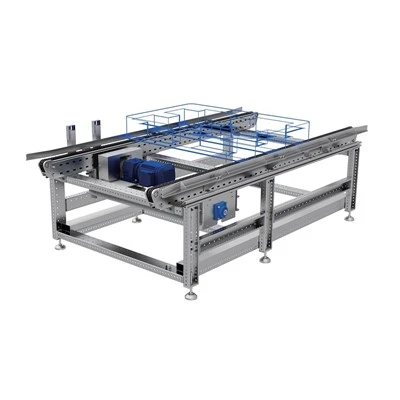
Today, I want to pull back the curtain on the sensors that make vertical conveyors tick. I’ve sat through hundreds of client meetings where operators ask why their system jammed mid-shift, or why a pallet took an extra 10 seconds to reach its level. More often than not, the answer boils down to a sensor that was undercalibrated, or a type of sensor that wasn’t installed for that specific load weight. Let’s break down the most common, critical sensors used in modern vertical conveyor systems, how they work, and why choosing the right ones matters for your operation.
First on the list: inductive proximity sensors. These are the workhorses of our systems, and they do the heavy lifting when it comes to movement and positioning. If you’ve ever watched a vertical conveyor carriage glide up a steel guide rail and stop exactly at a loading dock level, that’s an inductive proximity sensor triggering the stop. Unlike older sensors that require physical contact to register a part, inductive sensors use an electromagnetic field to detect the presence of metal from a small distance—no touching, no wear, no need to replace parts every six months. For vertical conveyors, which move loads between levels, precision positioning is everything. A carriage that stops a few inches off target can mean a forklift driver has to swing extra wide to load the pallet, slowing down every shift. That’s why we place inductive proximity sensors at every level, on both the up and down run of the conveyor. They don’t just detect the carriage itself, either; some are calibrated to detect guide rail brackets or small metal tags on the carriage frame, giving us even tighter positioning accuracy, often within half an inch. We recently installed a system for a medical supply distributor that handles temperature-sensitive vaccines, and they couldn’t tolerate off-target stops that would delay pallet transfers. By upgrading from standard inductive sensors to high-precision variants, we cut their level transfer errors by 98% in the first month of operation.
Next, we have photoelectric sensors, which are all about load detection and gap management. Vertical conveyors can handle everything from small, 50-pound boxes to 5,000-pound pallets, and you can’t have a box or pallet getting stuck between levels because the system didn’t know it was there. Photoelectric sensors work by emitting a beam of light (usually infrared, which is invisible and doesn’t interfere with warehouse lighting) across the conveyor path. If an object breaks that beam, the sensor sends a signal to the control system, which tells the conveyor to slow down, stop, or adjust its path. For vertical systems, we install two types of photoelectric sensors: through-beam and retro-reflective. Through-beam sensors have a separate emitter and receiver on opposite sides of the conveyor, so they’re perfect for detecting large, opaque loads like wooden pallets or metal containers. Retro-reflective sensors have both emitter and receiver in one unit, paired with a small mirror across the conveyor, which makes them ideal for detecting smaller items like plastic totes or corrugated boxes. The biggest mistake we see clients make with photoelectric sensors is placing them too high or too low, or not adjusting the beam width for the loads they handle. A client in the consumer goods space once had repeated jams because their retro-reflective sensor’s beam was set too wide, so it missed a small, 12-inch box wedged between two larger pallets. We recalibrated the beam, and the jams stopped within a week. Photoelectric sensors also play a key role in gap management, which is how vertical conveyors maximize throughput. If the system detects there’s a gap between two loads, it can move the next load up faster, rather than waiting for the previous one to clear the level, cutting down on empty travel time.
Then there are load cells and weight sensors, which are non-negotiable for safety and compliance. Vertical conveyors aren’t just built to hold a single maximum load weight—they have tolerance limits that, when exceeded, can cause the carriage to tilt, the guide rails to warp, or even a catastrophic failure. Load cells are mounted on the carriage itself, or on the entry and exit points of the conveyor, and they measure the exact weight of every load as it moves. This data is sent to the control system, which will automatically slow down or stop the conveyor if a load is too heavy. For industries like automotive parts manufacturing, where pallets of engine components can easily hit 4,000 pounds, load cells aren’t just a convenience—they’re a legal requirement to meet OSHA safety standards. We recently had a client try to bypass their load cell to move an extra-heavy pallet of steel beams, and within 10 minutes, the carriage’s side rollers started grinding against the guide rail, costing them 4 hours of downtime to replace the rollers. Since we retrofitted their system with redundant load cells, that kind of mistake hasn’t happened again. Load cells also help with inventory tracking, by logging the weight of each load as it moves between levels, which is a huge bonus for clients that use their vertical conveyors as part of their warehouse management system (WMS).
Another sensor that’s become more common in the last five years is ultrasonic distance sensors. These are the unsung heroes of anti-collision and carriage monitoring. Unlike photoelectric sensors, which are affected by dust, smoke, or uneven surfaces, ultrasonic sensors use sound waves (at a frequency too high for humans to hear) to measure distance. For vertical conveyors, we install ultrasonic sensors on the carriage to monitor the distance between the carriage and the guide rails, the floor, and the ceiling, to make sure it never gets too close and collides with the structure. They also work in environments where photoelectric sensors would fail, like cold storage warehouses, where low temperatures can fog or ice up optical lenses. We’ve installed ultrasonic sensors in freezers operating at -20°F, where standard sensors would freeze up within a month, and they’ve worked flawlessly for years. Ultrasonic sensors also help with emergency stop protocols. If the sensor detects the carriage is moving faster than it should, or is off-center from the guide path, it can trigger an immediate stop, preventing damage to the conveyor and any loads on board. One of our clients in the frozen food space had a carriage drift 6 inches off center on a cold morning, and their ultrasonic sensor caught it before it could hit the level door, saving them $12,000 in potential product damage and repairs.
We can’t talk about sensors for vertical conveyors without mentioning safety edge sensors, which are the first line of defense for workers who are loading or unloading the conveyor. Safety edges are flexible, rubber strips mounted along the sides of the conveyor carriage and the level entries/exits. If a worker’s hand, arm, or piece of material gets trapped between the edge and the stationary structure, the safety edge compresses, triggering an immediate emergency stop, before any injury or damage can occur. These are required by nearly all global safety standards, but we always go a step further: we install dual safety edges, so even if one gets damaged from repeated use, the second one still works. A client in the e-commerce space had a part-time worker who accidentally leaned into the conveyor while loading a stack of boxes, and the safety edge triggered a stop before they could get hurt. That’s the kind of small, life-saving moment you don’t get to see every day, but it’s why we prioritize safety sensors as much as performance sensors.
Now, I want to be clear: sensors don’t work in a vacuum. A top-of-the-line inductive sensor is useless if it’s paired with a control system that doesn’t interpret its data correctly, or if it’s not calibrated for the specific environment your conveyor operates in. That’s why, as a vertical conveyor systems supplier, we don’t just sell you a conveyor and a list of sensors to choose from. We start by auditing your operation: how many loads per hour do you need to move? What’s the average and maximum weight of your loads? Are you operating in a cold storage, dusty manufacturing, or standard warehouse environment? How many workers will be loading and unloading the conveyor, and what are their safety protocols? Once we have that data, we select the right mix of sensors, calibrate them to your exact needs, and provide ongoing maintenance and support to make sure they keep working.
I’ve seen too many companies cut corners on sensor quality to save a few dollars, only to end up with frequent jams, safety incidents, and costly downtime. A client of mine in the retail distribution space once opted for cheaper, uncalibrated photoelectric sensors on their new vertical conveyor, and they ended up with an average of 15 jams per day in the first three months. By the time they called us, they’d already lost $50,000 in missed orders, and replacing the sensors with calibrated, environment-appropriate ones cost a fraction of what they’d lost. That’s why investing in the right sensors isn’t just a technical detail—it’s a business decision that impacts your bottom line, your safety record, and your ability to meet customer demands.
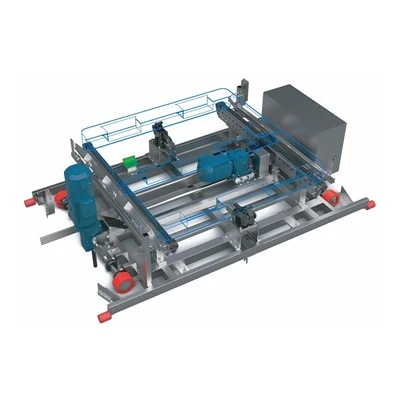
If you’re in the market for a new vertical conveyor system, or you’re looking to upgrade your existing system’s sensors to reduce downtime and improve safety, I’m here to help. Every operation is unique, and every sensor setup should be tailored to your specific needs. I’ve spent the last 10 years solving problems with vertical conveyors, and I’d be happy to walk through your operation, answer your questions, and help you find the right solution. Don’t hesitate to reach out for a consultation.
Vertical Conveyor Systems References
- Industrial Conveyor Association. (2022). Sensor Technology in Material Handling Conveyors: Best Practices and Safety Standards.
- Beckhoff Automation. (2021). Sensors for Vertical Conveyor Positioning and Load Monitoring.
- OSHA. (2020). Safety Standards for Material Handling Equipment in Warehouses and Distribution Centers.
- Sick AG. (2023). Non-Contact Sensor Solutions for Harsh Industrial Environments.
Anhui Rayo Automation Technology Co., Ltd.
With abundant experience, we are one of the most professional vertical conveyor systems manufacturers and suppliers in China. Please feel free to wholesale advanced vertical conveyor systems in stock here and get quotation from our factory. All customized products are with high quality and competitive price.
Address: No.28 Yongzhen Road, Wuhu Area, China (Anhui) Pilot Free Trade Zone
E-mail: ahry@ahrayo.com
WebSite: https://www.rayosmart.com/
