When I first started my smart valve controller supply business, the question I got most often wasn’t about features or compatibility—it was straight-up: “What’s a smart valve controller cost?” Early on, I’d fumble through generic cost breakdowns, but after three years in the industrial automation space, I’ve learned the answer isn’t one number. It’s tied to use case, required functionality, and the long-term value that makes a smart controller worth more than its upfront price. Let me break this down the way I explain it to my regular clients, from small water treatment shops to large chemical plants. Smart Valve Controller
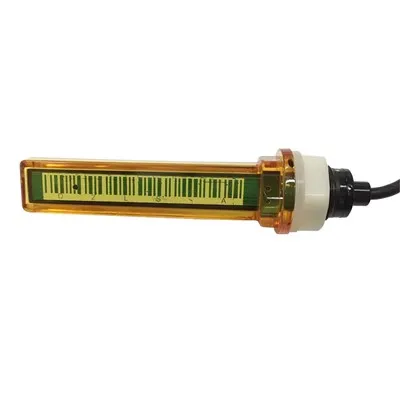
First, let’s set a baseline: upfront hardware cost. Most small to mid-sized industrial clients looking for a basic smart controller (one that automates valve operation, has remote access via Bluetooth, and basic diagnostic alerts) can expect to pay $150 to $350 per unit. These models don’t require complex integration, work with standard gate, ball, or globe valves, and are built for light to medium-duty applications like small farm irrigation systems, municipal water booster stations, or food processing line valves.
But here’s the catch—this is only the hardware. The hidden costs that trip up first-time buyers are often more substantial. For example, if you need wireless cellular connectivity (not just Bluetooth, which only works within 30 feet), add another $50 to $125 for a modem module, plus $10 to $30 monthly for a low-power IoT data plan. For clients in remote locations (oil fields, rural mining sites, off-grid wastewater plants), satellite connectivity can run even higher, at $150 to $400 upfront for the module and $50 to $100 monthly for service.
Then there’s functionality that scales with your operation. A mid-tier industrial controller, designed for medium-duty use in chemical processing, HVAC, or large municipal water networks, ranges from $350 to $800 per unit. These come with advanced diagnostics (leak detection, valve wear monitoring, and performance trend tracking), support for Modbus or Profibus industrial communication protocols, and the ability to integrate with existing SCADA systems. For example, a food and beverage plant might choose this tier to comply with FDA sanitation standards, requiring real-time temperature and pressure data tied to valve operation. I recently sold a batch of these to a craft brewery that needed to automate batch transfer valves—they saved 20 hours a week in manual checks, which more than offset the cost difference within six months.
The high-end models, built for heavy-duty industrial applications like offshore drilling, power generation, or large-scale refineries, are a different story. These start at $800 and can go up to $2,500 per unit, with customizations that justify the price. They include explosion-proof enclosures (required for hazardous environments), high-temperature and corrosion-resistant casings for extreme conditions, advanced predictive maintenance algorithms, and redundant power supplies to avoid downtime. A refinery I work with needed these for their pipeline valves—when a valve’s actuator started showing abnormal vibration, the controller alerted the maintenance team 72 hours before a potential failure, preventing an estimated $100,000 in lost production and repair costs.
Beyond unit cost, there are installation and integration expenses that are easy to overlook. For a basic Bluetooth-enabled model, a certified technician can install and configure one unit in 1 to 2 hours, at $75 to $150 per hour, adding up to $75 to $300 for a small job. But for complex SCADA integration, especially across a network of 50+ valves, installation can take 8 to 16 hours per day, with additional engineering fees for custom integration code—sometimes $1,000 to $5,000 total. I always encourage clients to ask about pre-installation site assessments, because many issues (like power access, signal strength, or valve size mismatch) can inflate costs if not addressed upfront.
Another often-overlooked component is support and maintenance. Basic controllers come with a 1-year warranty and free software updates, but extended support plans add 10% to 20% of the unit’s annual cost. A mid-tier plan for 100 units, for example, might run $5,000 to $15,000 per year, including 24/7 technical support, annual diagnostic calibrations, and replacement parts for faulty components. For clients in regulated industries, this support isn’t just a convenience—it’s a requirement to maintain compliance with OSHA, EPA, or FDA standards.
Now, let’s talk about total cost of ownership (TCO) over 5 to 10 years, because this is where smart valve controllers shine compared to traditional manual or basic electronic valves. A standard manual valve might cost $50 to $100 upfront, but you’re looking at $200 to $500 per year in labor for manual checks, repairs, and downtime. A basic smart controller, even at $250 upfront, might cut labor costs by 70%—saving $10,000 or more annually for a plant with 50 valves. For a mid-tier model, the TCO advantage is even starker: predictive maintenance alerts reduce unplanned downtime by up to 85%, according to a 2023 study in Industrial Automation Magazine. I’ve had clients who told me their smart controllers paid for themselves in under a year, purely from avoiding the cost of a single unplanned shutdown.
But there are factors that can push costs higher, even for the same model. Customization is a big one—if you need a controller that works with non-standard valve sizes, or integrates with a proprietary internal system, we can adjust hardware and software for an additional 15% to 30% of the base unit cost. For example, a pharmaceutical client recently needed a controller that would sync with their batch manufacturing software to adjust valve timing for sterile fluid transfers—we built a custom API for $3,000, which was a small investment compared to the cost of non-compliant product batches.
On the flip side, there are ways to lower costs without sacrificing quality. Buying in bulk usually gets you a 5% to 15% discount per unit—for a client ordering 50+ mid-tier controllers, that’s a $1,750 to $12,000 savings. We also offer refurbishment models for clients who don’t need brand-new units, with a 2-year warranty and 30% to 40% lower cost than new. These are controllers that were returned after a project, tested and repaired to meet our performance standards—they work just as well for non-critical applications like small retail HVAC systems or office building water valves.
I always tell prospective clients: don’t shop for the cheapest unit. A $100 controller might seem like a steal, but if it only has a 1-year lifespan and no diagnostic capabilities, you’ll end up replacing it twice every 5 years, plus dealing with the cost of downtime when it fails. Last year, a small construction company came to me with a problem—they’d bought 20 cheap controllers for their site’s temporary water system, and 12 had failed within 6 months, leaving their site without water for 3 days. The replacement cost plus lost productivity ended up being 10 times what they would have paid for reliable mid-tier units from the start.
At the end of the day, the cost of a smart valve controller is a balance between immediate upfront expenses and long-term value. It’s not just about what you pay today—it’s about what you save in labor, downtime, and compliance over the life of the unit. If you’re a facility manager, plant operator, or engineer wondering what fits your specific application, my team and I can work with you to break down costs, compare options, and find a solution that meets your needs without overspending.
If you’re ready to discuss your requirements, need a custom quote, or want to walk through how a smart valve controller would impact your TCO, reach out to our team to connect for procurement discussions. We’re here to answer your questions and tailor a solution that works for you.
Optical Level Sensor References
Industrial Automation Magazine. (2023). Predictive Maintenance ROI in Industrial Fluid Control Systems.
National Water Research Institute. (2022). Smart Valve Technology for Municipal Water Distribution Efficiency.
Occupational Safety and Health Administration. (2021). Process Safety Management Guidelines for Valve Systems.
Shenzhen Fineherc Technology Co., Ltd.
Address: 5th Floor, Building D, No. 39, Keji East Road, Torch Development Zone, Zhongshan City,China
E-mail: fineherc@hotmail.com
WebSite: https://www.fineherc.com/
