Hey guys, let’s cut to the chase because I know when you’re wondering about CNC machining for mass production, you’re not here for textbook fluff. I’m the owner of a CNC machining shop—we’ve been running 24/7 jobs for folks making everything from medical device parts to drone components for almost a decade—and I get the questions. You probably heard CNC is for prototyping, or that injection molding is the only way to crank out 100k parts fast. But here’s the thing: that old narrative doesn’t hold up anymore. CNC machining? It’s way more flexible than people give it credit for, and depending on what you’re making, it’s absolutely perfect for mass production. Let me walk you through why that’s not just a sales pitch, but the real stuff we see every single day at our shop. CNC Machining
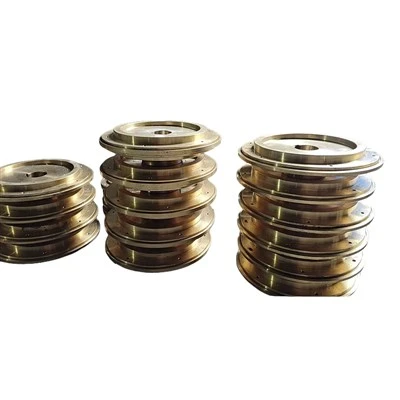
First, let’s nail down what “mass production” actually means these days. It’s not just churning out a million identical plastic toy parts in a month. For a lot of industries—like aerospace, medical, or defense—you might need 5,000 parts that have to be within a hair’s breadth of perfect. One tiny defect in a hip replacement part? That’s a lawsuit, or worse. One off-spec turbine blade? Catastrophic. That’s where CNC machining shines. Unlike injection molding, which is great for high-volume simple parts but has upfront tooling costs that can run six figures, CNC uses the same digital file for every single part. No need to make a mold, which takes weeks and costs a ton, especially if you have to make tweaks. For small to mid-sized runs—say 1,000 to 100,000 parts—CNC avoids that huge upfront cost. A lot of our clients come to us after trying to use injection molding for a 20,000-part run and getting hit with a $80k mold bill they can’t recoup. We get them set up in days, not months, and the per-part cost drops as we optimize our workflow. It’s like the difference between renting a car (CNC) vs. buying a fleet (injection molding)—makes sense when your volume isn’t big enough to justify the buy.
Now, let’s talk about precision. CNC is computer-controlled, right? So once you program the machine, it’s not relying on a guy with a mill cutting by hand, which can vary part to part. Modern CNC mills and lathes have tolerances down to like 0.001mm—way tighter than most industries even need. We recently did a run for a drone company: 15,000 aluminum motor mounts, each needing holes drilled perfectly aligned so the motor didn’t vibrate. If we’d done that by hand, there’d be parts that were off by a hair, leading to failed tests. With CNC, every part was identical. Even as we ran 24/7 over two weeks, the consistency never dropped. That’s non-negotiable for mass production, and it’s why so many aerospace and medical companies stick with CNC even when their volume hits 50k+ parts. They can’t risk mold wear or tooling imperfections that throw off thousands of parts.
But wait—what about material limitations? A lot of people think CNC only works with metal, and that if you need plastic, injection molding is the only way. Nah, we machine all kinds of stuff: PEEK for medical implants, carbon fiber for drone frames, even soft plastics like Delrin. And for parts where you need a mix of materials or custom finishes—like a part that needs a polished surface in some spots and a textured grip in others—CNC can do that in one setup. No extra steps, no sending parts to a different shop for finishing, which saves time and money. For mass production, lead time is everything. If you can get parts out the door two weeks faster than the competition, that’s a win. We once had a client with a rush order for 30,000 PEEK parts for a new dental tool—they’d messed up their injection molding lead time and needed parts in four weeks. We adjusted our production schedule, ran two shifts, and got them done on time with zero defects. They haven’t gone anywhere since.
Of course, it’s not all sunshine and parts that fit perfect. CNC isn’t for every mass production job. If you need 1 million identical plastic water bottles a month, CNC isn’t going to touch that—way too slow, way too expensive per part. Injection molding is king there, no question. But here’s the key: most people’s definition of mass production has shifted. A lot of startups or small businesses think “mass production” is 100k parts, but for them, that’s a huge order, not a million. And even big companies in niche industries are realizing that CNC’s flexibility beats tooling costs. Let’s say you’re a company making custom mountain bike parts—you might want 5,000 frames a year, but tweak the design every few months to add new features. If you used injection molding, every tweak means a new mold, costing tens of thousands. With CNC, you just adjust the digital program. That’s a game-changer for product development cycles. You can roll out new parts faster, adjust for feedback, and not get stuck with outdated tooling that’s worthless if you change your design.
Another big plus for mass production with CNC is quality control. We use automated inspection tools—CMM machines that check every part against the digital design, no human error. For mass runs, that’s way more consistent than checking parts by hand. We can even set up our machines to alert us if a tool is wearing down, so we replace it before it starts making bad parts. That cuts down on scrap, which is huge for mass production. If you’re making 10,000 parts, even a 10% scrap rate costs you thousands of dollars. With CNC, our scrap rate is usually under 1% for production runs because of that automated monitoring.
I know what some of you are thinking: “CNC is slow, right? Injection molding cranks out parts way faster.” Yeah, for simple, low-precision plastic parts, that’s true. But for complex parts, CNC’s speed adds up when you factor in setup time. Let’s say you need a part with 10 different features—holes, slots, a curved surface. Injection molding might take days to make the mold, but once it’s done, it makes a part in seconds. CNC might take a few minutes per part, but you can have parts ready to run in days, not weeks. And for complex parts, CNC can often do it in one setup, while injection molding might require secondary operations, which add time and cost. So when you add it all up, CNC’s total lead time can be way shorter than injection molding for mid to high volume complex parts.
Over the years, we’ve seen clients go from small prototype runs to 50,000-part mass production jobs on CNC. One client started with a 50-part prototype for a portable oxygen concentrator, then grew to 30,000 parts a year. They stuck with us because we could adjust to their needs, kept the quality tight, and didn’t hit them with hidden fees. Another client was making custom industrial valves—they tried injection molding for a 20,000-part run, got a bad mold that left 15% of parts defective, and switched to us. We machined the parts out of stainless steel, held the tight tolerances, and their scrap rate dropped to 0.5%. That’s not a one-off—we see that all the time.
Look, at the end of the day, there’s no one-size-fits-all answer. If you need 1 million simple plastic parts, CNC probably isn’t the cheapest or fastest. But if you need parts that are precise, made from specialized materials, or have complex geometries, and your volume is anywhere from 1,000 to 100,000 (or even more in some cases), CNC machining is absolutely suitable for mass production. It’s flexible, consistent, avoids the huge upfront tooling costs of other methods, and works across so many different materials and industries.
If you’re wondering whether CNC is right for your mass production job, I’m here to help. We’ve worked with startups, big corporations, medical device makers, aerospace companies, and everyone in between. Just reach out to chat through your project—tell me what parts you need, what volume, what materials, and what your timeline is. I’ll give you the real take, no sales pitch, and help you figure out the best way to get your parts made right and on time.
Metal Forgings References
- ManufacturingTomorrow. (2022). CNC Machining for Mass Production: Advantages and Applications. SME Media.
- ASTM International. (2021). Standard Guide for CNC Machining of Metallic and Nonmetallic Materials for Production Applications. ASTM International.
- Deloitte. (2023). The Future of Mass Production: Balancing Flexibility and Efficiency in Modern Manufacturing. Deloitte Insights.
Sanming Hongfeng Machinery Manufacturing Co., Ltd.
As one of the most professional CNC machining manufacturers and suppliers in China, we’re featured by quality products and good service. Please rest assured to wholesale customized CNC machining made in China here from our factory. Welcome to contact us for quotation.
Address: No.2 Gaoyuan Industrial Zone, Chenda Town, Sanyuan District, Sanming City, Fujian Province, China
E-mail: smhfjxzsq@163.com
WebSite: https://www.smhfmachinery.com/
