Hey folks, if you’ve ever stood on a production floor, you know conveyor sprockets are the unsung heroes of any material handling setup. They spin the chain, move the boxes, keep everything chugging along—until they don’t. One of the most common questions I get from shop managers and maintenance leads is: “How often do I need to replace my conveyor sprockets?” It’s not a one-size-fits-all answer, and as a conveyor sprocket supplier, I’ve seen way too many teams either replacing them way too early (wasting cash) or waiting until a sprocket snaps mid-shift (costing them days of downtime). Let’s break this down, no jargon, just straight talk from someone who’s been around these parts for years. Conveyor Sprocket
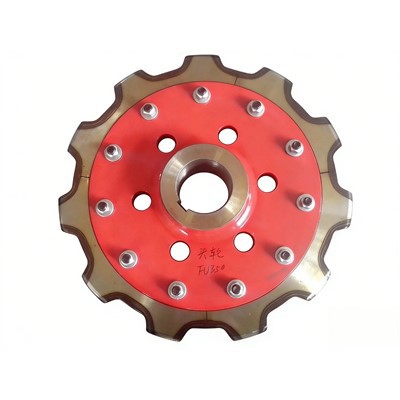
First off, let’s get the basics right: conveyor sprocket replacement frequency doesn’t live in a vacuum. It’s tied to so many factors that change from facility to facility. Let’s start with the big one: load. If you’re hauling heavy automotive parts on a conveyor that runs 18 hours a day, 6 days a week, your sprockets are taking a way bigger beating than a guy who only moves small parcels for 8 hours a day, 5 days a week. Heavy loads stretch the chain, create more friction between the sprocket teeth and chain links, and speed up wear. I once had a customer in the automotive industry who tried stretching his sprocket life to 2 years, only to have a sprocket tooth chip off while moving a 500-pound engine block. That shut his line down for 36 hours, cost him over $100k in lost production. He ended up switching to a schedule every 12–18 months, which turned out way cheaper long-term.
Then there’s material type. The stuff you’re moving? If it’s sharp, abrasive things like metal stampings, gravel, or wood chips, they get kicked up into the conveyor system, landing right between sprocket teeth and chain rollers. That grit grinds away at the sprocket’s surface, wearing down teeth in no time. I’ve seen sprockets on a construction materials conveyor go bad in as little as 6 months, just from all that fine dust and debris getting packed into gaps. On the flip side, if you’re moving soft, non-abrasive things like cardboard boxes or packaged food, wear is way slower—those sprockets can easily last 5–7 years if maintained right.
Speed matters too. Conveyors running at high speeds (like 100+ feet per minute) have a lot more impact on sprockets than slow ones. Every time a chain roller hits a sprocket tooth at high speed, that’s a little shock load that adds up. High-speed conveyors also cycle way more times in a day—100 feet per minute is 6,000 feet a day, vs. 10 feet per minute which is 600 feet a day. More cycles mean more wear, so replacement intervals are shorter for fast lines. I had a customer in e-commerce who runs sortation conveyors at 120 fpm; their sprockets need replacing every 18–24 months, vs. their packaging conveyors that only go 20 fpm, where sprockets last 4–5 years.
Now, what about maintenance? This is the part most people sleep on. If you’re greasing your chain regularly, keeping debris out of the conveyor housing, and inspecting sprockets for wear every month, you can stretch their life way further. I’ve had a food processing customer who does weekly inspections, daily chain cleaning, and monthly re-greasing—their sprockets are going on 8 years and still going strong. On the other end, a guy who runs a small warehouse and only checks his conveyor when it breaks? His sprockets might need replacing every 12 months, max. Bad maintenance doesn’t just speed up wear—it can cause other issues too, like chain misalignment, which makes sprockets wear unevenly. One of the biggest wear signs is called “tooth flank wear” or “sprocket tooth hook,” where the sides of the teeth get worn down from the chain sliding against them. If you catch that early, you can swap the sprocket before it breaks, instead of having a catastrophic failure.
Wait, let’s talk about when you actually need to replace a sprocket, not just a random timeline. A lot of people wait until a tooth is missing, but by then, the chain’s already worn too, and you might have to replace both. The rule of thumb I tell folks is: if the sprocket’s tooth thickness has worn down by 1/16 of an inch, or if the pitch of the sprocket (the distance between teeth) has stretched by 0.02 inches, it’s time to swap it. How do you check that? Easy, no fancy tools. Grab a set of calipers—most standard conveyor sprockets have marked dimensions in their spec sheet, so just compare what you’ve got to the new one. If you don’t have a caliper, you can do a visual check: hold a new sprocket next to your old one, if the old one’s teeth look noticeably smaller, or if there’s a “hollow” in the teeth where the chain sits, that’s wear. Also, listen for weird noises—if your conveyor starts squeaking, rattling, or skipping, that’s a sign the sprocket’s worn enough that the chain isn’t seating right anymore, and a replacement is due.
Another thing: sprocket material. Not all sprockets are made the same, and that changes replacement frequency too. We make sprockets in a few types: carbon steel, stainless steel, and even engineered plastic. Carbon steel is the most common, it’s strong but prone to rust and abrasion if not coated. A coated carbon steel sprocket for general use lasts 2–5 years, but uncoated ones for abrasive environments might only last 1–2 years. Stainless steel is for food or corrosive environments (like chemical processing)—it resists rust and grit, so those can last 5–8 years, sometimes longer. Plastic sprockets? They’re light, good for light loads and non-abrasive stuff, but they warp under heat or heavy weight, so those might only last 1–3 years. I always tell customers to match the sprocket material to their environment—saving a few bucks on cheap plastic sprockets ends up costing you more in replacements and downtime.
Wait, what about conveyor type? Different conveyors have different sprocket designs, right? Drag chain conveyors vs. belt conveyors vs. roller conveyors? Drag chain conveyors, which pull material through a trough, have sprockets that deal with way more friction because the chain is always in contact with the load and the trough. Those sprockets usually need replacing every 12–24 months, depending on the load. Roller conveyors, which move pallets or boxes on rollers, have smaller sprockets with less load, so those can last 4–6 years, as long as they’re kept clean. Modular belt conveyors, common in packaging, have sprockets that engage with the belt’s teeth, so wear depends on how abrasive the belt is—if it’s a rough rubber belt, sprockets wear faster; if it’s a smooth plastic one, they last longer.
Let’s get to the average timelines, so people have a starting point. For most standard applications—8-hour workdays, 5 days a week, moving non-abrasive loads, basic maintenance—you’re looking at 3–5 years between sprocket replacements. But if you’re running a 24/7 operation, moving heavy, abrasive materials, and skipping maintenance, that drops to 1–2 years. I’ve seen extreme cases where a conveyor runs 24/7 moving steel scrap, sprockets need replacing every 6 months. On the flip side, a slow, low-load, well-maintained conveyor for moving pharmaceuticals might get 10 years out of a stainless steel sprocket.
Now, common mistakes I see that mess up replacement frequency. First, using the wrong sprocket size. If you get a sprocket with too few teeth, it puts more stress on the chain and sprocket, causing extra wear. Too many teeth, and you might get chain misalignment, which wears the sprocket unevenly. Second, not replacing the chain when you replace the sprocket. A lot of people just swap the sprocket and keep the old chain, but if the chain’s already worn, it will stretch and cause the new sprocket’s teeth to wear out way faster. That’s a waste of money. Third, skipping regular inspections. I can’t tell you how many times a customer brings me a broken sprocket, and when we check, they haven’t looked at it in a year. A 10-minute visual check every month can catch wear early, save you from downtime.
Another angle: cost vs. downtime. Let’s do a quick math example. If a sprocket costs $150, and you replace it every 2 years, that’s $75 a year. If you wait until it breaks and causes 2 days of downtime, that’s $10k in lost production, plus a rush order for a sprocket (which might cost $200 for expedited shipping). Which is better? Obviously the scheduled replacement. I always push customers to set a maintenance schedule—mark your calendar every 12, 18, or 36 months, depending on your setup, to swap sprockets. That way you don’t get caught off guard.
Wait, what about retrofitting? A lot of older conveyors have sprockets that are hard to find. If you have an old conveyor that’s been running for 20 years, don’t wait for a sprocket to break—start planning to replace sprockets now, because getting a custom one can take weeks, and that’s downtime you can avoid. We help a lot of customers reverse-engineer old sprockets to make replacements, so even if you don’t have the original spec sheet, we can make one that fits.
Let’s wrap this up with actionable steps. First, track your conveyor’s usage: log hours run, load type, speed, maintenance done. That will give you a baseline for your specific setup. Second, inspect sprockets monthly: check tooth thickness, pitch, wear patterns, listen for noise. Third, set a replacement schedule based on your usage—if you run 10 hours a day 6 days a week, plan for replacement every 18 months; if it’s 8 hours 5 days, every 3–4 years. Fourth, match your sprocket material to your environment: stainless for corrosive/food, coated steel for heavy abrasive, plastic for light loads.
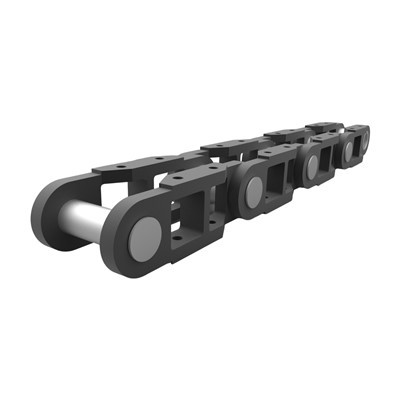
If you’re not sure where your sprockets stand, or if you need help figuring out your replacement timeline, reach out. We’ve been working with conveyor systems for years, and we can help you pick the right sprockets and schedule that fits your budget and downtime needs. No one wants a broken line costing them thousands, so getting the replacement frequency right is half the battle.
Forged Chain References
- Material Handling Industry Association. (2022). Conveyor Sprocket Wear and Maintenance Guidelines.
- American Society of Mechanical Engineers. (2021). Standard for Conveyor Chain and Sprocket Design.
- National Institute for Occupational Safety and Health. (2020). Downtime Cost Analysis for Conveyor System Failures.
- Conveyor Equipment Manufacturers Association. (2023). Sprocket Replacement Best Practices for Industrial Conveyors.
Zhejiang Hangte Chain Transmission Co., Ltd.
We are one of the most experienced conveyor sprocket manufacturers and suppliers in China since 1999. Please rest assured to buy high quality conveyor sprocket made in China here from our factory. If you have any enquiry about cooperation, please feel free to email us.
Address: No. 195 Qinglin East Street, Qingshan Lake Subdistrict, Lin’an District, Hangzhou City, Zhejiang Province
E-mail: hangtechain@gmail.com
WebSite: https://www.chinahtchain.com/
