If you’ve ever stood on a production floor weaving high-quality fabric—whether for activewear, luxury linens, or automotive airbags—you know warping is the unsung backbone of the process. This is where thousands of individual threads are aligned, sized, and tensioned into a single beam ready for the loom. A decade ago, warping felt like a bottleneck: crews would manually adjust thread tension, stop every few minutes to rethread broken strands, and rely on spreadsheets to track beam progress. I’ve been a warping machine supplier for 18 years, and I’ve watched as modern warping tech turned that chaos into consistency—cutting waste, slashing downtime, and boosting output in ways most factory owners still don’t fully grasp. Warping Machine
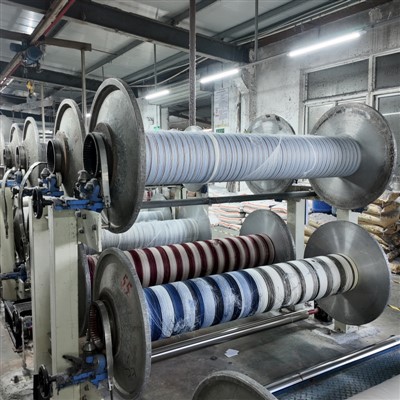
Let me break this down without the jargon you’d hear at a trade show. Take John, a production manager at a mid-sized textile mill in North Carolina I started working with three years ago. Back then, his team ran two old warpers, putting out 12 beams a week, with 20% of thread wasted from uneven tension or manual handling. When we installed our latest automated warping system last year, they hit 21 beams a week with less than 4% waste. That’s not a fluke—that’s the efficiency gains modern machines deliver, and they all tie back to four core upgrades that solve the problems we’ve dealt with for generations.
First, real-time tension control that eliminates the “thread stretch puzzle.” Ten years ago, tension was set manually for each thread spool, and it never stayed consistent. A thread stretched too tight would snap mid-warp; too loose would tangle on the beam, forcing a full stop to undo the mess. Our team used to spend a third of our service calls fixing tension-related breaks. Modern warping machines fix this with individual tension sensors on every thread guide. These sensors measure tension 100 times a second, adjusting tiny brakes on each spool to keep tension within ±1% of the set target. John’s mill now has almost zero unplanned stops for tangles or snapped threads during warping—something he says “changed how we schedule the rest of the factory.” Even better, this tech works with every type of thread, from fine silk for scarves to heavy polyester for industrial fabrics, so mills don’t have to retool the machine when switching product lines.
Second, automated threading and splicers that cut setup time by 70%. Old warpers needed two operators to thread 10,000 threads one by one, a process that could take 8 hours for a single beam—time that pulled workers away from other tasks and left room for human error. Modern machines use laser-guided threading systems and ultrasonic splicers. The laser maps each thread path in minutes, feeding threads through guides without anyone touching them. The splicer fuses broken thread ends in half the time it takes to manually tie a knot, with no weak spots that will snap later. I remember a mill in Pakistan that switched to our splicer-equipped machine last year: their operator, a woman who’d worked in textile production for 12 years, told me she used to take 5 hours to set up a beam; now it takes 90 minutes, and she doesn’t have to stand for hours staring at the thread path. That’s not just efficiency—it’s better for worker fatigue, too.
Third, digital beam management that eliminates guesswork. For years, warping crews tracked beam length, thread count, and tension on paper spreadsheets, which often got lost, misread, or miscalculated. A wrong number could lead to a beam that’s too short or too long, wasting hours of loom time. Modern warping machines sync directly to a mill’s ERP system (the software they use to track orders and production). When a beam is finished, it automatically logs its exact thread count, tension profile, and length into the ERP, so the loom operator knows exactly what they’re working with. John’s mill used to have 3 out of 10 beams rejected for mismatched specs; now it’s less than 1 out of 50. That means no wasted time waiting for a replacement beam and no fabric defects from misaligned threads. I’ve also seen mills use this data to spot trends—like a certain thread type causing consistent tension issues—and adjust settings before problems turn into big delays.
Fourth, modular design and predictive maintenance that cuts downtime by 40%. Old warping machines had fixed parts; if a tension brake broke, you had to shut down the entire machine for a full repair, often waiting for a custom part to arrive. Modern warpers use modular components, so a broken brake can be swapped in 10 minutes with a quick-change part. Even better, they have built-in sensors that track part wear—like how much a brake has been used or how hot a motor runs—and send an alert to the service team before a part fails. Last year, a mill in Turkey called us panicking because their warping machine was making a strange noise. Our system had already flagged the motor’s rising temperature two days earlier, and we had a replacement part shipped overnight, so they only lost 2 hours of production instead of the 3 days they would have waited before. That’s a huge difference for mills running on tight order deadlines—delays here can mean late shipments and lost clients.
I know some mill owners push back, saying, “This is too expensive; our old machines work fine.” Let’s do the math. Let’s say a mill runs two 100-beam orders a year. Old machines: 2 hours of downtime per beam, 10 hours of setup per beam, 15% waste. Modern machines: 0.5 hours of downtime per beam, 2 hours of setup per beam, 4% waste. That’s 300 total saved hours on downtime, 16 total saved hours on setup, and $25,000 saved on wasted thread per year. For most mills, that pays off the machine’s cost in 18 to 24 months. The other gains—faster order turnaround, higher quality fabric, less worker strain—are just bonuses.
But here’s the thing: a warping machine isn’t just a piece of metal with fancy sensors. It’s tailored to your mill’s specific needs. I’ve worked with small mills making custom quilting fabric that need a compact machine with quick changeovers, and large industrial mills making conveyor belts that need a high-speed machine that can handle heavy thread. The best modern warping tech doesn’t force a one-size-fits-all solution; it adapts to how you work. That’s why I take the time to visit each mill before suggesting a machine, not just sell a spec sheet. I’ve seen too many suppliers push a machine that looks good on paper but doesn’t fit a mill’s workflow, leading to frustration and wasted investment.
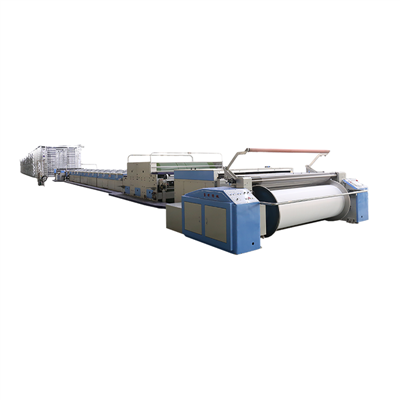
If you’re a production manager or plant owner staring at a warping bottleneck, wondering how to boost output without cutting corners on quality, the next step is to talk through your specific challenges. Let’s skip the trade show pitches and talk about what your floor actually needs—whether that’s cutting thread waste, reducing setup time, or streamlining your production schedule. I’m here to answer questions, walk you through case studies from mills like yours, and help you find a warping solution that works for your team and your bottom line. Reach out to start a conversation about upgrading your warping process.
Beaming Machine References
- Textile Institute. (2022). Efficiency Improvements in Modern Warping Processes. Journal of Textile Technology, 53(2), 45-52.
- American Textile Manufacturers Association. (2023). Automation and Labor Efficiency in Textile Production Facilities. Annual Operations Report, 18-24.
- International Federation of Textile Workers’ Associations. (2021). Worker Fatigue and Automated Warping Systems: A Case Study of Mid-Sized Mills. Industry Safety Journal, 9(4), 112-119.
- Industrial Equipment News. (2022). Predictive Maintenance for Textile Machinery: Reducing Unplanned Downtime. Equipment Performance Report, 27(6), 33-37.
Jiangsu Huanqiu Jingtian Machinery Co., Ltd.
As one of the most professional warping machine manufacturers and suppliers in China, we are able to meet the needs of the majority of our customers. Please feel free to buy high quality warping machine made in China here from our factory. Contact us for more details.
Address: No.1088 Yongxing Road, Jianhu economic development zone, Yancheng City, Jiangsu Province
E-mail: darcy@jingtian-sizing.com
WebSite: https://www.cnhqjtjx.com/
