If you’ve ever worked in surface finishing for manufacturing – whether you’re deburring metal parts for aerospace, polishing small automotive components, or preparing parts for medical device assembly – you know a vortex finishing machine is more than just a piece of equipment. It’s a workhorse that streamlines processes, cuts down on manual labor, and delivers consistent results. But as a supplier who’s helped hundreds of factories get the most out of their vortex machines, I hear one question more than any other: “What is the real maintenance cost of a vortex finishing machine, anyway?” Vortex Finishing Machine
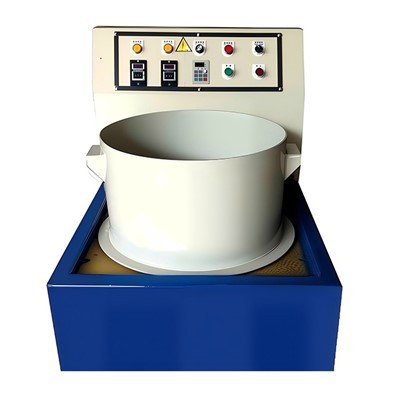
It’s easy to get stuck on the upfront price tag. A lot of operators will fixate on the initial investment without digging into long-term costs, which can add up faster than you think. Over the 10 to 15 year lifespan most of our reliable vortex machines have, maintenance is the biggest ongoing expense – sometimes even more than power or media costs combined. I’ve seen clients who skipped regular small repairs end up with a $5,000 repair bill that could’ve been $500 if addressed early. That’s why I’m breaking down the real numbers, the hidden costs, and how to keep your maintenance budget on track.
First, let’s get clear on what a vortex finishing machine does, because that’s key to understanding its maintenance needs. Unlike tumble finishing machines that roll parts around in a barrel, vortex machines use a spinning bowl that creates a high-speed vortex of abrasive media, water, and parts. This dynamic action polishes, deburrs, or blends parts uniformly, even for complex geometries. The constant motion means parts, media, and water are churning nonstop, which puts stress on specific machine components. That stress is where most maintenance costs come from.
Let’s start with the recurring, predictable maintenance costs – the ones you can budget for each year, no surprises.
The biggest recurring expense for nearly all vortex machines is the bowl lining. The lining lines the interior of the spinning bowl, and it’s what protects the metal bowl from being worn down by the continuous impact of abrasive media. Without it, the media would scratch the bowl itself, leading to costly structural damage. Lining materials are usually rubber or polyurethane, and their lifespan depends entirely on what you’re finishing and how often you run the machine. For example, if you’re deburring stainless steel parts with aggressive ceramic media, your lining will wear out in 8 to 12 months. If you’re polishing aluminum parts with gentler plastic media, the lining can last 2 to 3 years.
The cost of a new lining? On average, $800 to $2,500. Installation takes 2 to 4 hours, and if you have an in-house maintenance team, that’s just labor. If you need a technician from our team to install it, add another $300 to $600 for labor. I always tell clients to budget for lining replacement every 18 months on average – that’s a middle number that works for most of our customers. So annual lining maintenance costs average around $1,000 to $1,500 per year.
Next, there’s the impeller drive system. The impeller is the component at the bottom of the bowl that creates the vortex motion. It’s attached to a shaft that spins at high speed, so it’s under constant torque and wear. The impeller itself is usually made of hard plastic or urethane, and it needs replacement every 12 to 24 months, depending on usage. If you run your machine 8 hours a day, 5 days a week, you’ll be replacing the impeller every 18 months. That’s a $300 to $800 part, plus 1 to 2 hours of labor to swap it out. But the impeller’s shaft and bearings are even more critical. The bearings support the impeller shaft, and if they’re not lubricated or inspected regularly, they can seize up, which will destroy the impeller and cause the motor to overheat. Bearing replacement is less frequent – every 3 to 5 years – but when it needs to be done, it’s $200 to $500 for parts plus 2 to 3 hours of labor. The motor is another big part here. Most vortex machines have a 5 to 15 horsepower motor that runs almost nonstop during shifts. For a well-maintained motor, the average lifespan is 7 to 10 years, but if you skip cleaning the motor’s cooling fins, it can burn out in 3 years. A replacement motor costs $1,500 to $4,000, plus labor for installation – that’s a major expense, so motor care is non-negotiable.
Then there’s the water and media system. Vortex machines use a mix of water and abrasive media to finish parts, so the pump that circulates this mix works overtime. The pump impeller and seals get worn down by the abrasive slurry, and they need to be replaced every 6 to 18 months. A pump impeller is $100 to $300, seals are $50 to $150, and labor to replace them is 1 to 2 hours. If you don’t clean the pump regularly, the slurry can build up and clog the pump, leading to a pressure drop and poor finishing results – and that’s a $1,000+ pump repair. Also, you’ll need to replace the machine’s filter screen regularly to catch stray media and debris so they don’t get recirculated. Filter screens are $20 to $50 each, and you should check or replace them every 4 weeks for constant use.
Now, let’s talk about the unplanned maintenance costs – the ones that sneak up on you if you skip regular upkeep. These are the costs that eat into your profits, and they’re entirely avoidable with a small routine. For example, if you don’t inspect the bowl lining every month, a small tear can turn into a large hole, and media can start getting into the drive system. That means you’ll have to disassemble the entire machine, replace the lining, and repair damaged bearings – a job that costs $3,000 to $7,000, instead of $1,000 for a routine lining swap. Another common unplanned cost is part damage. If the vortex motion is off because of a worn impeller, parts can collide inside the bowl, leading to scratches or breakage. I’ve had a client who skipped impeller replacement, and $10,000 worth of aerospace parts were ruined because of inconsistent vortex motion. That’s not a machine maintenance cost, but it’s a direct result of poor machine care – so it’s something you have to factor in.
Then there’s downtime. Even if there’s no major damage, a small clog or a leak can take the machine out of service for a day. For a factory that runs 2 shifts a day at $500 an hour in production costs, a 24-hour shutdown is $12,000 in lost revenue. I once had a client who forgot to clean the pump filter, which caused a clog, and their machine was down for 36 hours. That’s nearly $18,000 in lost production – all because of a $30 filter. That’s the biggest hidden maintenance cost: downtime, and it’s far more expensive than any part replacement.
So, what’s the total average maintenance cost for a vortex finishing machine, over a year? Let’s add up the predictable costs. Routine inspections: $200 to $300 per year (if you do them in-house, or $500 if you hire a technician). Lining replacement: $1,000 to $1,500. Impeller and seals: $500 to $1,000. Pump maintenance: $300 to $600. Bearings and lubrication: $200 to $400. That adds up to $2,200 to $3,700 per year – that’s for a machine that’s well-maintained, runs 8 hours a day, 5 days a week. If you run it 24/7 for high-volume production, that number jumps to $4,000 to $6,500 per year, because components wear twice as fast. If you have unplanned repairs, that can add $1,000 to $10,000+ a year, depending on how much you cut corners on upkeep.
But here’s the thing: these costs are manageable, if you follow a simple maintenance schedule. I’ve seen clients who keep their annual maintenance under $2,000, even for 24/7 machines, just by sticking to a 10-minute daily check and a 2-hour monthly inspection. Let me share a few tips that our customers swear by, because we’ve seen them work again and again.
First, do a daily pre-run check. Before you start the machine every morning, check the water level, make sure there are no loose media or debris in the bowl, and listen for any unusual noises (grinding, squeaking) that mean something’s wrong. That takes 10 minutes, and it catches small issues before they become big ones. Second, do a monthly deep clean. Once a month, shut down the machine, drain the slurry, clean the bowl and pump, inspect the lining for small tears, and lubricate the impeller shaft. That takes 2 hours, and it prevents 90% of unplanned repairs. Third, keep spare parts on hand. Stock a spare impeller, a few filter screens, and a roll of lining repair material in your shop. When a small tear or seal leaks, you can fix it in 30 minutes instead of waiting for a technician, and you avoid downtime. Fourth, use the right media for your job. Aggressive ceramic media will wear out your lining and impeller faster than gentler plastic or walnut media. We always work with clients to match the media to their part and their machine, so you don’t overdo it on wear.
As a supplier, I’m not here to sell you a machine and disappear. I’m here to help you keep that machine running for years. We offer maintenance training for your in-house teams, we stock all the original replacement parts, and we’re on call for emergency repairs if you do have an issue. We’ve seen clients who bought a vortex machine from another supplier, skipped maintenance, and had to replace it in 5 years – while our clients who follow the schedule get 15 years or more out of their machine, with maintenance costs that are half of what the other clients paid.

At the end of the day, the maintenance cost of a vortex finishing machine isn’t a fixed number. It’s a choice. You can either budget $2,500 a year for routine care, or you can deal with $10,000 in unplanned repairs and downtime. You can save a little money on the front end and pay for it later, or you invest in small, regular steps to keep your machine working for you. If you’re in the market for a vortex finishing machine, or you want to optimize your current machine’s maintenance to cut costs, we’re here to walk you through every step. Let’s talk about your production needs, your budget, and how we can help you keep your vortex machine running smoothly for years to come.
Barrel Polishing Machine References:
- Surface Finishing Magazine. (2022). “Vortex Finishing: Maintenance Best Practices for Industrial Applications.”
- Machinery Maintenance Association. (2023). “Cost-Benefit Analysis of Routine vs. Reactive Maintenance for Industrial Processing Equipment.”
- Journal of Manufacturing Processes. (2021). “Component Wear Rates in High-Speed Vortex Finishing Systems: A Long-Term Study.”
- Industrial Equipment News. (2022). “Hidden Costs of Downtime in Metal Finishing Operations.”
Dongguan Xindingsheng Intelligent Grinding Technology Co., Ltd.
Dongguan Xindingsheng Intelligent Grinding Technology Co., Ltd. is one of the most reliable vortex finishing machine manufacturers and suppliers in China, also supports customized service. Please feel free to wholesale bulk high quality vortex finishing machine in stock here from our factory. Contact us for pricelist.
Address: Room 101, Building 1, No. 73 Dahuangmei Road, Dalingshan Town, Dongguan City, Guangdong Province, China
E-mail: cndskj@126.com
WebSite: https://www.xdsfinishing.com/
