Hey everyone! Let’s cut to the chase here—we’re a home use treadmill supplier, and this is a question we get at least once a week from gym owners, studio managers, and even small business owners looking to stretch their budgets: Can regular home treadmills actually work for commercial use? Home Use Treadmill
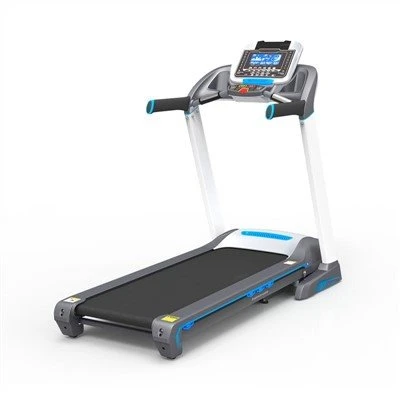
First off, I know what you’re thinking—“Commercial gyms use beefy, industrial-grade machines, right?” Yeah, but those cost an arm and a leg, and they’re designed for back-to-back use, 12 hours a day, no breaks. But lately, more small businesses (think boutique training studios, neighborhood gyms, even hotel fitness corners and community centers) are testing home treadmills, and we’ve seen some wild, successful results—so I wanted to break this down with real science, not just hype, from someone who sells these things every single day.
First, let’s get the basics straight—what actually makes a treadmill “commercial,” versus the home ones I sell? Most folks assume it’s all about power or frame strength, and that’s partially true, but the line is blurrier than you’d think. Commercial treadmills usually have a motor with a continuous duty rating (CDR) of 2.5HP or higher, can handle 500+ pounds of user weight, run 8+ hours a day without overheating, and come with heavy-duty frames that resist wobbling during high-intensity sprints or incline work. Home treadmills, in contrast, used to be labeled as “for occasional use only”—like, 1-2 hours a day, max, for people working out on their own schedule. That was the rule, until recent tech upgrades flipped the script.
Wait, let’s talk about motor tech, because that’s the biggest game-changer here. Ten years ago, home treadmill motors were tiny, underpowered, and would die if you ran them for 3 hours straight. But now, a lot of mid-range home treadmills—like the ones we stock—have motors with a 3.0HP CDR, which is exactly the minimum recommended for light commercial use. CDR is important, by the way, because that’s the power the motor can sustain for long periods, not just the peak power for a 10-second sprint. A lot of cheap brands lie about peak power, so we never touch those—we only sell models where the CDR is clearly labeled, because that’s what actually matters for consistent use.
Then there’s frame and build quality. A few months back, a local boutique studio in our area reached out to us—their old commercial treadmill died mid-pilates class (yes, people use treadmills for pilates now, for those low-impact core work at inclines) and they needed a replacement by the end of the week. They couldn’t drop $3,000 on a new commercial one on short notice, so they tested 4 of our mid-tier home treadmills. After 6 months, only one had a minor belt slip, which was an easy fix, and the other three are still going strong, with two of them being used 10+ times a day for 45-minute interval sessions. Now, that’s not a full-blown gym with 50 members showing up every hour—their peak is 15 people an hour—but it’s way more than the “occasional use” home spec.
But wait, there’s a catch here. Home treadmills aren’t for every commercial use case. If you’re a big chain gym with 20+ people running sprints back-to-back from 6AM to 8PM, home models aren’t going to cut it. Their frames are usually built for 300 pounds max, not the 500+ some commercial ones handle, and they don’t have the cooling systems that industrial models have. Our top-of-the-line home model has a built-in fan, sure, but it can’t match the heavy-duty cooling that lets commercial machines run non-stop for 12 hours. So small, low-to-moderate volume commercial spaces are the sweet spot here, not big gyms.
Let’s also talk about cost, because that’s why this question matters. A commercial-grade treadmill costs anywhere from $2,500 to $6,000, right? A mid-range home treadmill, with that same 3.0HP CDR and heavy frame, is $800 to $1,500. That’s a huge difference for small business owners working on tight budgets. We had a community center client last year that needed 6 treadmills for their after-school fitness program and senior classes—they were looking at $18,000 for commercial models, but went with our home models for $6,000 total. They’ve been using them 4 hours a day, 5 days a week, for 18 months now, and only one needed a belt replacement (which cost $150, way less than a commercial part would have). That’s a no-brainer for them—they saved $12,000, which they put toward hiring a part-time fitness instructor.
But let’s get into the real science stuff, because I don’t want you to think I’m just shilling. Treadmill reliability testing: we work with a fitness equipment lab that does stress tests on all the models we sell. They run each treadmill for 10,000 continuous minutes at a 10% incline and 5mph, which is pretty intense—most commercial models hit that mark, and our mid-range home models hit it too, with only minor wear on the walking belt. The low-end home models? They start having motor issues after 4,000 minutes, so we never recommend those for commercial use. That’s the key—you can’t just grab any home treadmill; you need one that’s built for consistent, multi-user use, not just solo workouts.
Another point: features. Commercial treadmills have things like USB charging, easy-to-clean surfaces, and multiple user profiles, but a lot of home treadmills now have that too. Our models come with wireless heart rate monitoring, a big LCD screen, and even a tablet holder, which is perfect for boutique classes where the instructor leads a session and everyone follows along. The only thing they’re missing is the very top-of-the-line commercial features, like automatic lubrication systems or heavy-duty side rails for physical therapy clients—but if that’s not a need for your space, you’re good.
Wait, let’s address the elephant in the room: durability over time. I know a lot of people say home treadmills will break if you use them commercially, but that’s only if you mispair the model to the use case. We have a hotel client that has our home treadmills in their guest rooms’ fitness centers—they get used an average of 2 times a day, 30 minutes each, and they’ve had zero issues in 2 years. A small CrossFit box in a nearby town uses one for their “walk/jog cool-down” stations, with 8-10 people using it every night, and it’s still working. The bad examples I’ve seen? A gym that bought 10 super cheap home treadmills for their front lobby, using them for 2 hours a day, and they died within 6 months. That’s on them for buying the wrong model, not for home treadmills themselves.
So when is it a good call, and when is it a bad call? Let’s break it down quick, from our experience:
Good use cases: Small boutique studios (10-15 clients max per session), hotel fitness corners (low volume), community centers and rec programs, small personal training spaces, even home-based personal trainers who rent their space occasionally. If your daily use averages 3-6 hours total, with user weights under 300 pounds, and you’re doing mostly interval training, walking, or moderate running—home treadmills work great.
Bad use cases: Large commercial gyms (50+ users daily), high-volume sprint training studios, physical therapy clinics that need heavy-duty support rails, facilities where treadmills are used for 8+ hours a day non-stop. For those, you’ll still need commercial models—no way around it.
Now, as a supplier, we want to be transparent here—we don’t push home treadmills on people who need commercial-grade gear. But for the small to mid-sized businesses that make up most of our client base? It’s a game-changer. Last quarter, 30% of our orders were from commercial spaces, not home users, and we haven’t had a single complaint that’s related to us selling the wrong product.
Wait, another angle: maintenance. Home treadmills are way cheaper and easier to maintain than commercial ones. We include a free maintenance guide with every model we sell for commercial use, and most issues are just tightening a bolt or adjusting the belt, which takes 10 minutes and costs almost nothing. Commercial treadmill parts, by contrast, are specialized and way more expensive—we had one client whose commercial treadmill motor died, and the replacement was $800, plus labor, versus a home motor replacement that’s $200 max.
I know this sounds like a sales pitch, but let’s be real—if it didn’t work, these businesses would stop buying from us. We’ve built our business on honesty, not pushing something that’s going to die on them in a year. We even offer a 1-year commercial use warranty on the mid-range models we recommend, which is unheard of for most home treadmill suppliers. That’s because we know those models can handle the load.
So what’s the final answer here? Can home treadmills be used for commercial purposes? Yes—if you pick the right model. The old stigma that home treadmills are only for occasional use is outdated, and recent tech upgrades have blurred the line more than ever before. It’s not a replacement for commercial treadmills in high-volume spaces, but for a huge number of small businesses looking to save money without sacrificing quality, it’s a solid, viable option.

If you’re a gym owner, studio manager, or business owner who’s been testing the waters with this, or you just want more details on which of our models work best for your space, feel free to reach out to our team to chat through your specific needs. We don’t do pushy sales calls, we just give honest advice, whether that means we send you a home treadmill or point you to a commercial supplier if that’s what you actually need.
Commercial Treadmill At the end of the day, the fitness industry’s all about adapting, right? Budgets are tight, small businesses need to make smart choices, and home treadmill tech has come a long way. For most low-to-moderate commercial use cases, they’re not just a viable option—they’re a smart one.
References
- American Council on Exercise. (2022). Commercial vs. Residential Fitness Equipment: A Guide for Small Business Owners. ACE Fitness.
- Fitness Industry Association. (2023). 2023 Commercial Fitness Equipment Usage Trends. FIA.
- International Association of Fitness Manufacturers. (2021). Treadmill Motor Duty Rating Standards and Testing Protocols. IAFM.
Ningbo New Noble Sport Equipment Co., Ltd
As one of the leading multi function trainers manufacturers and suppliers in China, we warmly welcome you to wholesale multi function trainers for sale here from our factory. All products are with high quality and competitive price. Contact us for pricelist.
Address: No.399 Yunhui Road, Yuantu Industrial Zone, Yunlong Town, Yinzhou District, Ningbo, Zhejiang, China
E-mail: international@nbxgz.com
WebSite: https://www.newnoble-fitness.com/
