If you’ve ever stood in a grocery store’s bakery aisle, staring at rows of soft naan, crispy tortillas, or pillowy pita, chances are those flatbreads didn’t come from a home kitchen. They rolled off a commercial flatbread production line—one that turns basic flour, water, yeast, and salt into consistent, shelf-stable, restaurant-ready flatbreads, all in a matter of hours. As a supplier of full flatbread production lines, I’ve spent thousands of hours walking alongside bakers and line operators, troubleshooting, tweaking, and perfecting the dough preparation process that’s the backbone of every great flatbread. Skip the old myth that commercial flatbread is just “mass-produced dough”: the process here is precise, science-backed, and built to balance consistency, speed, and quality that tastes just as good as homemade—without the labor of kneading and proofing by hand. Today, I’m breaking down exactly what goes into dough preparation in our flatbread production lines, the step-by-step process our team has refined over years of working with bakeries large and small. Flatbread Production Line
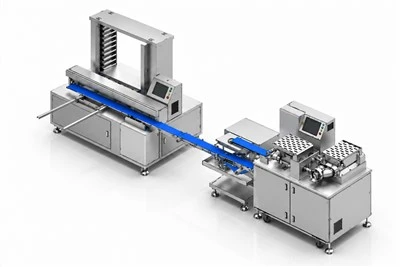
First, let’s set the stage: dough preparation isn’t just mixing ingredients together. It’s a sequence of timed, temperature-controlled steps that ensure every batch of flatbread has the same texture, rise, and flavor, no matter if you’re making 1,000 flatbreads an hour or 10,000. The first critical step, and the one that often makes or breaks a batch, is ingredient formulation tailored to the type of flatbread being produced. A naan needs extra fat (usually ghee or vegetable oil) for that soft, buttery crumb; a whole-wheat tortilla requires a higher protein flour to hold its shape on a taco; and a crispy lavash needs less water to stay thin and crackery. When we design custom flatbread production lines, we work with bakers to adjust formulas, but the core base ingredients always follow a strict, measurable order. No more guessing “a handful of flour” or “a splash of water”—commercial dough needs accuracy down to the gram, which is why our lines include automated ingredient weighing systems that eliminate human error.
Once the formula is locked, the first physical step of dough preparation is ingredient blending, and it starts with dry ingredients. Our flatbread production lines use large, stainless-steel blending tanks that mix flour, salt, yeast, and any dry additives (like whole-grain grains, seeds, or dough conditioners) first. Why mix dry ingredients first? If you add yeast directly to water before combining with flour, the yeast can activate too early, breaking down gluten before the dough is even ready, which leads to a flat, dense flatbread. The dry blend runs for 1 to 2 minutes at a low speed, just long enough to evenly distribute salt and yeast—you don’t want to overmix dry ingredients, which can create clumps of yeast that leave dead spots in the dough. For bakers making gluten-free flatbreads, we adjust this step to add xanthan gum or other binders with the dry mix too, since those ingredients need to be evenly dispersed to hold the dough together.
Next comes the liquid addition, and this is where temperature control becomes non-negotiable. The liquid used in most flatbread dough is a mix of water, and for certain types like naan, oil or ghee. The water’s temperature is calculated to bring the entire dough to a final temperature between 75°F and 80°F (24°C to 27°C) after mixing. That’s the sweet spot for yeast activity: too cold, and the yeast will activate too slowly, leading to long proof times and inconsistent rise; too hot, and the yeast will die, leaving the dough flat and flavorless. Our flatbread production lines have integrated temperature sensors in the mixing tank that adjust water temperature automatically, so even if the ambient factory temperature shifts by 10 degrees overnight, the dough’s final temperature stays exact. No more stopping the line every hour to test water temperature—our systems do it in real time.
Once the liquid is added, it’s time for the mixing and kneading stage, which is where gluten develops. Gluten is the protein network that gives dough its elasticity, allowing it to stretch into thin flatbreads without tearing and trap gas from yeast for rise. The mixing speed and time are carefully controlled here too. For most flatbread dough, we run the mixer at medium speed for 8 to 12 minutes. Run it too fast, and the dough overheats, killing yeast and making the dough too tight and tough. Run it too slow, and gluten doesn’t develop enough, leading to a crumbly flatbread that breaks when you fold it or roll it out. Our mixing systems have variable speed controls that let us adjust based on the formula: for a softer naan, we reduce mixing time to keep the gluten less developed; for a chewy sourdough flatbread, we extend mixing by 2 minutes to build a stronger network. Operators also learn to spot the “window test” during this stage—a small piece of dough stretched thin enough to see light through it without tearing—to confirm the dough is ready, and our lines even have visual sensors that alert staff when that point is reached.
After mixing, the dough is divided into uniform pieces, a step that’s often overlooked but critical for consistency. If one dough ball is 2 ounces and another is 2.5 ounces, you’ll end up with flatbreads that are too small or too thick, which throw off baking times and product quality. Our flatbread production lines use automated dough dividers that cut the mixed dough into perfectly sized pieces, with an accuracy of +/- 1 gram. No more hand-cutting, which leads to variable sizes and wasted dough. For specialty flatbreads, like those with inclusions (such as herbs or sesame seeds), the divider can also incorporate those evenly during this step, so every dough ball has the same amount of toppings.
Once divided, the dough pieces move to the proofing stage, which is where they rest and rise before shaping. Proofing is one of the most important steps for flavor and texture, and in commercial production, it’s done in temperature- and humidity-controlled proofers that are integrated into our flatbread production lines. The ideal proofing environment for flatbread is 85°F to 90°F (29°C to 32°C) with 75% to 85% humidity. Humidity is key here: if the air is too dry, the dough’s skin will crust over, trapping carbon dioxide and leading to uneven rise or cracking when you shape the flatbread. Our proofers have built-in humidity and temperature controls that adjust automatically, so even in a hot factory, the dough rises consistently. Proofing time varies by flatbread type: pita needs 20 to 30 minutes to develop the air pockets that make it expand in the oven, while a crispy lavash only needs 10 to 15 minutes, since it doesn’t need a large rise.
A common question I get from bakers is: why not skip hand proofing and rely on the line? Because our proofing stages are designed to mimic the consistent conditions a master baker would create, but at scale. When we first started building flatbread production lines, we saw that many bakeries were struggling with inconsistent proof times because of varying factory temperatures, so we integrated closed-loop proofing systems that track each tray’s dough temperature and adjust the proffer’s settings in real time. That means every single dough ball on the line has the same rise time and condition, leading to flatbreads that are identical batch after batch.
After proofing, the dough is ready for the final step in preparation: shaping, which is technically part of dough preparation (since it’s the final form before baking). Our flatbread production lines use automated sheeters and moulders that roll the dough into the desired thickness and shape—whether that’s a round tortilla, an elongated naan, or a thin rectangular lavash. The sheeting speed is adjusted to match the proofing time, so the dough doesn’t sit too long after proofing and lose its gas, which would make it flat. For flatbreads with a signature texture, like the blistered naan from a tandoor, our lines can even add a light press at the edge to create a puffed crust, just like a hand-stretched naan would have.
Now, it’s important to note that dough preparation doesn’t end once the shaped dough hits the oven. For many shelf-stable flatbreads, there’s a final resting stage after shaping, called “retarding,” which involves chilling the dough to slow yeast activity for up to 24 hours. This is a game-changer for flavor: retarding develops a deeper, nuttier taste in the dough, and it also allows bakeries to produce dough in batches over the course of a day, rather than having to process everything at once. Our flatbread production lines are designed to integrate retarding cabinets after the shaping stage, so bakers can run the line in shifts and pull dough from the retarder when they’re ready to bake, without sacrificing quality.
I’ve seen firsthand how a well-designed dough preparation process transforms a small bakery’s output. Last year, I worked with a family-owned bakery in Ohio that was making artisan flatbreads by hand, turning out 500 flatbreads a day with inconsistent sizes and proof times. When they upgraded to our flatbread production line, we adjusted their dough preparation process to use automated weighing, temperature-controlled mixing, and integrated proofing. Within three months, their output jumped to 3,000 flatbreads a day, with less than 2% waste from uneven dough balls, and their customer reviews noted that the flatbread tasted just as good as their original hand-made version—all because the dough preparation process preserved the flavor and texture they’d worked to perfect.
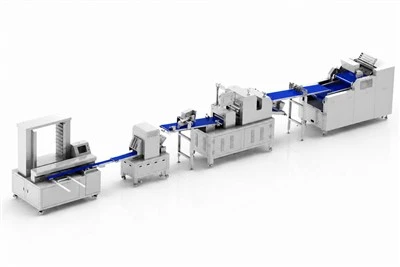
At the end of the day, the goal of dough preparation in a flatbread production line isn’t just to make a lot of dough fast. It’s to maintain the consistency, flavor, and quality that makes flatbreads beloved, whether they’re for a local grocery store or a national restaurant chain. If you’re a bakery owner looking to upgrade your flatbread production line, or you’re tired of dealing with inconsistent dough batches that throw off your entire process, our team can help you design a custom dough preparation system tailored to your specific flatbread type, output needs, and flavor profile. We don’t sell one-size-fits-all lines—we work with you to adjust every step of the dough preparation process, from ingredient formulation to proofing and retarding, to make sure your flatbreads stand out, even in a crowded market. If you’re ready to streamline your production, reduce waste, and keep your flatbread quality high, reach out to our team to discuss how we can build a flatbread production line that works for your business.
Meat Processing Lines References
- Cauvain, S. P. (2018). Bakery Products: Science and Technology (2nd ed.). Wiley-Blackwell.
- Campbell, G. M., & Mougeot, E. (1999). Dough Rheology and Baked Product Texture. Springer.
- Shelke, K. (2021). Commercial Baking: Technology and Operations. American Association of Cereal Chemists International.
- Slade, L., & Levine, H. (1995). Glass Transitions in Foods. Academic Press.
Shanghai Longyu Electro-Mechanic Technology Co., Ltd.
Shanghai Longyu Electro-Mechanic Technology Co., Ltd. is one of the most professional flatbread production line manufacturers and suppliers in China, featured by quality products and good service. Please feel free to wholesale advanced flatbread production line made in China here from our factory. Also, custom service is available.
Address: No.66, Guangfulin East Road, Zhongshan Subdistrict, Songjiang District, Shanghai, China
E-mail: sales4@longyu-sh.com
WebSite: https://www.longyu-sh.com/
