Hey there, if you’ve been on the hunt for a used die cutting machine—whether you’re a small print shop just scaling up, a custom packaging brand trying to keep costs low, or a craft studio that’s outgrown its hobby-grade gear—you know two things: first, a new die cutter? It’s usually a huge ask, like $10k+ even for mid-tier models, and second, a used one is total gold… if you don’t mess up the financing part. As a used die cutting machine supplier, I’ve seen way too many people jump in with cash they shouldn’t, or pick a financing deal that bites them later. So today, I’m breaking down the actual best way to fund this big (but smart) purchase, no stuffy jargon, no hidden gotchas. Used Die Cutting Machine
First off, let’s get one thing straight: most small business owners don’t have $15k to $50k sitting in a business savings account for a machine they’ll use every single day. I get it—you’re trying to turn a profit, not drain your emergency fund or leave yourself flat if a client cancels last minute. The key here is balancing cost, flexibility, and not getting locked into a deal that makes you pay way more than the machine is worth over time. Let’s walk through the options, and I’ll tell you which ones actually work for most folks, and which ones to skip.
Let’s start with the obvious cash option, just to get it out of the way. If you do have the cash stashed, that’s fine, right? No interest, no monthly payments. But here’s the catch: unless your business is raking in consistent, extra cash (like, not the kind you need for rent or payroll), tying up all your working capital in a machine is risky. What if your press breaks next month? Or you get a big order that needs extra inventory, and you can’t cover the materials? I’ve had customers come to me after blowing their whole savings on a used die cutter, then call panicking because they can’t make payroll. Cash only makes sense if the machine is 100% paid off and leaves you with at least 3 months of operating costs in the bank. If that’s not you, skip pure cash—there are way better ways.
Next, the route most people ask me about: small business loans. But wait, not just any small business loan. Let’s split this into two types: traditional bank loans and online small business loans. Traditional banks are strict—they want great credit (like 700+), 2+ years in business, and sometimes collateral. I had a customer last year who runs a 5-person packaging shop, he had a 680 credit score and only been open 18 months, and the bank turned him down flat. Online lenders are way more flexible, but you have to watch the rates. Some online lenders charge 15% or even 20% APR, which is crazy high for a machine that’ll last 10+ years. The sweet spot here is an SBA microloan, if you qualify. SBA (Small Business Administration) microloans have rates around 6-8%, way lower than most online lenders, and they’re designed for small businesses that can’t get regular bank loans. I’ve helped a bunch of customers line up SBA microloans through local nonprofits, and the process is actually way less headache than people think—you just have to have a solid business plan, not perfect credit. The big downside? They might take a few weeks to approve, so don’t wait till your current machine dies to apply.
Then there’s equipment financing—this is the one that’s made for exactly this kind of purchase. Here’s how it works: when you get equipment financing for a used die cutting machine, the machine itself is the collateral, so the approval is way easier than a regular business loan. That means even if your credit is a little lower (like 600+), you can still get approved, as long as your business is making consistent revenue. Now, there are two main types of equipment financing deals, and this is where people mess up. First is a fair market value (FMV) lease, and second is a purchase loan. Let’s break that down.
An FMV lease is basically a long-term rental, but it’s super popular for used industrial equipment like die cutters. Here’s the deal: you make monthly payments for 2-5 years, at the end you have three options: return the machine, trade it in for a newer used model, or buy it for its fair market value (usually like 10-15% of the original cost, so basically a tiny balloon payment). Wait, why is this good for a used machine? Because die cutters hold their value really well— a 5-year-old used model that cost $25k new is still worth $8k-$10k, so if you lease it, you’re not paying to replace the whole machine’s value, just the portion you use over the lease term. Also, FMV lease payments are usually lower than purchase loans, which is huge for small cash flow. But wait, the catch: you can’t modify the machine during the lease, and if you want to buy it at the end, make sure you check the FMV number upfront—some lenders will inflate it to make more money.
The other option is a equipment purchase loan, which is exactly what it sounds like: you borrow the full amount of the machine, make monthly payments, and own it outright when the loan is done. This is better if you plan to keep the machine forever, or if you want to modify it down the line (like adding a custom die cutter accessory or a new blade system). For used machines, the loan term is usually shorter than new ones—2-4 years instead of 5-7, because used equipment has a shorter lifespan left (wait, no, actually a well-maintained used die cutter can last 15+ years, but lenders factor in depreciation, so terms are shorter). The rate here is usually a little higher than an SBA microloan, like 7-10%, but way lower than those payday-style online loans. I work with a handful of financing partners specifically for used industrial equipment, and their purchase loan rates are consistent, no hidden fees—no prepayment penalties, which is a big one. If you pay off the loan early, you shouldn’t get charged extra. That’s a non-negotiable for me, because I hate when people get stuck paying more just because they had extra cash to pay things off fast.
Now, here’s a tip only a used die cutting supplier would know: skip the “same as cash” or rent-to-own options you see online, especially for individual sellers. A lot of random online marketplaces have those rent-to-own deals for used machines, but the rates are like 25%+ APR, and if you miss one payment, they take the machine back, and you lose every penny you paid. I’ve seen that happen way too many times—someone pays $3k over a year, misses one $500 payment, and the seller takes the machine, no refund. That’s a disaster. Stick with specialized equipment financing from lenders that actually know used industrial machinery, not just random personal loans.
Wait, another underrated option: 0% introductory APR business credit cards. But only if you can pay the full balance before the intro period ends. A lot of business credit cards give 12-18 months of 0% APR on purchases, and if you can put a big chunk of the machine on that, you avoid interest. But here’s the hard part: most cards have a limit, and for a $10k+ used machine, the limit might not be enough, plus if you don’t pay it off before the intro ends, you jump to 20%+ APR, which is way worse. Only do this if you’re 100% sure you can pay the balance in full in the intro window, and the card has a high enough limit. It’s a good short-term hack, but not a long-term solution.
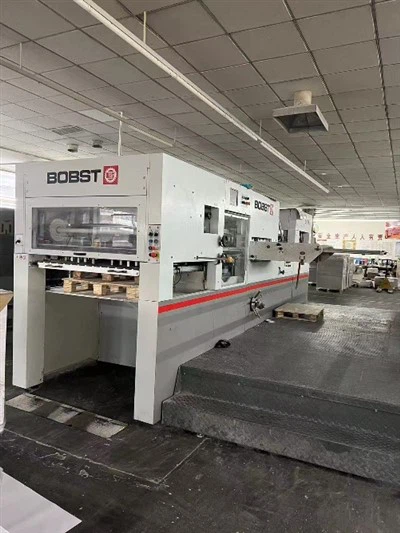
Now, let’s talk about what I see customers messing up all the time: not checking the machine’s actual value before agreeing to financing. A good used die cutting machine—like a Heidelberg, Bobst, or a high-quality model that’s been well-maintained, not beat up from a print shop that ran it 24/7—isn’t worth a random number the lender pulls. As a supplier, I always tell customers to get an independent appraisal before they sign any financing papers. That way, you know the machine is actually worth what you’re borrowing, so you’re not paying interest on something that’s only $5k worth. I provide free appraisals for all the machines I sell, so you don’t have to pay extra for that.
Also, think about your cash flow, not just the monthly payment. I’ve had customers pick a 6-year financing term because the monthly payment is super low, but end up paying twice the machine’s original cost over those 6 years. Shorter terms mean higher monthly payments, but way less total interest. For example, a $10k machine at 8% APR: 2-year term is $450 a month, total interest is $800. 5-year term is $205 a month, total interest is $2,300. That’s an extra $1,500 in your pocket if you go with the shorter term, provided your cash flow can handle it. If you can swing it, go shorter—don’t stretch the term just for a lower monthly number.
Wait, and what about if you have a good business relationship with a bank you’ve worked with for years? Maybe they’ll give you a business line of credit to cover the machine. Lines of credit are good because you only pay interest on what you borrow, not the whole amount, but again, traditional banks are picky. It’s worth asking, but don’t get your hopes up if you’re a newer business.
Let’s wrap this up with the actual best way, based on what works for 90% of my customers: First, make sure you pick the right used die cutting machine in the first place—don’t buy a machine that’s going to break down in 2 years. That’s half the battle (and I sell only machines that’ve been fully inspected, serviced, and come with a 30-day warranty, so that’s one less thing to worry about). Then, if you don’t have the cash to pay outright, go for an equipment financing purchase loan from a lender that specializes in used industrial machinery, with no prepayment penalties, and a 2-3 year term. If you want lower monthly payments for the first few years while you get the machine up and running, an FMV lease is a great backup, just make sure you read the fine print on the buyout at the end.
And hey, if you’re not sure which option fits your business, just reach out. As a used die cutting machine supplier, I work with financing partners every day, and I can point you to the right deal, no pressure, no hidden fees. Whether you’re a one-person shop or a mid-sized packaging business, I’ve helped dozens of people finance their perfect die cutter without getting ripped off. If you’re ready to stop dealing with flimsy old equipment that slows down your orders, or you’re tired of paying premium prices for new machines, let’s chat. We can go over your budget, your goals, and find a financing plan that works for you, not the other way around.

Now, a quick note to make sure this all makes sense: every business is different. What works for a 10-person print shop might not work for a 5-person craft studio. Take your time, don’t rush into any financing deal, and always ask for a copy of the fine print before you sign anything. And if you have questions about used die cutters or how to finance yours, I’m here to help.
Cardboard Box Making Machine References:
- U.S. Small Business Administration. "Microloans: Small Business Funding for Startups and Expansions." Updated 2024.
- Equipment Financing Association. "2024 Guide to Financing Used Industrial Machinery." Published annually.
- National Association of Printing Ink Manufacturers. "Cost-Effective Equipment for Small Print and Packaging Businesses." 2023 Industry Report.
Guangzhou HS Machinery Co., Ltd.
We’re well-known as one of the leading used die cutting machine manufacturers and suppliers in China. Please feel free to buy cheap used die cutting machine for sale here from our factory. Quality products and low price are available.
Address: Xiaowu 1st Industrial Area, Xiaowu Village, Dongchong Town, Nansha, Guangzhou, China
E-mail: vipmachinery@126.com
WebSite: https://www.cartonboxsolutions.com/
