When customers walk into our retail space or browse our product listings, one of the most common questions we get—right after, “What sizes do you have?”—is, “Are acrylic counter display cases scratch-resistant?” As a supplier who’s worked with acrylic display cases for over a decade, I’ve seen firsthand how this question splits buyers: small business owners worrying about their high-end jewelry or craft pieces, pop-up shop managers testing durability for busy foot traffic, and even museum curators looking for a lightweight alternative to glass that won’t mar easily. It’s not a simple yes or no answer, and that’s where the science behind acrylic (often called plexiglass or perspex, though those are brand names) comes in. Let’s break it down so you know exactly what to expect when you invest in one. Acrylic Counter Display Case
First, let’s start with the basics of acrylic’s composition, because that’s the foundation of its scratch resistance. Acrylic is a thermoplastic polymer made from methyl methacrylate, and when it’s molded into a counter display case, it’s different from the acrylic in a cheap plastic toy. We use only cast acrylic for our counter cases, not extruded. Cast acrylic is made by pouring liquid monomer between two glass plates and letting it cure, which creates a denser, more uniform material. Extruded acrylic is pulled through a die, which leaves it with tiny internal stresses that make it more prone to scratches and bending. That’s a key point most casual suppliers gloss over: not all acrylic is equal, and for counter displays that sit on sales counters (where they get brushed by bags, keys, and cleaning cloths), cast is the way to go.
Now, scratch resistance itself is measured using the pencil hardness test, a standard in the plastics industry. The test uses pencils with varying hardness grades—from 6B (softest) to 9H (hardest)—and you drag a pencil across the surface at a 45-degree angle with a set amount of force. If the pencil scratches the material, it’s assigned that grade. Glass, for comparison, has a hardness of about 6 to 7H. Standard cast acrylic lands around 2H to 3H. That means it’s softer than glass, so something like a metal key or a dropped coin will scratch it if it’s dragged across. But wait—before you panic, there are factors that change this number, and ways we modify our products to boost scratch resistance.
The first modification is a protective coating. We use a proprietary hard coat on all our counter display cases that brings the surface hardness up to 6H, matching glass. This coating is a UV-cured acrylic lacquer that bonds chemically to the acrylic surface, not just sitting on top like a cheap paint. It forms a thin, rigid layer that resists scuffs from keys, jewelry hooks, and even small tools. But here’s the catch: the coating is only as good as the surface it’s applied to, and it can wear down over time if you’re using harsh cleaning products or scraping it with abrasive materials. We always advise our customers to use microfiber cloths and mild soap for cleaning, not steel wool or window cleaners with ammonia, which eats away at the coat.
Another thing that affects scratch resistance is how you handle and install the case. Even the hardest coated acrylic will scratch if you set it down on a rough counter surface without a mat, or if you stack heavy items (like a stack of price tags or a heavy perfume bottle) on the edge of the case instead of inside. We include non-slip foam pads on the bottom of every counter display case we ship, which not only prevents it from sliding on the sales counter but also adds a layer of protection against scratches from the counter itself. We also add reinforced corners to our cases, because the edges are the most vulnerable—most scratches start at the corners, where people tend to grab the case or set things down abruptly.
Now, let’s talk about the myths around acrylic and scratches. A lot of people think acrylic is more scratch-prone than glass, and that’s true in some cases, but not all. If a scratch does happen, it’s much easier to fix a minor scratch on acrylic than on glass. We get calls all the time from customers who spilled a latte on their case and dragged a paper towel too hard, leaving a light scuff. We tell them to use a polishing compound specifically made for acrylic—we keep a small tube in every sample shipment we send out—and apply it with a soft cloth in circular motions. Most light surface scratches will buff out completely, something you can’t do with glass. Deep scratches, the ones that go through the hard coat and into the acrylic core, are harder to fix, but they’re also less common with our coated cases.
There are also scenarios where acrylic’s scratch resistance is actually better than glass’s. If a customer drops a heavy object on the case, glass will shatter, and the sharp edges can hurt employees or damage the items inside. Acrylic will crack, but it won’t splinter, and the hard coat will resist scratching even when it’s bent slightly. For high-traffic areas, like a convenience store counter where the display case is bumped every few minutes, acrylic is more practical. We supply a lot of corner stores with our counter displays for snacks and phone accessories, and those cases stay scratch-free for two to three years with basic care, whereas a glass case in the same spot would have deep scratches within six months.
Now, how do we test our own products to make sure they hold up? We do a weekly scratch test in our workshop. We take a sample of each new batch of counter display cases, drag a metal key across the surface 10 times at a steady force, and check for scratches. If it fails, we adjust the coating process. Last year, we switched to a thicker hard coat after several customers reported that their cases were scratching too easily—we realized the original coat was too thin for the heavy jewelry items our customers were displaying. That’s the kind of on-the-ground feedback we rely on, because lab tests can only tell you so much; real-world use is what matters for a counter display.
We also work with customers to match the right acrylic to their needs. If a customer is displaying delicate, high-value watches on a counter where it’s not touched much, we can offer a standard 2H coated acrylic case, which is cheaper and lighter. If a customer has a busy craft fair booth where the case is moved multiple times a day, we recommend the 6H hard coat, plus an extra layer of protective film that we apply during shipping—peel that off when you’re ready to use the case, and it’s scratch-proof right out of the box. That film is temporary, but it’s a lifesaver during transport, when most scratches happen.
There’s one thing we never do: we don’t promise acrylic is scratch-proof. No plastic material is, and any supplier who says their acrylic counter display cases are scratch-proof is exaggerating. The truth is, acrylic is scratch-resistant to a certain point, and knowing that point helps you make the right choice. If you need a display case for a museum exhibit that’s behind a lock and only touched by staff with clean hands, a standard acrylic will work. If you’re putting it on a busy retail counter where customers can lean on it, set bags on it, or accidentally drag their keys across it, you need that enhanced hard coat.
A common mistake we see customers make is buying a cheap acrylic case from a big-box store or online marketplace that doesn’t use cast acrylic or a hard coat. Those cases are made from extruded acrylic, which has a hardness of 1H or less—drag a key across it once, and you’ll see a deep scratch. We recently had a customer who bought a $50 acrylic counter case for their boutique’s earrings, and within two weeks, it was covered in scuffs. They reached out to us, and we sent them a quote for our coated cast acrylic case, which costs a bit more but lasts 10 times longer. It’s worth the investment, not just for scratch resistance, but for the clarity too—cheap acrylic is yellow and foggy after a few months, while our cast acrylic stays clear for years, so your products look better.
Another factor to consider is cleaning products, which I touched on earlier. A lot of retail employees use the same window cleaner they use on glass to clean their acrylic display cases. Ammonia in those cleaners breaks down the hard coat over time, making the surface more prone to scratches. We always include a care guide with every order, which says to use a 50/50 mix of water and white vinegar, or a mild dish soap, to clean the case. That simple change can extend the life of the hard coat by several years, keeping the case scratch-resistant longer.
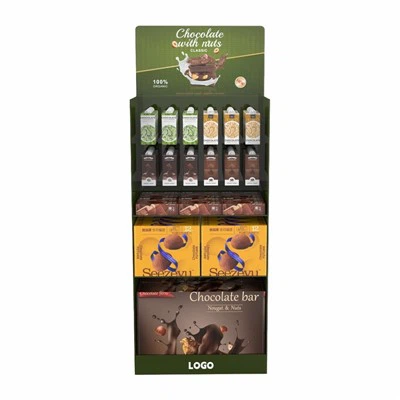
Let’s wrap this up with a real example. Last quarter, a customer who sells artisanal chocolates contacted us. She had been using a glass display case on her counter, but it kept getting scratched by the metal labels she placed next to the chocolates. She switched to our acrylic counter display case with the 6H hard coat, and after three months, she sent us a photo—there wasn’t a single scratch on it. She told us that’s the longest any display case has lasted for her, and she’s ordered three more to restock her inventory. That’s the kind of result we strive for, and it’s why we spend so much time testing and adjusting our products.
At the end of the day, when you’re choosing an acrylic counter display case, the key is to work with a supplier who understands the science behind the material, not just the sales pitch. We don’t just sell cases; we’ve been using them in our own workshop, and we’ve heard from hundreds of customers about what works and what doesn’t. If you’re in the market for a counter display case and want to know which type is right for your space, reach out to us to discuss your specific needs. We can send you samples, walk you through the scratch resistance specs, and help you pick a case that will protect your products and look great for years to come.
Acrylic Counter Display Case References:
- "Properties of Thermoplastic Polymers," Society of Plastics Engineers, 2022.
- "Pencil Hardness Testing for Coatings and Plastics," American Society for Testing and Materials, Standard D3363-21, 2021.
- "Acrylic vs. Glass for Retail Display Applications," Retail Design Institute, 2023.
- "Surface Scratch Resistance of Coated Acrylic Materials," Journal of Applied Polymer Science, Vol. 139, Issue 12, 2022.
Guangzhou Guangjie Display Products Manufacturing Co., Ltd.
We’re well-known as one of the leading acrylic counter display case manufacturers in China, also support customized service. Welcome to buy bulk high quality acrylic counter display case at competitive price from our factory. If you have any enquiry about pricelist and quotation, please feel free to email us.
Address: No. 16-1 Lilv Road, Dashi Street, Panyu District, Guangzhou City, Guangdong Province
E-mail: guangjie_dp888@163.com
WebSite: https://www.gjdisplaystand.com/
