Hey guys, if you’ve ever dabbled in power electronics—whether you’re a designer, a hobbyist, or just someone who’s ever wondered how your phone charger or laptop power brick works—you’ve probably crossed paths with inductors. And if you’ve spent any time researching inductors, toroidal ones have probably popped up a lot. But here’s a question I get all the time, and it’s one that’s been bugging folks for years: Can toroidal inductors actually hold their own in switching circuits? As a guy who’s been supplying toroidal inductors for over a decade, I’m here to break this down without all the stuffy engineering jargon that makes your eyes glaze over. Let’s cut through the noise and get real. Toroidal Inductor
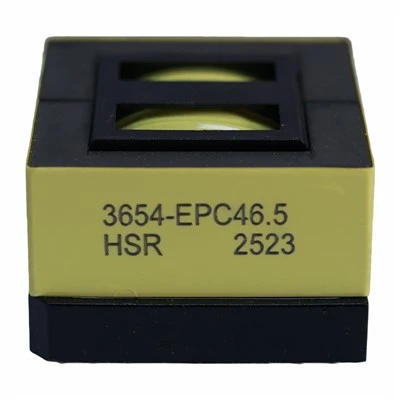
First, let’s start with the basics for anyone who’s not deep in the weeds. Switching circuits (think DC-DC converters, inverters, even those quick chargers) work by flipping power on and off thousands or even millions of times a second. The inductor’s job here is two-fold: it smooths out the current so you don’t get a jittery, unstable flow, and it stores a little energy to keep the circuit consistent between those on/off cycles. Now, toroidal inductors are those donut-shaped guys—core wrapped in wire, no legs sticking out, all nice and compact. Why do people love them? Well, for starters, they’re super efficient at containing magnetic fields. Unlike traditional inductors with an E-I core (the blocky, open-frame ones), toroids wrap every coil around the core, so there’s almost no magnetic field leaking out. That’s a big deal, right?
Wait, but why does that matter for switching circuits? Let’s think about switching circuits’ biggest enemies: noise and losses. When you’re switching at high frequencies (say, 10kHz up to 1MHz, which is standard for modern switching designs), any magnetic leakage can cause electromagnetic interference (EMI) that messes with nearby components. That means your circuit might not work as intended, or it could even radiate noise that hits other devices. Toroidal inductors almost eliminate that leakage. I’ve had customers tell me that switching their circuit from E-I inductors to toroids cut their EMI readings by 30% or more—no extra shielding needed, no hassle. That’s a game-changer for designs that have strict EMI requirements, like industrial controls or automotive electronics, where you can’t have random noise causing a sensor to glitch.
But hold on, it’s not all sunshine and donuts. A lot of folks will tell you that toroidal inductors are harder to wind than other types. For switching circuits, which often require tight, consistent wire turns to hit the exact inductance value, that winding complexity can be a downside—if you’re doing it in-house, that is. But here’s the thing: as a supplier, we’ve mastered that winding process. We use automated winding machines that wrap multiple layers of wire evenly around the toroid core, so every inductor is identical, no wonky turns that throw off your switching circuit’s performance. We also use high-grade materials—like ferrite cores for high-frequency switching, or powdered iron for lower frequencies and high current—to make sure the core doesn’t saturate under load. Saturation is a big one in switching circuits: if the core saturates, the inductor stops working as an energy storage device, and you get a huge spike in current that can burn out your circuit. Toroids, when sized right, handle saturation way better than other inductors because the closed core concentrates the magnetic field in a way that avoids those hot spots.
Let’s talk about real-world use cases. I’ve supplied toroidal inductors to a ton of switching circuit designs: solar inverters, EV battery chargers, even drone power systems. Take a recent customer who makes small solar panel optimizers—those little boxes that sit on each panel to boost power. They were using E-I inductors, but at 50kHz, the E-I units were getting hot and causing the optimizer to shut down under load. They switched to our toroidal inductors, and not only did the heat drop by 25%, but their efficiency went up almost 4%. Why? Less magnetic leakage means less energy lost as heat, and the toroid’s compact size let them fit the optimizer into a smaller enclosure. That’s the kind of win you can’t ignore in switching circuits, where every watt of efficiency matters—especially for battery-powered or off-grid devices.
Another big point: inductance density. Toroidal inductors have a higher inductance per unit volume than most other inductor types. For switching circuits that are pushing for miniaturization—like wearables, or compact consumer electronics—that’s huge. You don’t need a big, bulky inductor to hit the required inductance and current ratings; a small toroid does the same job. That’s why you’ll see toroids in phone chargers now, instead of the big, blocky inductors from 10 years ago. They’re cheaper to manufacture in high volumes, smaller, and more efficient. Wait, but what about current handling? Some folks worry that toroids can’t handle high currents without getting too big. Modern core materials have fixed that. We offer toroidal inductors that handle 50A+, even 100A, for high-power switching circuits like EV chargers. You just need to size the core right and use thick enough wire—something we specialize in.
Now, let’s address the myth that toroids are too expensive. Yeah, early on, when winding was manual, they were pricier. But with automated winding and bulk material sourcing, the cost has come way down. For high-volume switching circuit designs, the difference is negligible—especially when you factor in the lower EMI, higher efficiency, and longer lifespan that toroids bring. I’ve had customers switch back from E-I inductors to toroids because the maintenance costs and performance issues with E-I units were adding up. It’s not a question of “can you afford it” anymore—it’s a question of “can you afford not to use it.”
But wait, there are a few things to keep in mind if you’re using toroidal inductors in switching circuits. First, the winding direction matters. If you’re winding the coils incorrectly, you can get opposing magnetic fields that reduce inductance, which messes up your switching circuit’s regulation. That’s why working with a supplier who knows switching circuits is key—we’ll work with you to design the winding, wire gauge, and core size to match your exact frequency and current needs. Second, mounting. Toroids are round, so you need to secure them properly to avoid vibration issues, especially in automotive or industrial applications. We offer mounting hardware and can even add encapsulation to make them rugged for harsh environments. Third, frequency response. If your switching circuit is running at extremely high frequencies (like 10MHz+), you might need a different core material than the standard ferrite toroid—but that’s a niche case, and we have materials designed for those frequencies too.
I’ve seen so many engineers write toroidal inductors off because of outdated info, or because they tried a cheap, low-quality toroid that didn’t work. Here’s the truth: when you get a properly designed toroidal inductor from a supplier who gets switching circuits, it’s not just a good fit—it’s often the best fit. The combination of low EMI, high efficiency, compact size, and reliable saturation resistance makes toroids ideal for switching circuits, no matter the application.
At the end of the day, the question isn’t “can toroidal inductors be used in switching circuits”—it’s “why wouldn’t you use them?” Unless you’re working on a super low-frequency, hobbyist-level project where cost is the only factor, toroids offer benefits that far outweigh any downsides. And if you’re someone designing a switching circuit right now, and you’re tired of EMI headaches, heat loss, or bulky components, let’s talk. We can custom-make toroidal inductors to fit your exact specs, no one-size-fits-all garbage, and help you optimize your circuit for performance.
If you’re ready to stop fighting inefficiencies and EMI issues in your switching circuits, reach out to us for a no-obligation chat about your inductor needs. We’ve got the expertise, the equipment, and the materials to make sure your project works like a charm.
Inductor References
- Mohan, N., Undeland, T. M., & Robbins, W. P. (2003). Power Electronics: Converters, Applications, and Design (3rd ed.). John Wiley & Sons.
- El-Hamamsy, S. A., & Owen, H. A. Jr. (1989). “Design Considerations for Toroidal Inductors in High-Frequency Power Converters.” IEEE Transactions on Power Electronics, vol. 4, no. 3, pp. 344-352.
- Skilling, H. H. (1981). Electrical Inductors and Transformers. John Wiley & Sons.
Dongguan Hensiron Electric Co., Ltd.
As one of the most professional toroidal inductor suppliers in China, we have world-leading production equipment and strong manufacturing capabilities. Please feel free to buy high quality toroidal inductor made in China here from our factory. Customized orders are welcome.
Address: Building 4, Xinxing Industrial Zone, Wangao Road, Wanjiang Street, Dongguan City, China
E-mail: jessica@dghensiron.com
WebSite: https://www.dghensiron.com/
