If you’ve ever stood at a baggage claim carousel, watching a suitcase that marked as “priority” keep getting routed to the far end of the terminal, or waited 20 minutes for a checked bag that showed up on your phone’s baggage tracker, you’ve experienced the gap between airport logistics equipment and the IT systems that are supposed to keep everything moving smoothly. For the past seven years, I’ve run a small, specialized airport logistics equipment supply business—we don’t sell generic cargo belts or basic baggage scanners; we build, calibrate, and integrate the custom hardware that’s supposed to talk to an airport’s core IT systems like a well-oiled team, not two strangers in the same room. Early on, we learned the hard way that even the most durable conveyor belt or baggage tag printer is useless if it can’t “see” the data an airport’s already collecting. Airport Logistics Equipment
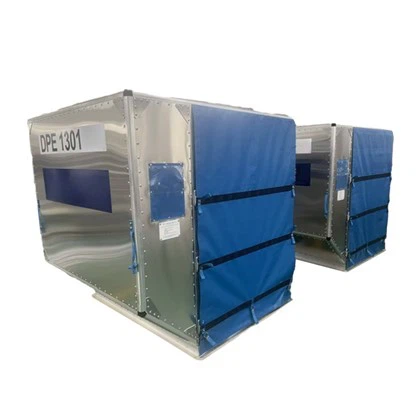
Let’s start with the basics, because this isn’t just some tech buzzword trend. When a passenger checks a bag at the ticket counter, that bag gets a 10-digit baggage tag with a unique barcode (or now, a 2D data matrix that carries 10 times more data). That barcode holds details: flight number, final destination, passenger’s frequent flyer number, special handling notes (like fragile, or connecting to an international red-eye). Before integration, that information would live in the departure control system (DCS), which is what airlines use to manage passenger check-in, and the airport operational database (AODB), which is the nerve center that tracks all flights, gates, and terminal resources. The logistics equipment—baggage handling systems (BHS), conveyor belts, transfer carts, even the small scanners that check bag tags along the route—would run on their own old, siloed software, often made in the 1990s, that only stored its own local data. So a bag tagged for Gate 32 might get stuck in a side chute because the BHS didn’t get the updated gate assignment when the flight was delayed 45 minutes. That’s the chaos we fix.
Now, how do we actually pull this off as an equipment supplier? It’s not just slapping a barcode scanner onto a conveyor and calling it a day. First, we spend weeks on-site at the airport before we design any hardware, not after. A few years back, we had a job at a mid-sized U.S. hub that was upgrading its BHS to handle 20% more seasonal holiday traffic. The airport’s AODB was already running on a cloud-based platform (they’d moved from on-prem three years prior) but their old conveyor system used proprietary software that only communicated over a 1990s serial protocol—something not used in any new IT system. Instead of forcing the airport to replace their entire conveyor network, which would have cost $12 million and shut down half the terminal for six months, we built a small, low-profile “bridge module” that sits between each conveyor’s control box and the AODB. These modules don’t just read barcodes—they translate the old serial data into MQTT, the lightweight protocol that most modern airport IT systems use to send real-time data back and forth. That’s the secret sauce, right? Integration isn’t about buying new hardware; it’s about building the middle layer that lets existing systems speak to each other, while making our equipment flexible enough to plug into that layer.
Next, there’s data sync, and this is where a lot of suppliers cut corners. We don’t just set the modules to transfer data every five minutes—we program them for event-driven sync. So when a bag is scanned at the check-in counter, the module sends that data to the AODB immediately, then waits for a confirmation: “Confirm gate assignment, confirm loading to flight 123.” If that confirmation is delayed because of a last-minute gate swap, the conveyor stops the bag at a holding point instead of routing it to a gate that’s no longer open. Last year, a major international airport in Europe had a problem where 12% of connecting bags were misrouted because their BHS only pulled gate data every 10 minutes—by the time the conveyor got the updated info, the bag had already traveled halfway across the terminal. We installed our event-driven modules, and that misroute rate dropped to less than 1% within three months. The IT team there said it cut their baggage handling overtime costs by $1.2 million a year. That’s the real value of integration, not just a cleaner baggage claim.
We also focus on real-time visibility, which is something passengers see, but airports and airlines rely on it even more for operations. When a passenger uses the airport’s app to track their bag, that data comes from the BHS scanners, not just the airline’s DCS. Our equipment contributes to that. We add small, battery-powered GPS trackers to baggage carts (not the heavy ones on the main conveyor belts—those use power from the system) that send location data to the AODB every second a cart is moving. If a cart is stuck in a remote cargo bay, the IT system alerts the ground crew immediately, instead of them doing a manual roll call every hour. During a storm a few months ago, a regional airport we work with had to delay 14 flights in one afternoon. Normally, that would mean sorting hundreds of bags manually, but because our conveyors were synced to the AODB, they automatically rerouted bags from the delayed flights to a temporary holding zone, so when the flights were cleared, they were loaded in 40% less time. That’s not just convenient—it’s operational resilience, which is a huge priority for airports now, especially with more frequent weather disruptions.
But here’s something a lot of equipment suppliers don’t talk about: cybersecurity. Airport IT systems are high-value targets, full of passenger data, flight schedules, and critical infrastructure details. When we integrate our equipment, we don’t just plug into the network—we build in layered security. Every bridge module we make uses end-to-end encryption for data transfers, so if a hacker tries to intercept the tag data between the scanner and the AODB, they can’t read it. We also program the modules to only send the data the system needs—no extra metadata, no access to other airport systems. Early in my business, we had a client that let another supplier integrate their conveyor modules without encryption, and they got a ransomware attack that locked up their baggage system for 12 hours. That supplier had to replace all their hardware because they didn’t build security into the integration layer. We never cut corners there. It’s non-negotiable, not an afterthought.
Another big piece is scalability. Airports don’t stand still—they add new gates, switch to new IT platforms, expand their cargo operations. Our equipment is designed to integrate without a full overhaul every time a new system comes online. For example, last year a major U.S. carrier switched from their in-house DCS to a cloud-based DCS offered by a global airline tech company. Most equipment suppliers would have come in, pulled out all the old modules, installed new ones, and charged the airport $2 million. We just updated the protocol settings on our existing bridge modules—no hardware change, just a software update that took our team of three engineers two days on-site. The airport saved over $1.7 million, and their baggage handling operations didn’t shut down for a minute during the transition. That’s the value of building integration into the equipment, not adding it as an add-on.
I wish I could say this all works perfectly, every time, but we run into challenges all the time. Last year, we had a job at a small regional airport that was still running a 15-year-old AODB that used a proprietary protocol only their original IT vendor supported. The vendor was out of business, so they couldn’t update the protocol to MQTT. Instead of telling them they had to replace their entire core IT system, we built a custom translation layer that uses that old proprietary protocol and converts it to standard formats our modules can use. It took us three extra months of R&D, but it meant the airport could keep their existing IT investment, and our conveyors could integrate without major disruption. That’s what being a supplier is about, right? It’s not about selling the fanciest new hardware; it’s about solving the problem, even when the client’s systems are messy or outdated.
Looking ahead, the biggest shift is towards AI-powered airport operations, and our equipment integration has to keep up. Airports are starting to use AI to predict baggage delays, optimize conveyor routes, and even flag damaged bags before they reach the carousel. To make that work, our equipment has to be able to send not just location and tag data, but also sensor data: the vibration of conveyor belts to predict maintenance issues, the weight of bags to make sure they’re loaded correctly, even the temperature of hold bags for perishables or live animals. Last quarter, we started adding these small sensors to our conveyor rollers, and integrating them with the airport’s AI operations platform. At a cargo hub in Asia, that’s cut unplanned conveyor downtime by 28% because the AI can schedule maintenance before a belt breaks. That’s the next level of integration—our equipment doesn’t just move bags; it feeds data that makes the whole airport smarter.
If you’re an airport operations manager or a procurement lead, you know that integrating logistics equipment with IT systems isn’t just a tech project—it’s a project that impacts on-time flight performance, passenger satisfaction, and your bottom line. A broken integrated baggage system can cost an airport tens of thousands of dollars an hour in delayed flights and passenger complaints. At the same time, you don’t want to throw out years of IT investment just to upgrade your equipment. That’s why our approach is always site-specific, not one-size-fits-all: we listen to your existing systems, build integration layers that fit, and make sure every piece of our equipment works with what you already have.

If you’re looking to upgrade your airport logistics equipment with seamless integration that’s reliable, secure, and scalable, reach out to connect with our team for a tailored consultation. We’ll walk through your current systems, show you how our equipment can integrate without disruption, and build a plan that fits your budget and operational needs.
Pallet Dolly REFERENCES
- Airport Council International (ACI). (2023). Global Airport Technology Benchmark Report: Baggage Handling and IT Integration.
- Federal Aviation Administration (FAA). (2022). Guidelines for Airport Logistics Equipment and Cybersecurity Integration.
- International Air Transport Association (IATA). (2024). Baggage Data Standardization Protocols for Modern Airport Operations.
- Gartner. (2023). Market Guide for Airport Logistics Integration Solutions.
- European Organisation for the Safety of Air Navigation (EUROCONTROL). (2022). Operational Resilience Through Integrated Airport IT and Logistics Systems.
Wuxi Aviation Ground Equipment Co., Ltd.
Wuxi Aviation Ground Equipment Co., Ltd. is well-known as one of the leading airport logistics equipment manufacturers and suppliers in China. Please rest assured to buy or wholesale discount airport logistics equipment for sale here from our factory. For price consultation, contact us.
Address: No.18 Dingxiang East Road, Hudai Town, Binhu District, Wuxi, Jiangsu, P.R. China
E-mail: sales@wxagecl.com
WebSite: https://www.wxagecl.com/
