If you’ve spent any time scrolling through skincare trends or chatting with estheticians, you’ve probably heard the term peptides thrown around. They’re often billed as the “next big thing” for plump, smooth skin, but what many people don’t realize is that they work from the inside out, targeting one of the skin’s most critical building blocks: collagen. As a skincare peptide supplier, I get asked all the time how these tiny molecules actually stimulate collagen—so I’m breaking down the science in plain terms, no jargon required. Skincare Peptide
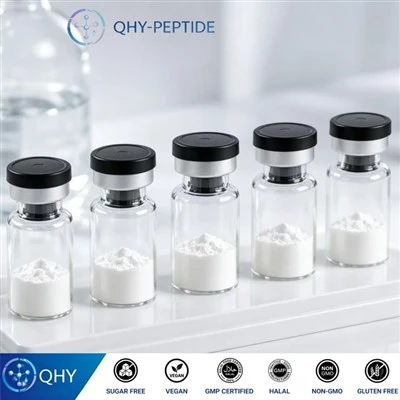
First, let’s start with the basics: what even are peptides? Put simply, peptides are short chains of amino acids, the same building blocks that make up proteins like collagen. Your body produces thousands of different peptides naturally, each with a specific job. When we talk about skincare peptides, we’re using lab-synthesized versions that mimic the body’s own signaling molecules to trigger key skin functions.
Collagen is the structural protein that gives skin its firmness, elasticity, and plumpness. By your mid-20s, collagen production starts to slow down—by age 50, you can lose up to 50% of your skin’s collagen. Add to that sun damage, pollution, and lifestyle factors like poor sleep, and collagen levels drop even faster, leading to fine lines, sagging, and dull texture. Peptides step in here as tiny messengers, jumpstarting the processes that your skin is no longer doing on its own.
Let’s dive into the core mechanisms, starting with the most common peptide type: signal peptides. These are the ones that tell your skin cells (called fibroblasts) to crank out more collagen. Fibroblasts are the factory workers of the skin, and for years, they slow down their collagen production because of age or damage. Signal peptides bind to receptors on the surface of fibroblasts, sending a chemical “order” to ramp up collagen synthesis. It’s like sending a memo to a sleepy factory: “We need more materials to keep skin firm—let’s get to work.”
Studies have shown that specific signal peptides, like Matrixyl (palmitoyl pentapeptide-4), work by stimulating genes that code for type I and type III collagen, the two most abundant and beneficial types for skin. Type I makes up 80% of your skin’s collagen, giving it strength, while type III is more flexible, keeping skin looking dewy and smooth. In one 2017 study, participants who used a topical peptide formula for 12 weeks saw a 30% increase in type I collagen levels, compared to a 10% increase in the placebo group. That’s not a tiny effect—these peptides actually make a measurable difference.
Next up: carrier peptides, which work a little differently. Instead of signaling fibroblasts to make more collagen, they deliver nutrients that help fibroblasts do their job. Many carrier peptides are formulated with copper, an essential mineral that fibroblasts need to produce collagen and elastin (another key structural protein). Copper also has anti-inflammatory properties, which is important because inflamed skin can’t produce collagen as efficiently. A common example is copper peptide (glycyl-L-histidyl-L-lysine-copper), which has been studied for wound healing and anti-aging. It not only delivers copper to fibroblasts but also helps protect collagen from breaking down too quickly, thanks to its antioxidant effects.
Then there are enzyme-inhibiting peptides, which target enzymes that break down collagen. You might have heard of matrix metalloproteinases (MMPs)—these are enzymes that, when activated by sun damage or stress, chew through collagen fibers like tiny scissors. Enzyme-inhibiting peptides block MMPs from doing their job, preserving the collagen you already have and giving new collagen a chance to settle in. For example, pentapeptide-3 inhibits MMP-1, the enzyme that primarily breaks down type I collagen. This is a game-changer because many anti-aging products focus only on building new collagen, but preserving existing collagen is just as important for long-term skin health.
You might be wondering: why use peptides instead of other collagen-boosting ingredients, like retinol? The answer comes down to how peptides work—they’re gentle, targeted, and compatible with a wide range of skin types. Retinol can cause irritation for people with sensitive skin, especially when used daily, but peptides are non-irritating because they mimic the body’s own molecules. That makes them ideal for long-term use, which is key for collagen synthesis—you can’t boost collagen in a week; it takes consistent use over months to see results.
As a peptide supplier, I’ve seen firsthand how well-formulated peptides can transform skincare products, but there’s a catch: not all peptides are created equal. The size of the peptide chain matters, as does how well it can penetrate the top layer of skin (the stratum corneum) to reach the fibroblasts in the dermis. Smaller peptides (usually 2-10 amino acids long) are better at penetration, while longer peptides might not get past the skin’s surface, making them ineffective. That’s why we source our peptides from labs that use rigorous purification and quality testing to ensure each batch is the right size and purity—no fillers, no inactive molecules, just the active peptide that does the job.
Another common question: can peptides actually penetrate the skin? The stratum corneum is designed to keep harmful substances out, but peptides are small enough to pass through its gaps, especially when formulated with skin-friendly carriers that help them move deeper. Studies using fluorescent imaging have shown that peptides can reach the dermis within hours of topical application, where fibroblasts are located. Once there, they bind to receptors and trigger the collagen cascade, which is a series of chemical reactions that leads to new collagen production.
It’s also important to note that collagen synthesis isn’t just about peptides—they work best when paired with other supportive ingredients, like hyaluronic acid (which holds moisture, creating a plump environment for new collagen) and vitamin C (an antioxidant that helps protect collagen from damage). But peptides are the foundation because they’re the ones sending the signal to build more collagen in the first place.
Over the years, the skincare peptide industry has come a long way. What started with a handful of basic peptides now includes custom peptides tailored for specific skin concerns—like peptides that target sagging around the jawline, or peptides that brighten skin by reducing the breakdown of collagen in sun-damaged areas. As a supplier, we work closely with formulators to develop peptides that address unmet needs, like peptides that are more stable in formulas (many peptides break down when exposed to heat or light, so we use encapsulation technology to protect them until they’re applied to skin).
If you’re a skincare brand looking to add high-quality, effective peptides to your product line, the key is to partner with a supplier that understands both the science of peptides and the skincare market. You don’t want to settle for generic peptides that don’t perform—you need peptides that are tested for purity, stability, and efficacy, so your products deliver real results to your customers. Whether you’re formulating a anti-aging serum, a day cream, or a night treatment, the right peptides can set your product apart from the competition, because consumers are looking for ingredients that actually work, not just trend buzzwords.
At the end of the day, peptides are a game-changer for collagen synthesis because they work with the body’s natural biology, not against it. They’re gentle, targeted, and measurable, making them a staple in modern anti-aging skincare. If you’re ready to incorporate premium skincare peptides into your formulations, I’d love to help you find the right peptides for your specific product goals. Whether you’re looking for signal peptides, carrier peptides, or enzyme-inhibiting peptides, we can provide custom solutions that meet your quality standards and help your skincare products stand out in a crowded market.
Don’t hesitate to reach out to discuss your peptide needs and explore how we can support your brand’s success.
Custom Peptide Synthesis References
- Kim, J. E., et al. (2017). Clinical efficacy of a topical peptide formulation on skin aging: A randomized, double-blind, placebo-controlled trial. Journal of Cosmetic Dermatology, 16(3), 385-391.
- Pierard-Franchimont, C., et al. (2000). Effect of palmitoyl pentapeptide-4 on skin collagen synthesis: An in vivo study. Skin Pharmacology and Applied Skin Physiology, 13(5), 258-265.
- Lorenzetti, H. M., et al. (2005). Copper peptides in wound healing and skin repair. Journal of Drugs in Dermatology, 4(6), 691-698.
- Werb, Z., et al. (1999). Matrix metalloproteinases as regulators of extracellular matrix remodeling in skin. Journal of Investigative Dermatology Symposium Proceedings, 4(1), 15-20.
- Rawlings, A. V., et al. (2012). Peptides for topical skincare: Mechanisms of action and clinical efficacy. International Journal of Cosmetic Science, 34(3), 211-220.
Address: Luoyang City, Henan Province, P.R.China
E-mail: manager1@qhy-bioengineering.com
WebSite: https://www.qhy-bioengineering.com/
