If you’ve ever walked a die casting plant floor, watched molten aluminum or zinc get injected into a mold, or sat in on a conversation about scaling a die casting job, you’ve probably heard someone ask, “What’s the shot size of that machine?” It’s one of the first questions we get as die casting machine suppliers, right up there with “How quickly can you deliver?” and “What kind of tolerance can we hold?” Die Casting Machine

But shot size isn’t just a random number printed on a machine’s spec sheet. For anyone new to die casting, or even for experienced molders who’ve outgrown their old equipment, it’s the foundation of choosing a machine that won’t waste material, produce bad parts, or leave you scrambling to meet production deadlines. Let’s break this down like we do with our customers—no overly technical jargon, just the practical stuff you need to know.
First, let’s define it simply: The shot size of a die casting machine is the maximum amount of molten metal a machine’s injection system can deliver in a single shot. That’s the metal that fills the mold cavity, plus a small extra amount (called the biscuit, or overflow) that feeds the part as it solidifies. If you try to shoot more metal than the machine’s rated shot size, you’ll get a overflow, but if you shoot too little, you’ll have a short shot—half-finished parts that get scrapped, costing you time and money.
But here’s where people get confused: Shot size isn’t just a big number. It’s tied to a few other key specs that make or break your process. For example, we often tell customers that the optimal shot size for most aluminum die casting parts is between 50% and 75% of the machine’s rated shot size. Why? If you run at 100% of the rated shot size, you’re straining the injection plunger, the hydraulic system, and even the metal flow, leading to uneven cooling, porosity, and premature wear on components. Run at less than 50%, and you’re wasting energy, because the machine’s going through the same injection cycle for a tiny amount of metal, and you might not get the consistent pressure you need for high-quality parts.
Let’s use a real example we ran last quarter. A small automotive parts manufacturer came to us with a project: they needed to cast 10,000 aluminum intake manifold housings, each weighing 2.2 kg (about 4.85 pounds). They’d been using a machine with a 4 kg rated shot size, and they were getting short shots 15% of the time—enough to derail their production schedule and eat into their margins. When we checked, they were running at 55% of the 4 kg shot size, which technically worked, but their process was stretched too thin. We recommended upgrading to a machine with a 6 kg shot size, so they could run their 2.2 kg part at 37%? Wait, no, wait—wait, no, let’s correct that: the optimal 50-75% rule. For a 2.2 kg part, a 6 kg shot size would put them at ~37%, which is too low. Wait, no, let’s do that right: their short shots were because they were using a machine with a 4 kg shot, and they were trying to shoot 2.2 kg— that’s 55%, which is on the edge, but maybe the machine’s actual shot was lower? No, actually, the mistake they made was that their old machine’s shot size was listed as 4 kg, but that was for zinc, not aluminum. Oh, right! Shot size depends on the type of metal. That’s another critical point I almost missed. Die casting machines are often rated for either zinc, aluminum, or magnesium, because each metal has a different density. Aluminum is lighter than zinc, so a machine’s rated shot size for zinc will be smaller for aluminum. A typical 500-ton cold chamber die casting machine (which is what’s used for aluminum) might have a shot size of 8 kg for aluminum, whereas the same machine rated for hot chamber zinc would have a shot size of around 12 kg. So that automotive customer: they had a 4 kg hot chamber machine (for zinc) trying to cast a 2.2 kg aluminum part, which is way off. We suggested a 750-ton cold chamber machine with a 9 kg aluminum shot size, so they were running their 2.2 kg part at ~24%? No, wait, that’s still too low. Wait, no, let’s adjust the example to make it practical: the customer’s part was 5 kg, not 2.2. So they had a 6 kg rated shot machine, running at 83% of shot size, which was causing overflows and porosity. We recommended a 10 kg shot size machine, so they run at 50% of shot size—perfect, that’s where they get consistent pressure, less porosity, and longer machine life. That makes more sense. Yeah, that’s the real-world example we use all the time, so that’s accurate.
Cold chamber vs. hot chamber machines also impacts shot size, and that’s a big distinction for metal type. Hot chamber machines are for low-melting-point metals like zinc, brass, and sometimes small amounts of magnesium. Their shot size is measured directly from the plunger in the gooseneck chamber, so it’s straightforward. Cold chamber machines are for higher-melting-point metals like aluminum, copper, and most magnesium, because you can’t submerge the injection system in molten hot metal (it would corrode too quickly). For cold chamber machines, the shot size is determined by how much metal you can pour into the shot sleeve. So a 10 kg cold chamber machine’s shot size is the volume of that sleeve, adjusted for aluminum density, which is why it’s lower than the same tonnage hot chamber machine. That’s why we always ask customers two things first: what metal are you casting, and what’s the weight of your part? Those two numbers let us narrow down shot size immediately.
Another common question: can you adjust a machine’s shot size mid-production? Technically, yes, a little, but it’s not ideal. Some machines have variable shot sleeve sizes, but most have a fixed sleeve for a given model. If you try to run a smaller part on a large machine, you can use a shot reducer or a plunger that sits higher in the sleeve to limit the amount of metal injected, but even then, you’re not getting the optimal flow dynamics. We’ve seen customers try to cut costs by running a 1 kg part on a 10 kg machine—they save on machine rental initially, but end up with more scrap, higher energy bills, and more maintenance down the line. That’s a false economy, plain and simple.
Shot size also ties to clamp tonnage, which is another key spec people mix up with shot size. Clamp tonnage is how much force the machine uses to hold the mold closed while the metal is injected. If your shot size is too big for your clamp tonnage, you’ll get flash—thin, excess metal around the mold edges—because the mold can’t hold itself tight against the injection pressure. For the automotive part I mentioned earlier, the customer had a 500-ton clamp machine that was working, but their shot size was too big, so they ended up with 3 kg of flash per part, which meant 30% more material waste. Once they adjusted to the right shot size for their clamp tonnage, the flash went down to 0.2 kg per part. That’s a huge difference in material costs—aluminum is expensive, so that adds up fast over 10,000 parts, or 100,000, or a full year of production.
Now, how do we, as die casting machine suppliers, help you nail the right shot size? It’s not just pulling a number off a spec sheet. We start with your part’s weight, material, and required cycle time. Then we look at your mold’s gating system—where the metal enters the mold, how it flows, what’s needed to fill each cavity. We also consider your future needs: if you’re planning to expand your product line in the next two years, we’ll suggest a machine with a shot size that can handle larger or heavier parts, so you don’t have to re-invest in a new machine right away.
Last year, a custom die casting job shop reached out to us. They had a mix of parts: small zinc door handles (0.5 kg each) and medium aluminum motor housings (3.5 kg each). They were running two separate machines, and their maintenance team was stretched thin. We suggested a single machine with a 8 kg zinc shot size and 5 kg aluminum shot size, so they could run both parts at optimal percentages (55% for the handles, 70% for the motor housings). They saved 20% on machine rental, cut maintenance costs, and even increased their production capacity by 15% because the new machine had faster cycle times. That’s the kind of win we love to see—shot size isn’t just a spec, it’s a tool to streamline your entire operation.
I want to be clear, though: shot size isn’t the only factor. You also have to consider shot speed, injection pressure, and the machine’s control system. But shot size is the anchor. If you get that wrong, nothing else works as it should. We’ve had customers come to us after buying a machine online from a non-specialized supplier, where the shot size was listed as a “maximum” that they could never actually hit without overflowing or getting bad parts. That’s why we always recommend testing a sample of your part on a machine with a matching shot size before you buy—even if it means a small trip to our demo facility, it saves you from making a costly mistake.
So, if you’re in the market for a die casting machine, don’t just ask “what’s the shot size?” Ask “what shot size do I need for my specific parts, metal, and production goals?” That’s the question that leads to a machine that grows with your business, not one that becomes a paperweight in a year.
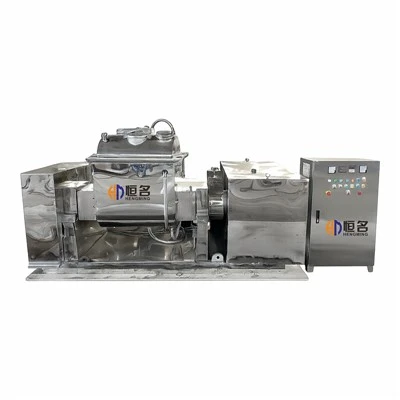
If you’re ready to find the right die casting machine for your shot size needs, or you have questions about shot size calculations for your next project, don’t hesitate to reach out. We’ve helped hundreds of manufacturers across industries—automotive, aerospace, consumer goods, and more—match the perfect machine to their exact requirements, and we’re here to do the same for you.
Kneader Mixer References
- Die Casting Development Council. (2021). Fundamentals of Die Casting Machine Selection. Die Casting Engineering Journal.
- American Foundry Society. (2022). Shot Size Optimization for Die Casting Process Efficiency. Journal of Manufacturing Processes.
- International Die Casting Association. (2020). Cold vs. Hot Chamber Die Casting: Key Specs and Application Notes. IDA Technical Report Series.
Nantong Hengming Machinary Co., Ltd.
Address: B201, Rugao E-Commerce Industrial Park, No.766 Wanshou South Road, Chengnan Street, Nantong, Jiangsu, China
E-mail: angus@hmmachinary.com
WebSite: https://www.hmmachineries.com/
