When I first started my work as a butt fusion fittings supplier more than a decade ago, I lost count of how many times I’d get a call from a contractor or project manager asking, “Wait, are the fittings I bought going to work with that HDPE pipe I’m trying to install?” It’s a question that trips up even seasoned professionals sometimes, and I’ve spent years refining how to break this down clearly—not just with industry jargon, but with real-world context that makes sense for anyone on the job. Let’s cut through the confusion and get to the core: yes, butt fusion fittings are almost always compatible with HDPE pipe fittings, but there are non-negotiable details you can’t skip if you want a joint that lasts. Butt Fusion Fittings
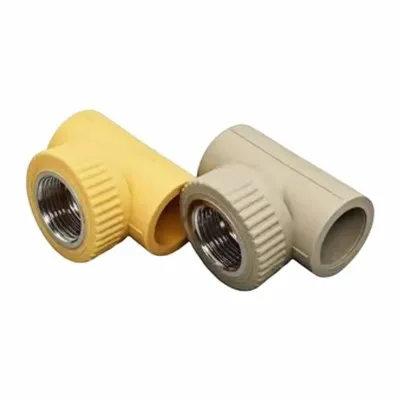
First, let’s ground this in what actually makes HDPE (high-density polyethylene) work with butt fusion. HDPE is a thermoplastic material, meaning it softens when heated and fuses permanently when pressure is applied as it cools—no adhesives, no extra parts, just molecular bonding. Butt fusion fittings, designed specifically for this process, are cut from the exact same HDPE resin as the pipe. That’s the key compatibility baseline I drill into every new customer: same resin type, same manufacturing standards, and matching dimensions. If you skip even one of those, you’re not just risking a bad joint—you’re risking a project failure that leads to downtime, extra costs, or even safety hazards, especially for underground water lines, gas distribution, or industrial wastewater systems.
I’ve seen too many people assume all HDPE is the same, and that’s where mistakes happen. HDPE comes in different grades, categorized by its melt flow rate (MFR) and density classification, usually specified by ISO 4427 or ASTM D792. For example, most pressure pipe HDPE is PE4710, a high-density, stress-resistant grade that’s become the industry standard for water and gas applications. A butt fusion fitting made from PE4710 will bond seamlessly with PE4710 pipe. But here’s the catch: if a contractor picks up a cheap, off-spec butt fusion fitting made from a lower-grade HDPE (like PE3608, which is sometimes used for non-pressure applications only), the joint won’t melt evenly. The lower-grade resin has a different molecular structure, so when you heat the fitting and pipe, their softening points don’t align. You’ll end up with a weak weld that can crack under pressure, or a gap that lets leaks develop over time. I’ve had to replace fittings for clients who tried to save a few bucks on mismatched resins, and every time I explain the science behind why it failed, they nod and say, “I had no idea that was a thing.” It’s not that they were being careless—HDPE terminology can feel overwhelming when you’re not deep in the supply side.
Next, dimension compatibility. This isn’t just about “will it fit end-to-end.” Butt fusion relies on precise outside diameter (OD) matching. HDPE pipe has a standardized OD (for example, 110mm, 160mm, 200mm, based on ISO or ASTM specs), and butt fusion fittings are manufactured to the exact same OD. If a fitting’s OD is even a millimeter off from the pipe you’re using, the fusion machine’s clamps can’t hold both pieces evenly. Uneven clamping leads to uneven heat distribution—one side of the joint melts too much, the other not enough—and that creates a weak spot. I once had a job where a contractor ordered 250mm fittings that were labeled as HDPE, but their OD was 2mm too small. We had to send custom machined adapters to match, and it cost the project two extra days of work and a lot of frustration. That’s why, when I send quotes to customers, I always ask for the pipe’s OD, pressure rating, and resin grade before I recommend a fitting. I can’t tell you how many times someone will say, “My pipe is 6-inch,” and I have to clarify—are you talking about nominal size (which can vary) or actual outside diameter? Nominal sizes are a rough guide, but for fusion, OD is non-negotiable.
Pressure rating is another common point of confusion. A lot of people think, “If my pipe is rated for 16 bar, my fitting just needs to be the same size, right?” Not exactly. Butt fusion fittings are designed to match the pressure rating of the pipe they’re paired with, and they’re tested to the same standards. A fitting rated for 10 bar won’t stand up to a 16 bar pipe’s pressure, even if it fits perfectly. But here’s the good news: most reputable butt fusion fittings I supply are rated for full pressure, matching the pipe’s class (like Class 12 for 12 bar, Class 16 for 16 bar). What I tell customers is, “Check your pipe’s pressure class, and get a fitting with the same or higher rating.” It’s a simple step, but it’s one that prevents so many avoidable issues. I’ve also worked with industrial clients who have non-standard pressure requirements—for those, I can custom manufacture fittings to match their exact specs, no problem.
Now, let’s talk about the process itself, because compatibility isn’t just about the parts—it’s about how you fuse them. Even if you have the perfect resin-matched, dimension-matched parts, a bad fusion job will fail. I’ve seen this firsthand: a contractor used a cheap fusion machine, set the heat time too short, and ended up with a joint that leaked within a month. Or another team didn’t clean the ends of the pipe and fitting before fusion, leaving dirt or debris between the layers. That’s why, as a supplier, I don’t just sell fittings—I also share fusion best practices with every customer, because the parts are only as good as the installation. For example, when you heat a butt fusion fitting and a pipe, you need to use a heating plate set to the correct temperature (usually around 210 degrees Celsius for PE4710), apply consistent pressure until the material melts into a uniform bead, then remove the plate and push the two pieces together with the right force. If any step is off, even compatible parts won’t create a strong joint.
But wait—what about different types of HDPE pipe, like corrugated HDPE pipe vs. solid-wall HDPE pipe? Corrugated pipe is often used for drainage, not pressure applications, and butt fusion fittings can work with it too, but you have to make sure you’re using fittings designed for corrugated pipe. Corrugated pipe has a different wall structure, so a standard solid-wall fitting won’t seal properly. That’s another reason why working with a supplier who knows the difference matters— I don’t just sell one type of butt fusion fitting; I stock fittings for every HDPE pipe type, from pressure water lines to agricultural drainage.
I should also address a common myth: some people think you can connect HDPE pipe with other materials, like PVC or steel, using butt fusion. No, that’s not compatible. Butt fusion only works between thermoplastic materials of the same resin type. If you need to connect HDPE to PVC, you’d use a transition fitting with gaskets or solvent cement, not butt fusion. Same with steel—you’d need a mechanical coupling, not a fused joint. That’s a line I never cross as a butt fusion supplier: I only recommend butt fusion for joints where both parts are HDPE, same resin, same dimensions. It’s the only way to get the permanent, leak-proof joint butt fusion is known for.
Now, let’s talk about real-world results. I had a customer last year who was installing a 10-mile water line for a rural community. They originally bought fittings from a supplier who didn’t specify the resin grade, and after 6 months, three joints were leaking. They reached out to me, and we tested the old fittings—turns out they were PE3608, which isn’t rated for pressure water lines. We replaced them with PE4710 butt fusion fittings, matched exactly to their pipe’s OD and pressure rating, and now, two years later, the line is still running without a single leak. That’s the kind of result I care about: not just selling parts, but making sure they work for the job.
So, to circle back to the original question: Are butt fusion fittings compatible with HDPE pipe fittings? The answer is yes, when you get three things right: same resin grade, matching outside dimensions, and aligned pressure ratings. But it’s not a “one-size-fits-all” deal. There are small, often overlooked details that make all the difference, and as a supplier, I make it my job to make sure my customers understand those details, not just sell them fittings.

If you’re working on a project, whether it’s a small residential line or a large industrial installation, and you’re not sure if your butt fusion fittings will work with your HDPE pipe, don’t guess. I’ve helped hundreds of contractors sort out compatibility issues, avoid costly mistakes, and get their projects on track. Whether you need standard fittings, custom sizes, or guidance on fusion processes, reach out to discuss your requirements. I’m here to help you get the right parts the first time, so you don’t have to deal with delays or failures down the line.
Butt Fusion Fittings References
- ISO 4427:2019, Plastics piping systems — Polyethylene (PE) pipes and fittings for water supply
- ASTM D792-20, Standard Test Methods for Density and Specific Gravity (Relative Density) of Plastics by Displacement
- American Water Works Association (AWWA) Standard C906, Polyethylene (PE) Pressure Pipe and Fabricated Fittings, 4 in. Through 63 in. (100 mm Through 1600 mm), for Water Transmission and Distribution
- Association of Plastic Pipe Extrusion Technology (APPET), Butt Fusion Installation Best Practices for HDPE Piping Systems
Qingdao Polyfusion Machinery Co., Ltd.
As one of the most professional butt fusion fittings manufacturers and suppliers in China, we have world-leading production equipment and strong manufacturing capabilities. Please feel free to buy bulk high quality butt fusion fittings from our factory.
Address: Chengyang Industry Zone, Chengyang, Qingdao, Shandong, China
E-mail: export01@qdpolyfusion.com
WebSite: https://www.polyfusionfittings.com/
