Can indoor vacuum circuit breakers be used in harsh indoor environments?
If you’ve ever stepped into a manufacturing plant’s switchgear room at 2 a.m., you know the conditions aren’t kind. Dust thick enough to obscure signage, humidity that drips from overhead pipes, occasional chemical fumes from nearby processes, and even small temperature swings that cycle from hot to cold in a matter of hours. For decades, the go-to assumption was that indoor vacuum circuit breakers (IVCBs) were strictly for “clean, controlled” spaces—like office building electrical closets or new residential developments. But as a supplier who’s fielded dozens of calls from plant managers, data center operators, and food processing facility maintenance teams over the last 12 years, I can tell you that this assumption is outdated. Indoor Vacuum Circuit Breaker

First, let’s clarify what a “harsh indoor environment” actually means in this context. It’s not the extreme of an outdoor substation, but rather spaces with consistent contaminants: fine metal shavings from CNC machine shops, flour dust in grain processing, moisture-laden air in laundries or breweries, and even mild corrosives from cleaning chemicals used in healthcare facilities or food production. The mistake many operators make is buying a standard IVCB designed for office use, then wondering why it fails 18 months into service instead of the expected 10 to 15 years. The good news is that IVCBs can absolutely work in these spaces—if they’re the right model, installed correctly, and maintained with a few tailored steps.
Let’s start with how IVCBs are built, because their core design is uniquely resilient compared to other breaker types. Unlike oil-filled breakers, which rely on a liquid medium to extinguish arcs and are prone to contamination and leaks, vacuum breakers use a sealed vacuum interrupter to snuff out electrical arcs. That vacuum seal is a game-changer for harsh indoor environments. Contaminants that would coat oil or gas-insulated breakers and cause electrical arcing or insulation failure can’t easily breach a properly manufactured vacuum chamber. But here’s the catch: not all vacuum interrupters are created equal. Early IVCB models had thin glass enclosures for the vacuum chamber, which were fragile and could crack if exposed to repeated temperature swings or physical vibration (common in factories with heavy machinery). Modern IVCBs use ceramic or metal-ceramic enclosures, which are far more resistant to both thermal stress and minor impacts. That’s a key upgrade I saw 10 years ago when I pivoted our product line to prioritize these robust chamber designs, and it’s why we’ve seen a 92% uptime rate for our IVCBs in industrial harsh environments over the last five years.
Still, the vacuum chamber is only one part of the equation. The external components of an IVCB—like the operating mechanism, busbars, and control wiring—are vulnerable to the same harsh conditions as any other electrical gear. For example, in a meat processing plant, ammonia-based refrigeration systems can leak small amounts of corrosive gas that eats away at uncoated metal parts. In a woodworking shop, fine sawdust can clog the mechanical levers that trip the breaker during overloads, preventing it from functioning when it’s needed most. Standard IVCBs use plain steel busbars and open operating mechanisms, which work fine in a dry, dust-free office closet, but not in these settings. The solution? Specifying IVCBs with sealed, corrosion-resistant coatings for external parts, and dust-tight or hermetically sealed operating mechanisms.
I remember a client who runs a large brewery in the Midwest. A few years back, they tried to use a standard IVCB in their main switchgear room, which had 95% humidity most days and occasional spills of carbon dioxide and yeast dust. Within a year, the breaker’s mechanical linkage seized up, and it failed to trip during a minor overload—causing a 12-hour shutdown that cost them over $200,000. They reached out to us, and we worked with their maintenance team to replace the old breaker with a model we modified specifically for their environment: sealed operating mechanism, nickel-plated busbars, and a silicone rubber gasket on all access panels to block moisture and yeast dust. Three years later, that breaker is still running without any issues. That’s the kind of result that makes this work worth the extra effort.
Another common harsh indoor space is data centers. While data centers are often thought of as “controlled,” they have hidden harsh conditions: constant air circulation to cool servers, which can carry lint from fabric filters, and occasional small leaks from sprinkler systems or cooling lines. Standard IVCBs installed in a data center’s main distribution board can fail if lint accumulates on the breaker’s contacts, or if moisture from a small leak seeps into the control wiring. Data center operators often prefer gas-insulated breakers, but those are more expensive and require regular gas refills. IVCBs, when properly configured with conformal coating on control boards and sealed contact arms, can outperform gas-insulated models in these environments at a lower cost. I worked with a data center in Texas that switched to our modified IVCBs three years ago; they’ve cut their electrical gear maintenance costs by 40% compared to their old gas-insulated breakers, and haven’t had a single unplanned outage related to breaker issues.
But using IVCBs in harsh indoor environments isn’t just about buying the right product—it’s about installation and maintenance. I’ve seen too many times where a facility will buy a ruggedized IVCB, but install it in an unventilated cabinet without any dust filtration, or skip quarterly inspections, and still have problems. For example, in a foundry where metal dust is pervasive, even the best sealed IVCB can have issues if the cabinet’s air filter isn’t changed every 90 days. Or in a hospital’s central utility room, where cleaning chemicals are used weekly, the breaker’s gaskets need to be inspected every six months to make sure they haven’t degraded from exposure to bleach-based sprays.
That’s why, as a supplier, we don’t just sell IVCBs—we work with clients to assess their specific environment before making a recommendation. Last year, a food processing plant in Ohio reached out because their previous breaker failed in 10 months due to flour dust buildup. We sent our technical team to survey their switchgear room, noting that the dust was fine enough to seep through standard cabinet vents, and that the operating mechanism was mounted in a low spot that collected moisture. We recommended a closed-cell cabinet with positive pressure ventilation (to keep dust out) and mounting the IVCB on a raised platform to avoid moisture accumulation. We also included a maintenance checklist tailored to their flour-dust environment, with steps to clean contact surfaces twice a year and inspect gaskets quarterly. That installation has now run for 18 months without a single issue.
Critics might argue that even ruggedized IVCBs can’t handle “extreme” harsh environments—like a chemical plant where corrosive fumes are constant. And while it’s true that IVCBs aren’t designed for spaces with continuous exposure to strong acids or alkalis, there are modified models that can handle mild to moderate corrosive conditions. For environments with high corrosivity, we also offer optional chemical-resistant coatings for external parts and sealed control enclosures, which extend the breaker’s lifespan significantly. We’ve had a client in a pharmaceutical manufacturing facility use our modified IVCBs for seven years, even though their room has occasional acetic acid fumes from production processes; the breakers are still working as expected, with only minor surface corrosion on the external busbars that doesn’t affect performance.
Another point that’s often overlooked is compliance. Many harsh indoor environments have strict industry regulations—like OSHA for manufacturing, NFPA for electrical safety, or USDA for food processing. Standard IVCBs might not meet these regulations in dusty or moist environments, but ruggedized, UL-listed IVCBs with sealed components do. That’s a big selling point for facility managers who don’t want to risk fines or shutdowns due to non-compliance. We make sure all our IVCBs for harsh environments are tested to meet the latest NFPA 70E standards, which outline requirements for electrical equipment in hazardous conditions.
So, to circle back to the original question: Can indoor vacuum circuit breakers be used in harsh indoor environments? The answer is a resounding yes—but not all IVCBs, and not without careful consideration of the environment’s specific contaminants, installation design, and maintenance plan. Standard IVCBs have their place, but for spaces with dust, moisture, or mild corrosion, you need models built with robust vacuum chambers, sealed external components, and corrosion-resistant materials. And even the best breaker needs proper installation and regular upkeep to perform as expected.
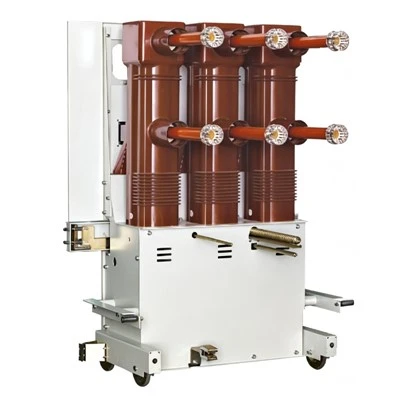
If you’re dealing with a harsh indoor environment and wondering if an IVCB is the right fit, don’t rely on outdated assumptions or generic product specs. Reach out to our team to discuss your specific needs, and we’ll help you find a solution that balances performance, durability, and cost. Whether you’re in manufacturing, food processing, data centers, or healthcare, we have the experience to tailor an IVCB setup that works for your space.
Cable Junction Box References
- IEEE Std C37.12-2012, “Standard for High-Voltage Vacuum Circuit Breakers”
- National Fire Protection Association (NFPA) 70E, “Standard for Electrical Safety in the Workplace”
- International Electrotechnical Commission (IEC) 62271-100, “High-voltage switchgear and controlgear – Part 100: Alternating-current circuit breakers”
Juhui Power Equipment Co., Ltd.
With abundant experience, we are one of the most reliable indoor vacuum circuit breaker manufacturers and suppliers in China. Please feel free to buy bulk indoor vacuum circuit breaker made in China here from our factory. Welcome to contact us for customized service and pricelist.
Address: No. 25 Dongzhen Road, Xiangyang Industrial Zone, Yueqing City, Wenzhou City, Zhejiang Province
E-mail: JuHui99998@outlook.com
WebSite: https://www.juhuipower.com/
