If you’ve ever stood in a factory floor, surrounded by the hum of injection molding machines and the hiss of blow molding equipment, or if you’re new to the packaging industry trying to wrap your head around how a simple plastic water bottle goes from resin pellets to a finished product, you’ve probably heard two terms tossed around: PET preform molds and bottle molds. For years, as a PET preform mold supplier, I’ve had conversations with brand owners, factory managers, and even small-batch producers who mix these two tools up, thinking they’re interchangeable. They’re not—and understanding the difference isn’t just a technical detail; it’s the line between a smooth production run, consistent product quality, and wasted time and money. PET Preform Mold
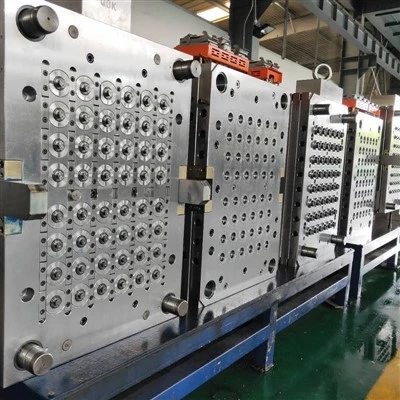
Let’s start at the very beginning, because that’s where both molds live in the production timeline. PET, or polyethylene terephthalate, is a lightweight, shatter-resistant plastic that dominates beverage, food, and even pharmaceutical packaging. The journey from raw PET to a finished bottle isn’t a single step. It starts with injection molding, a process where molten PET resin is injected into a mold cavity. That mold is the PET preform mold. The preform it makes isn’t a finished bottle—it’s a thick, test-tube-shaped piece of plastic, with a threaded neck at the top and a closed bottom. Think of it like a baby bottle nipple connected to a small tube, just scaled up. The preform has a uniform wall thickness, a consistent thread pitch, and a neck that’s precision-machined to fit the cap later. This preform is then moved to a second step: blow molding, where it’s heated and stretched inside a bottle mold, which inflates the preform like a balloon to take the shape of the final bottle. Without the preform mold, you can’t have a consistent preform to blow into a bottle. Without the bottle mold, a preform is just a useless plastic tube.
Now, let’s break down the structural differences, because that’s where the science of these molds really shows. A PET preform mold is built for injection molding, which requires high pressure to force molten resin into tight, detailed cavities. Most preform molds are multi-cavity, meaning they can produce 12, 24, or even 48 preforms in one cycle—critical for high-volume production. Each cavity in a preform mold has two main parts: the core pin and the cavity insert. The core pin makes the inside of the preform, so it has to be precision-ground to ensure the inner diameter is consistent, and it often has cooling channels to keep the resin from overheating and warping. The cavity insert forms the outer surface of the preform, including the threads and the rim where the cap will seal. The threads on a preform mold are usually made as separate, unscrewing components, because if they were part of the permanent cavity, the finished preform would get stuck. After each injection cycle, the mold opens, the unscrewing mechanism twists the core or the cavity to release the preform’s threads, and the preform is ejected.
A bottle mold, on the other hand, is built for blow molding, a lower-pressure process that uses air to expand the preform. Bottle molds are also multi-cavity, but their cavities are shaped exactly like the final bottle: rounded, with labels, indentations for handles, or custom shapes for brand design. Unlike preform molds, bottle molds don’t have core pins. Instead, they have a holder that grips the preform’s neck, locking it in place as heated air is blown into the preform. The bottle mold’s cavities need to be smooth but also have just enough texture to avoid leaving marks on the bottle’s surface, and they have cooling systems to set the bottle’s shape quickly. Another key structural difference: preform molds often have hot-runner systems, which channel molten resin directly to each cavity, reducing waste and speeding up cycles. Bottle molds usually use cold-runner systems, or they’re paired with the preform’s neck holder, which doesn’t require the same high-pressure injection.
Then there’s the role each plays in quality and production consistency. As a PET preform mold supplier, I can tell you that preform quality is the foundation of a good bottle. If a preform has uneven wall thickness, that will lead to a bottle that’s weak in some areas, prone to leaking, or inconsistent in weight—something that brand owners hate because it leads to product rejections. Preform molds have to account for shrinkage, because PET shrinks as it cools; a preform mold’s dimensions are calculated to compensate for that shrinkage so the final preform is the exact size needed for blow molding. Bottle molds, by contrast, are tailored to the specific bottle shape a customer wants. If a brand wants a new 500ml sports bottle with a contoured grip, the bottle mold is custom-made to match that contour, but it’s dependent on the preform’s neck—so the preform mold has to keep the neck threads identical every time, otherwise the bottle won’t seal properly.
Cost is another big difference, and it ties to what each mold is designed to do. Preform molds are often more expensive per unit cavity than bottle molds, because of the precision required for the core pins, unscrewing mechanisms, and hot-runner systems. A 24-cavity preform mold can cost tens of thousands of dollars, depending on the complexity, because each cavity has to be machined to tolerances of thousandths of an inch. Bottle molds are generally less expensive, but they’re also custom to a specific bottle shape—so if a brand changes their bottle design, they might need a new bottle mold, but they can keep using their existing preform mold as long as the neck size stays the same. That’s a key point: the preform’s neck is standard for a given cap size, so a single preform mold can produce preforms for multiple bottle molds, as long as the neck matches.
I’ve seen the consequences of mixing these two up, too. A few years ago, I worked with a small beverage company that bought what they thought was a “complete bottle production system” from a supplier who sold them a bottle mold and tried to pair it with a generic preform mold. The problem? The preform mold was sized for a 1-liter bottle, but their new bottle was 500ml, so the preform had the wrong length, and when they tried to blow it, the walls were too thin, leading to a lot of waste. They had to reach out to us, because their initial mistake came from not understanding that the preform and bottle molds are dependent on each other, not interchangeable. That’s why we always take the time to walk customers through the process: first, we confirm what bottle shape they want, then we design the preform mold to produce the right preform, and then we coordinate with blow molding machine suppliers to make sure all the parts fit together.
Another common misconception is that larger preform molds are always better. For high-volume production, a 48-cavity preform mold will produce more preforms per hour than a 12-cavity one, which lowers per-unit cost. But it also requires a more powerful injection molding machine, and if a brand is just starting out with small batches, a 12-cavity mold might be more practical. Bottle molds, too, are sized based on the blow molding machine: a machine that can handle 24-cavity bottle molds will have a larger platen than one for 12 cavities, so they have to match.
Let’s also talk about maintenance, because that’s part of the day-to-day operation of a production line. Preform molds need regular cleaning, especially the hot-runner system, to prevent resin buildup that can cause defects in preforms. The core pins, which are prone to wear from high pressure, need to be polished and replaced periodically. Bottle molds, meanwhile, need to be cleaned to remove plastic residue from the blow molding process, and their surface coatings (which give the bottle its finish) can wear off over time, leading to scratches or uneven coloring on the final bottle. Because preform molds produce parts that are used as the base for every bottle, their maintenance directly impacts every downstream step; a faulty preform mold will cause issues all the way to the finished bottle, while a faulty bottle mold only impacts that specific bottle shape.
Now, you might be wondering: when should you invest in a preform mold, and when do you need a bottle mold? If you’re setting up a new production line, you’ll need both, but in most cases, the preform mold is the first purchase. Even if you’re just looking to change your bottle design, the preform mold can stay the same as long as the neck size and preform weight don’t change. For example, a brand might start with a 500ml water bottle, using a preform mold for that size, then later introduce a 1-liter version with the same cap, so they can use the same preform mold and only adjust the bottle mold. That’s why many packaging companies treat their preform molds as long-term assets, while bottle molds are often project-specific for new products.
As a PET preform mold supplier, I’ve seen firsthand how understanding these differences can make or break a production line. It’s not just about selling a mold—it’s about educating customers on how each part of the process works. Too many new producers assume that all plastic molds are the same, but the gap between a well-made preform and a blown bottle is huge. A preform mold that’s machined with tight tolerances will produce preforms that blow evenly, with consistent wall thickness, which leads to fewer rejects, lower material waste, and a more reliable production cycle. A bad preform mold, on the other hand, will lead to preforms that crack during blowing, bottles that leak, and lost revenue.
If you’re in the packaging industry, whether you’re a brand owner looking to launch a new product, a factory manager upgrading your equipment, or someone just learning about PET production, the line between a preform mold and a bottle mold is critical. They work in sequence, they’re designed for different types of molding processes, and they have different roles in quality and cost. You can’t make a finished PET bottle without both, but you can’t make a consistent bottle without the right preform mold first.

If you’re looking to invest in a PET preform mold that’s tailored to your specific production needs, or if you have questions about how preform molds work with your bottle design, reach out to our team to discuss your requirements. We’ll walk you through the design process, help you choose the right cavity count, and ensure that your preform molds integrate seamlessly with your blow molding equipment.
PET Preform Mold References:
- Rosato, D. V., & Rosato, M. G. (2004). Injection Molding Handbook. Kluwer Academic Publishers.
- Harper, C. A. (2002). Modern Plastics Handbook. McGraw-Hill.
- Throne, J. L. (1991). Thermoforming: Principles and Practice. Hanser Publishers.
- Society of the Plastics Industry (SPI). (2018). Guide to PET Packaging Manufacturing. SPI Press.
Taizhou Koni Mould Co., Ltd.
As one of the most professional pet preform mold manufacturers and suppliers in China, we also support customized service. Please feel free to wholesale high quality pet preform mold made in China here from our factory. For pricelist, contact us now.
Address: No. 97 Jinju Road, Chengjiang Subdistrict, Huangyan District, Taizhou City, Zhejiang Province
E-mail: kn@kenimould.com
WebSite: https://www.kenimouid.com/
