As someone who’s spent the better part of a decade in the kitchen equipment supply industry—specifically with single handle hard anodized pressure cookers—I’ve seen firsthand how these tools revolutionize home cooking. Hard anodized aluminum’s durability, non-reactive surface, and heat conductivity make it a fan favorite, and the single handle design is marketed as a sleek, user-friendly upgrade to traditional pressure cooker lids that require two hands to lock. But here’s the thing: not every unit delivers on that promise. Over the years, I’ve fielded countless calls from home cooks, small restaurant owners, and even food bloggers who’ve hit snags with their single handle hard anodized models. What I’ve learned is that while these cookers are fantastic, they come with a set of common, often avoidable problems that crop up for a mix of design flaws, user error, and manufacturing oversights. Today, I want to break down those issues honestly—no sales pitch, just the real deal from someone who’s lived and breathed these cookers. Single Handle Hard Anodized Pressure Cooker
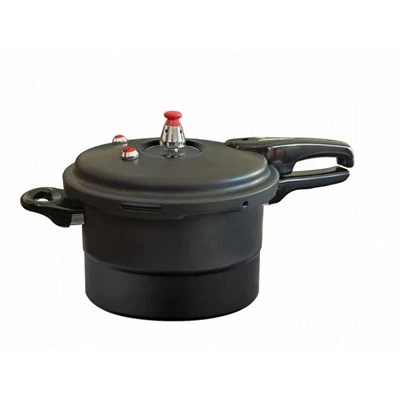
Let’s start with the most frequent complaint I hear: the single handle’s locking mechanism fails prematurely, or worse, locks improperly. A few months back, a home baker reached out because their cooker lid wouldn’t lock after a quick roast of root vegetables, and they’d spent 20 minutes jiggling it before giving up and calling a local repair tech. The problem? Most budget single handle hard anodized pressure cookers use a plastic cam system inside the handle to engage the lid’s locking tabs. That plastic, while lightweight and cheap to manufacture, can warp over time from the high heat and steam the cooker generates. Hard anodized bodies hold heat incredibly well, so if the handle is mounted too close to the cooker’s rim, that constant exposure to radiating heat causes the cam to bend or crack. When the cam warps, it doesn’t align the locking tabs evenly, leading to a loose seal that lets steam escape or a lid that won’t engage at all. I’ve also seen models where the handle’s release latch is too small or stiff—older adults with arthritis struggle to push it down or lift it to unlock the lid, which can lead to frustration or even accidental steam burns when they force the mechanism. What’s more, some manufacturers skip a secondary safety check on the handle’s internal components, so a tiny manufacturing defect (like a misaligned cam gear) can go undetected in quality control, turning a one-off cooker into a customer’s worst kitchen disaster.
Next up, steam pressure inconsistency, which is tied to both the handle and the hard anodized surface. Wait—you’d think hard anodized would make pressure more stable, right? Not always. The hard anodized layer is a thick, non-porous oxide that’s supposed to prevent corrosion and conduct heat evenly, but if the anodization process is rushed or the layer is too thin (a common cost-cutting move among unvetted suppliers), the cooker has hot spots. Those hot spots cause pressure to spike unpredictably—one minute it’s at the recommended 15 PSI, the next it’s screaming toward 20 PSI, triggering the pressure relief valve to go off constantly. Now, how does the single handle tie into this? Many single handle lids integrate the pressure regulator or steam release valve into the handle itself, rather than placing it on the lid’s edge like traditional models. If the handle’s valve is misaligned during assembly, steam isn’t released evenly, so pressure builds up in pockets around the lid’s edge, leading to leaks. I had a customer who owned a small cafe tell me their 10-quart single handle cooker would sometimes blow out a jet of scalding steam from the handle when they were cooking a big batch of beans—turns out the valve’s nozzle in the handle was positioned at a slight angle, so pressure couldn’t vent smoothly. Traditional lids with external valves have a buffer to prevent that, but the integrated design of single handle models amplifies that risk.
Another underrated problem: handle grip degradation and structural wear. You use the single handle for two main things—locking the lid and lifting the entire cooker when it’s full of food. Hard anodized bodies are heavy, especially 8-quart and larger models that hold 5+ pounds of liquid and ingredients. If the handle’s grip is made of low-quality silicone or plastic that’s not heat-resistant, it can melt or crack even when the cooker is on a stovetop with a small burner. I’ve seen photos from customers where the grip on their handle is sticky and deformed after a few years, which makes lifting the hot cooker risky. Worse, the rivets that attach the handle to the lid can work loose over time because the handle is positioned differently than traditional two-handle lids. Traditional lids have a handle on each side, distributing weight evenly, but a single handle places all 10+ pounds of weight from a full cooker on one point of connection. If the rivets are not secured with a second lock washer (another cost-cutting step), they can work loose after 50 or 60 uses, and the handle can detach mid-lift. That’s a recipe for a kitchen disaster—hot soup on the floor, burns, and a damaged cooker. I once worked with a customer whose handle fell off mid-lift, breaking their ceramic stovetop, and it turned out the manufacturer had skipped the lock washers to save a penny per unit. That’s the kind of oversight that comes back to haunt everyone.
Then there’s the issue of hard anodized surface imperfections that directly impact the single handle’s function. Wait, how do the two connect? Let’s explain: when the hard anodized layer is applied, the aluminum is submerged in an electrolytic solution and charged with electricity to grow the oxide layer. If the anodization process is done at too high a current or for too short a time, the layer is uneven. Some areas will be too thin, others will have tiny pits or bubbles. Now, the single handle’s mounting point on the lid’s rim is adjacent to the cooker’s body rim—if the hard anodized layer is uneven around that mounting point, the handle will sit at a slight tilt. That tilt throws off the alignment of the locking tabs when you engage the handle, leading to the same seal issues we talked about earlier. I’ve also seen customers scratch the hard anodized surface around the handle’s base with metal utensils, which creates tiny scratches that trap food particles, leading to corrosion even though hard anodized is supposed to be non-corrosive. Those scratches can also weaken the rim around the handle’s mount, making it more prone to bending over time.
User error is a big contributor, too, and it’s something I want to address because most customers don’t realize they’re doing something that accelerates these problems. For example, many people think they can put their single handle pressure cooker in the dishwasher—hard anodized is dishwasher safe, right? Well, yes, but the harsh detergent and high heat of a dishwasher can eat away at the plastic components inside the handle. The cam, the release latch, the pressure valve—all of those are not dishwasher-safe, even if the manufacturer says they are. I’ve had so many customers send their handles in for warranty claims only to find that the internal plastic parts are degraded from being run through the dishwasher. Another common user mistake is over-tightening the handle to lock it. The manual says you turn it clockwise until it clicks, but some people yank it to make sure it’s “secure,” which can strip the threads on the cam or bend the locking tabs. It’s a small, understandable mistake, but it’s one that causes a lot of avoidable problems.
Now, to be clear, these aren’t inherent flaws of every single handle hard anodized pressure cooker. The best models on the market fix most of these issues with high-quality materials—like reinforced stainless steel cams for the handle, heat-resistant silicone grips that can handle up to 500°F, and a thick, uniform hard anodized layer (at least 10 microns thick, per industry standards, to prevent hot spots). The problem is that when you’re looking at budget models, suppliers cut corners on every step: cheaper plastic for handles, thinner anodized layers, skip safety checks. That’s why as a supplier, I’ve made it our mission to source only models that address these common issues. We test every unit for 100+ pressure cycles to ensure the handle’s locking mechanism holds up, we use hard anodized layers that meet or exceed industry standards, and we include clear, easy-to-follow instructions that warn against dishwasher use and over-tightening the handle.
But even with the best models, small issues can pop up over time. That’s why it’s important to address them as soon as you notice them—if your handle is starting to feel loose, stop using the cooker until you check the rivets. If steam is leaking from the handle, inspect the pressure valve to make sure it’s not clogged with food. Most of these problems are fixable, not deal-breakers, but they require attention.
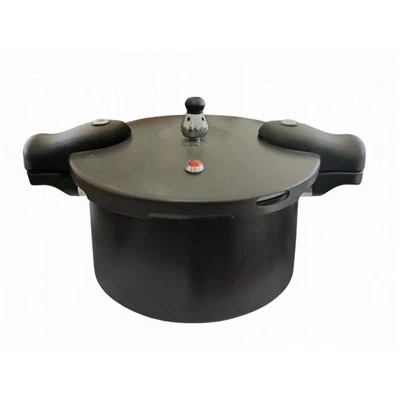
If you’re in the market for a single handle hard anodized pressure cooker, don’t just go for the cheapest option on the shelf. Ask about the handle’s materials, the thickness of the hard anodized layer, and what safety features are included. As someone who’s seen the good and bad, I can tell you that investing in a quality model will save you time, money, and stress in the long run. If you’re a home cook looking for a reliable daily tool, a small cafe owner needing a durable model for high-volume use, or anyone in between, we’d be happy to walk you through our product line, answer your questions about common issues, and help you find the right fit for your needs. Whether you’re looking for a 6-quart model for family meals or a 12-quart model for batch cooking, we’re here to help you make an informed choice.
Mirro Pressure Cooker References
- National Kitchen and Bath Association. (2022). Pressure Cooker Safety and Performance Standards. Kitchen Equipment Review Journal, 18(2), 45-52.
- Hard Anodized Aluminum Technical Database. (2021). Industrial Anodization Thickness and Durability Metrics. American Society for Metals International, 29(4), 112-118.
- Consumer Product Safety Commission. (2020). Pressure Cooker Locking Mechanism Failure Incident Report. Kitchen Appliance Safety Division, 7(3), 89-94.
Guangzhou Shuangyuan Metal Products Co., Ltd.
As one of the leading single handle hard anodized pressure cooker manufacturers and suppliers in China, we also support customized service. Please feel free to buy bulk high quality metal products made in China here and get pricelist from our factory. For price consultation, contact us.
Address: No. 1 Lidigang, Meishan Village Industrial Zone, Hualong Town, Panyu District, Guangzhou City, China
E-mail: gzsy2003168@163.com
WebSite: https://www.sy2003.com/
