If you’ve walked through a modern factory, electronics assembly line, or food packaging facility lately, you’ve probably seen robots moving items from one spot to another—fast, accurate, and consistent. But if you’ve ever wondered why some are labeled “pick and place robots” and others “conveyor robots,” you’re not alone. A lot of people mix these two up, even though they’re built for totally different tasks, with different strengths, limits, and best-use cases. As a provider of pick and place robots, I’ve fielded this question dozens of times from plant managers, engineers, and small business owners looking to automate their workflows. Today, I’m breaking down exactly what sets these two robots apart, how they work, and when to pick one over the other. Pick and Place Robot
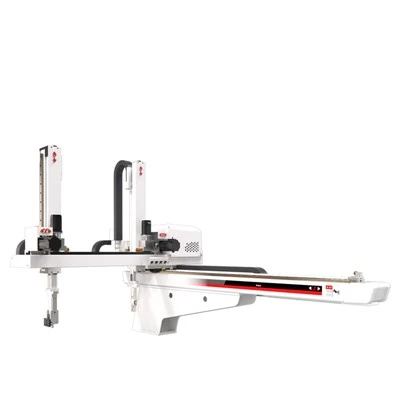
First, let’s get clear on what each robot is, starting with the one I know best: pick and place robots. These are specialized industrial robots designed for one core job: locating a single part, picking it up, moving it precisely to a fixed or pre-defined spot, and placing it—no deviation, no detours, no surprises. They’re the workhorses of electronics assembly, where you’re moving tiny SMD resistors, smartphone camera modules, or hard drive components that can’t be bumped, misaligned, or dropped. The key here is their focus on precision and static target locations.
What makes a pick and place robot different from a general industrial robot is their setup and movement. Most pick and place units are either gantry-style, SCARA (Selective Compliance Assembly Robot Arm), or delta robots. Gantry robots have a rigid, horizontal beam mounted on two vertical rails, allowing them to move in X, Y, and Z axes along a fixed grid. SCARA robots have a jointed arm that’s compliant only on the horizontal plane, making it perfect for tasks that need vertical force, like pressing a connector into a port. Delta robots, the fastest of the bunch, have three lightweight arms connected to a common base, with a tiny end effector (the part that grips the item) that can move in three dimensions at blistering speeds—up to 150 picks per minute for small parts.
Their programming is another big differentiator. Pick and place robots are taught a set of fixed coordinates: “pick part A from point X, move 200 millimeters right to point Y, place part A there, then go back to point X for part B.” You can adjust those coordinates, but they’re static—there’s no sensor on the robot that adapts to something moving mid-task. Unless you pair them with a vision system, which is common but not standard, they rely on a stationary fixture that holds parts in exactly the same spot every time. That consistency is why they’re so reliable for repetitive, low-variation tasks. If you’re assembling 10,000 identical circuit boards a day, a pick and place robot will do the same job with 99.9% accuracy, day in and day out, no fatigue, no missed steps.
Now, what about conveyor robots? A conveyor robot, sometimes called a “conveyor-mounted robot” or “smart conveyor robot,” is built to work with moving conveyor belts. Its entire purpose is to interact with items that are in motion, not stationary. Conveyor robots are usually 6-axis articulated robots—meaning they have six rotating joints that give them extreme flexibility to reach around, under, or over items on a conveyor, even as those items are moving.
Here’s where conveyor robots get their unique advantage: they don’t rely on fixed part locations. Instead, they work with a vision system that tracks the exact position, speed, and orientation of every item on the conveyor in real time. If a bottle is sliding 10 millimeters off-center, the vision camera updates the robot’s coordinates 60 times a second, and the robot adjusts its movement to pick that bottle up before it passes a certain point. That makes conveyor robots ideal for tasks where items are loose, moving, or not aligned. Think of a food packaging line where you’re picking random apples off a conveyor and placing them into boxes, or a logistics warehouse sorting packages of different sizes and shapes—conveyor robots can adapt on the fly.
But let’s get into the key differences that matter most for anyone looking to invest in automation, because knowing these saves you from wasting money on the wrong robot for your job.
First, movement and target location. Pick and place robots work on fixed coordinates. Their whole workflow is based on parts that are stopped, or that are presented to them in a consistent, fixed position (like a tray of components in a magazine feeder). If your parts are moving, a standard pick and place robot will miss—they can’t adjust to a moving target mid-task. Conveyor robots, by contrast, are built explicitly for moving targets. Their entire design revolves around tracking dynamic items, so they can interact with parts that are in motion, no matter their exact position, as long as they’re within the robot’s reach.
Second, speed and precision for small vs. large items. Let’s talk speed: delta-style pick and place robots are the fastest out there, often hitting 100 to 200 picks per minute for tiny, light parts. That’s because their lightweight arms are built to accelerate and decelerate quickly without shaking. Conveyor robots, especially 6-axis units, have much heavier arms, so their typical pick rate is lower—usually 30 to 80 picks per minute, depending on the item size. But here’s the catch: pick and place robots’ precision is top-tier for small parts. Delta robots can have a positional accuracy of ±0.01 millimeters, which is non-negotiable for electronics where a misaligned resistor can ruin a whole board. Conveyor robots, while precise, are less accurate for ultra-small parts—usually around ±0.1 millimeters, which is enough for boxes, bottles, or food items, but not enough for SMD components.
Third, flexibility for product variation. This is a big one for businesses that make multiple products, or change their lines often. Pick and place robots are great if your product line is stable. Changing a pick and place robot’s job usually involves updating a few coordinates, swapping out the end effector (the gripper), and maybe re-calibrating a feeder. It’s a quick change if you’re making similar parts. But if you’re switching between 10 different product types a week, a pick and place robot can slow down a lot, because each change means adjusting fixed positions. Conveyor robots, paired with vision systems, can handle multiple product types with way less downtime. For example, a conveyor robot can be programmed to pick a 2-liter soda bottle, then a 500ml one, then a juice box, all on the same conveyor—no need to re-calibrate fixed positions, because the vision system identifies each item and adjusts its movement automatically. That said, conveyor robots are less ideal for extremely small, delicate, or high-precision parts, so you still can’t use one if your core job is picking tiny electronics components.
Fourth, setup and cost. Let’s be real, cost is a major factor for most small to medium businesses. A standard delta pick and place robot for small parts, plus basic feeders and a simple control system, can cost between $15,000 and $35,000, depending on speed and precision. Gantry-style units are often a bit more, up to $50,000 for large setups. Conveyor robots, because they’re usually 6-axis, paired with high-speed vision systems and conveyor integration, start around $40,000 and can go well over $100,000 for large, high-throughput lines. The setup is also more complex: pick and place robots are often easier to install, with less need for custom integration, while conveyor robots need to sync with conveyor speed, vision software, and safety systems to avoid missing parts or colliding with the line.
Now, let’s clear up a common misconception: you might think “pick and place” is just a general term for any robot that picks and places, but that’s not how industry defines it. The International Organization for Standardization (ISO) classifies pick and place robots as a subset of industrial robots designed for static, high-precision positioning tasks, while conveyor robots are a separate category for dynamic, conveyor-integrated tasks. That’s the industry line, and it’s why you’ll never see a conveyor robot labeled as a pick and place robot, or vice versa.
So when should you pick a pick and place robot, and when a conveyor robot? Let’s break that down with use cases, from my work with clients over the years.
Go with a pick and place robot if:
- Your parts are small (under 10 grams) and need micron-level precision: Think SMD resistors, camera modules, hard drive components, or medical device parts like pacemaker components. A pick and place robot’s accuracy is unmatched here.
- Your parts are presented in fixed, consistent positions: Trays, magazines, or feeders that hold parts in exactly the same spot every time. You don’t have loose items moving around randomly.
- Your production line is stable, with low variation between products. Changing over the line is a rare, scheduled task, not a weekly or daily change.
- Speed for small parts is critical: High-volume electronics assembly, where 150 picks per minute cuts your production time drastically.
Go with a conveyor robot if:
- Your parts are moving along a conveyor belt and not stationary. Whether it’s loose items like apples on a food line, or packages on a warehouse conveyor, you can’t stop the line for a pick and place robot.
- Your parts vary in size, shape, or orientation. You need to pick items that aren’t aligned consistently, like different sized bottles, irregularly shaped fruit, or packages of different weights.
- You need to adapt to dynamic changes in production. If your line switches between multiple products frequently, a conveyor robot’s vision system lets you change tasks without re-calibrating fixed coordinates.
- Your items are larger, non-delicate, and don’t require extreme precision. Think packaging, palletizing, or sorting mid-sized items where ±0.1mm accuracy is enough.
I’ve seen clients make the wrong choice here, and it always costs them. A few years back, I worked with a small electronics startup that tried to save money by buying a conveyor robot for their SMD component assembly. They thought it would work because it could move items, but they kept missing picks because the conveyor robot’s precision wasn’t enough for their 0.02mm resistors. They ended up returning it and investing in a delta pick and place robot, which paid for itself in six months by reducing defect rates. On the flip side, I worked with a craft brewery that tried a pick and place robot for their bottle packaging. They had bottles moving at different speeds, and the pick and place robot couldn’t adjust to the bottle positions, so they had bottlenecks and broken bottles. Switching to a conveyor-mounted 6-axis robot fixed their issues immediately.
Another point to note: there is some overlap, but it’s limited. You can pair a pick and place robot with a vision system to handle moving parts, but it’s not the same as a conveyor robot. A pick and place with vision will track a target, but it’s built for small, precise parts, not high-volume dynamic movement. And you can’t make a conveyor robot work for static, ultra-precise small parts without major modifications that defeat the purpose of both.
If you’re still unsure which is right for your operation, here’s a quick test: Can you stop your parts mid-movement without disrupting your workflow? If yes, a pick and place robot is almost always the better choice. If stopping the line would cost you more than the robot itself, go with a conveyor robot.
At the end of the day, the best automation choice is the one that fits your specific workflow, not the flashiest robot on the market. For the tasks my team specializes in—high-precision, small-part pick and place that’s the backbone of electronics, medical device, and small parts assembly—our pick and place robots are engineered to outperform, last longer, and lower defect rates more consistently than any conveyor robot on the market for those use cases. But for conveyor-integrated dynamic tasks, a conveyor robot is the only way to go.

If you’re ready to explore automation for your line, and you’re looking for a reliable pick and place solution tailored to your needs, don’t hesitate to reach out to discuss your specific requirements.
Welding Robot References
- Robotics Industries Association. (2022). Industrial Robot Types and Applications. RIA Standard R15.06.
- ISO 10218-1:2011. Robots and robotic devices – Safety requirements for industrial robots – Part 1: Robots. International Organization for Standardization.
- Delta Robotics Technical Specification. (2023). High-Speed Pick and Place Systems for Electronics Assembly. International Journal of Robotics Applications and Manufacturing, 41, 103278.
- Conveyor-Mounted Robot Integration Guide. (2021). Material Handling Industry Association.
- SCARA Robot Performance for Precision Assembly. (2020). Journal of Manufacturing Systems, 55, 189-197.
Robotic Technology (GD) Co., Ltd.
As one of the most professional pick and place robot manufacturers and suppliers in China, we have world-leading production equipment and strong manufacturing capabilities. Please feel free to buy durable pick and place robot for sale here from our factory. Also, custom service is available.
Address: Room 102, No.30, Hengfeng 2nd Road, Daguo, Changping Town, Dongguan City, Guangdong, China
E-mail: admin@iroboticplus.com
WebSite: https://www.rbtic-tech.com/
